Thinking about driving yourself through Namibia’s remote desert? Here’s exactly how safe it really is, and what you should know before you hit the road.
Disclosure: This post may contain affiliate links, which means we’ll receive a commission if you purchase through our links, at no extra cost to you. Please read full disclosure for more information.
I never really thought I’d end up in Namibia.
My husband always talked about doing this big self-drive camping road trip through the desert, but I figured it was one of those bucket list things that would stay on the list forever, until we found a cheap flight from Cape Town to Windhoek (only $57 USD per person) and suddenly… it was happening.

I won’t lie, the idea of remote roads, wild animals, no cell service, and sleeping in a rooftop tent freaked me out at first.
But I’m so glad we did it. It pushed me out of my comfort zone and turned out to be my favorite experience of 2025.
Namibia is actually one of the most popular countries in Africa for self-drive trips, partly because it’s so safe and the crime rates are low.
So, is Namibia safe for a self-drive road trip? Yes, as long as you’re prepared.
Here’s exactly what we experienced in our 4×4 during 6 days in Namibia.
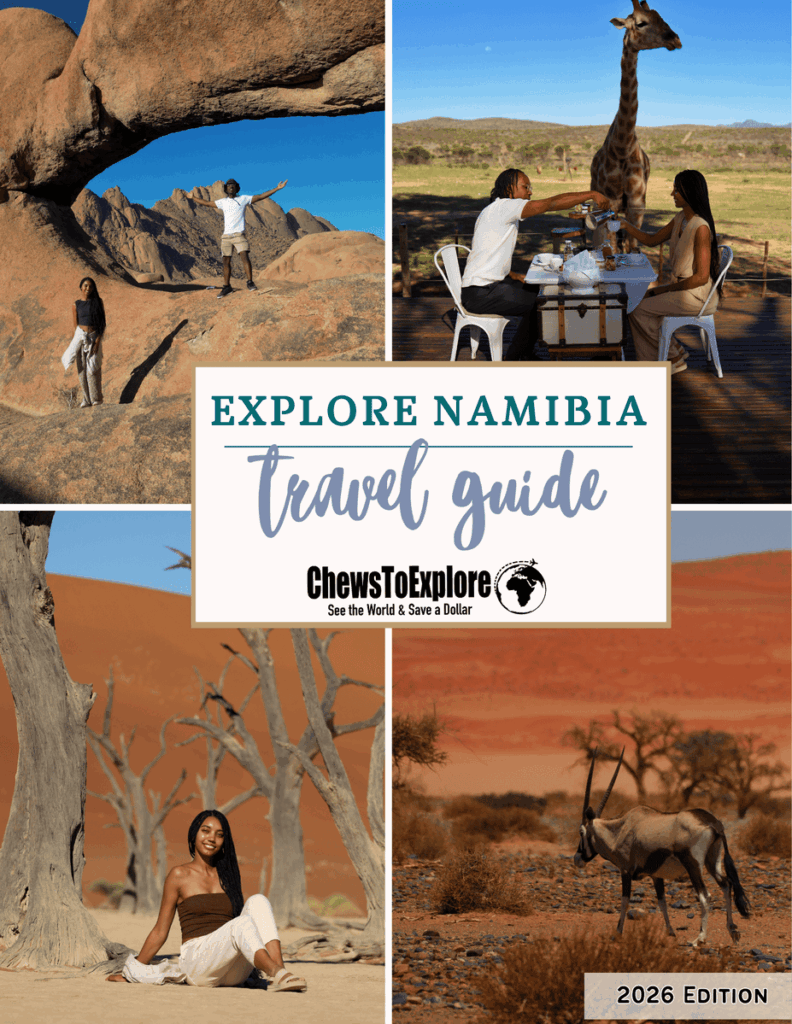
Want the full planning shortcut?
→ Grab our Explore Namibia Travel Guide
Driving Conditions
Namibia’s roads are a mix of paved highways, bumpy gravel, and soft sand.
And you’ll probably hit all three in a single day.
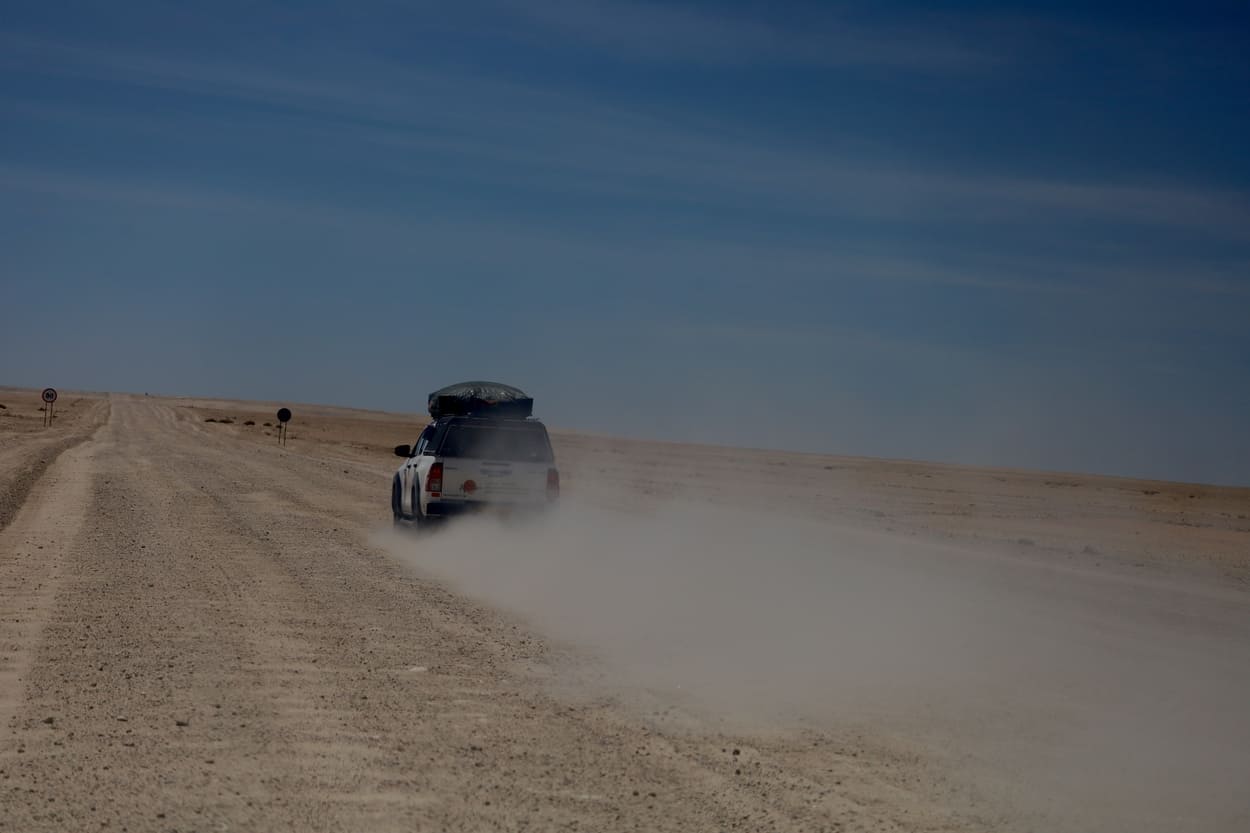
If you’re planning a road trip in Namibia, I’d definitely recommend using a 4×4.
The extra traction and clearance make gravel and sand roads so much easier (and safer).
We rented ours from Asco Car Hire in Windhoek and had a great experience, but there are other good companies too if you’re arriving elsewhere.
It is possible to pick up your car in Windhoek and drop it off somewhere else, but keep in mind that most rental companies charge extra one-way fees for this.
Budget for that if you don’t plan to loop back.
When you’re driving on gravel roads, stick to the grooves left by other cars.
It’s bumpy. Just think of it as a free, natural African massage.
Sand is the same: always follow the tracks.
Even then, you can still get stuck, like we did at Deadvlei.
We barely veered off the groove and ended up tire-deep in soft sand under the mid-day sun.
Luckily, other travelers came by and sent for help. We dug ourselves out with the shovel that came with our 4×4 and got pulled out by another truck.
Not exactly fun, but definitely memorable.
However, there were more paved roads than we expected. It looks like Namibia is investing a lot in road construction, which makes some stretches super smooth and easy to drive.
Road safety depends on where you are.
Leaving Windhoek or when heading out to spots like Spitzkoppe or Etosha, you might not see another car for an hour.
But in busier areas like Walvis Bay and Swakopmund, you’ll share the road with trucks and faster drivers, so stay alert and don’t speed.
You might see wild animals, especially if you drive at dawn or dusk when they’re more active.
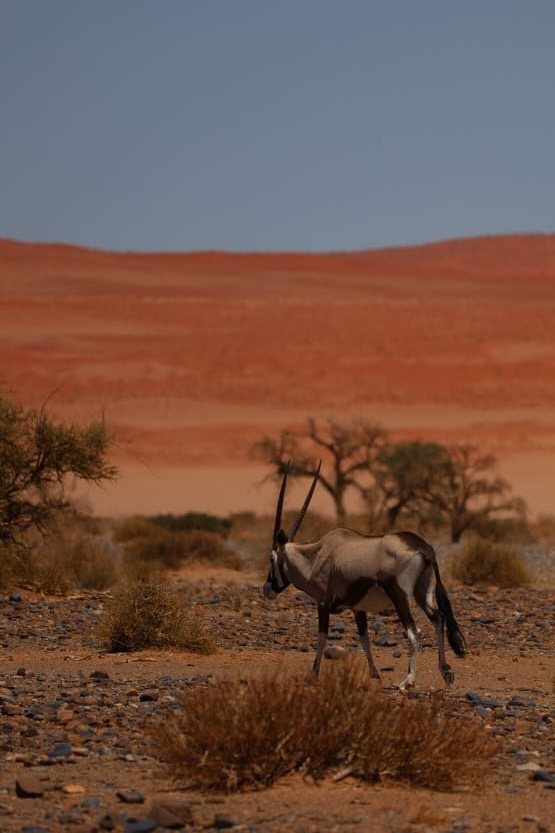
We stuck to driving mostly midday. Not only are you in the comfort of the AC, but there’s less chance of a surprise animal in the road.
If you’re trying to catch a sunrise at Sossusvlei, plan to get there the day before, around midday, so you’re in place and ready to roll early the next morning.
Quick tip: Air down your tires when you hit sandy areas. It helps with traction.
RELATED ARTICLE: How To Visit Table Mountain in Cape Town
Fuel & Navigation
Gas stations can be really spread out in Namibia, so don’t take any chances.
We pinned every gas station we personally came across inside our Explore Namibia Travel Guide because in Namibia, that’s not “nice to know”… it’s your backup plan.
Our 4×4 from Asco came with two fuel tanks, which was a huge relief.
You’ll think your gauge is full for days, until it starts dropping, which means you’re onto that second tank.
As soon as you see that needle move, top up at the next station you find.
Just to give you an idea: on our 6-day loop, we filled up twice and were fine.
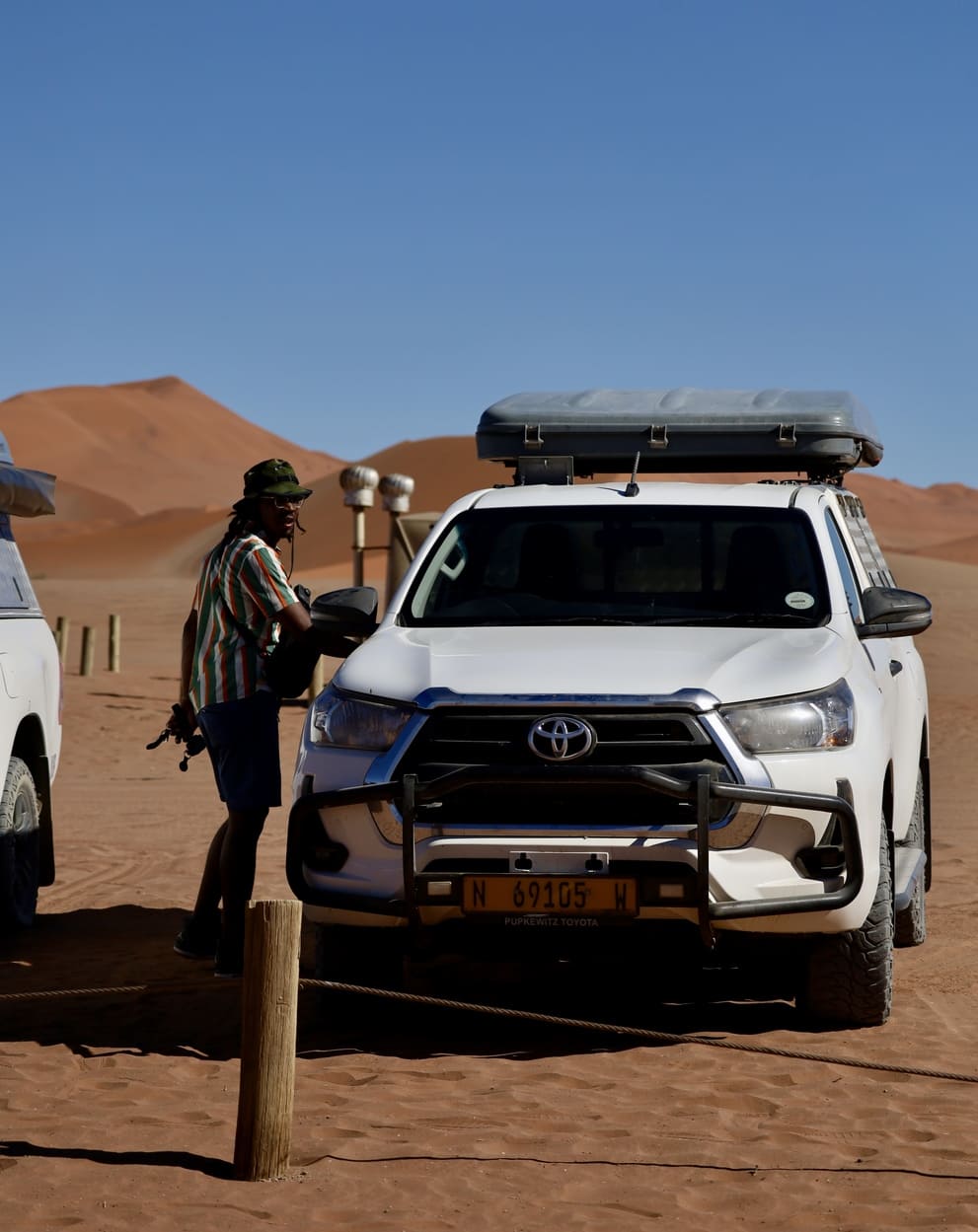
But if you’re in a regular car with just one tank, you’ll need to be way more careful. You can drive for hours without passing through a real town.
If anything goes wrong, our rental had GPS tracking so Asco could come find us if needed.
A little peace of mind when you’re literally in the middle of nowhere.
Just know that depending on where you break down, help might still take a while.
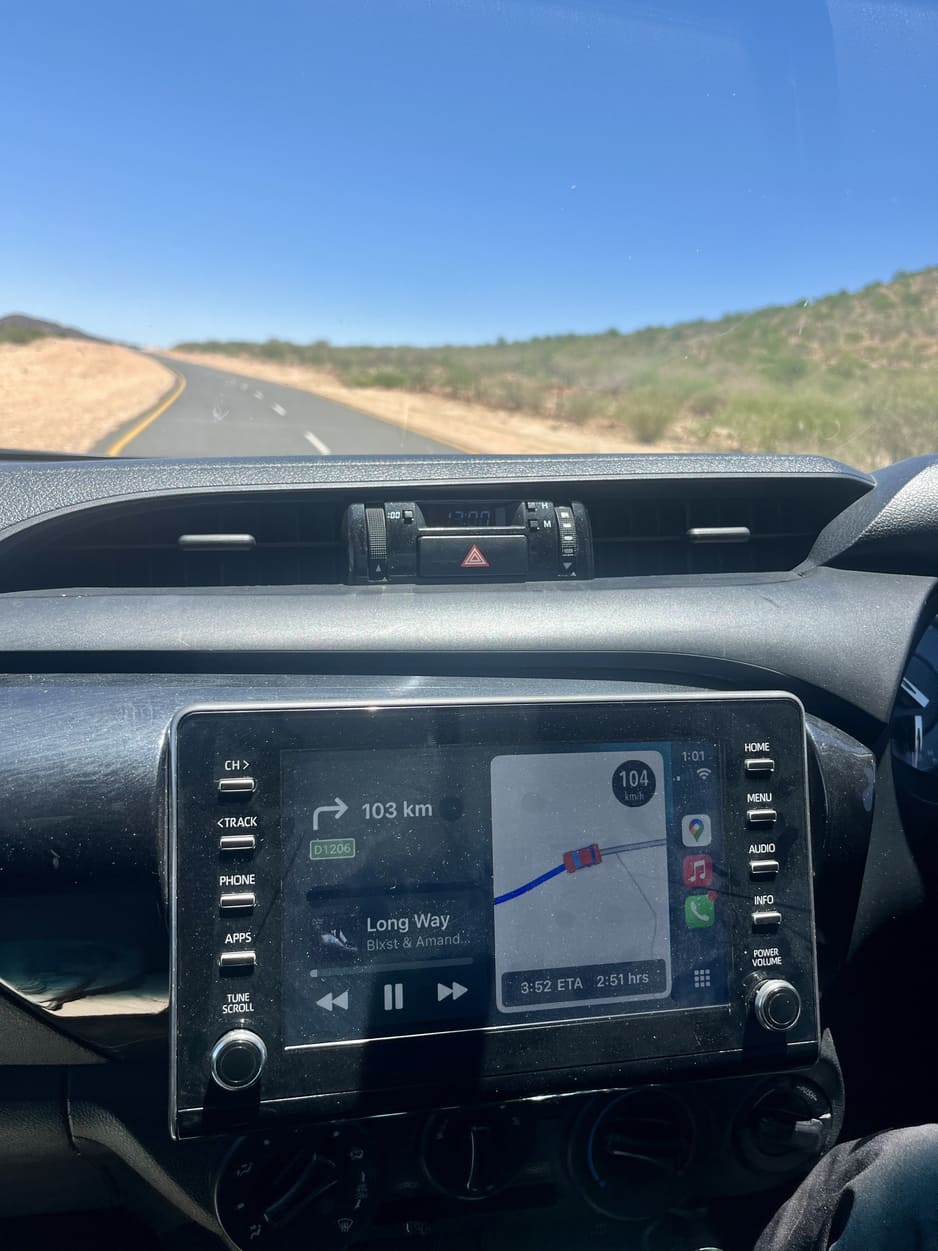
Once you land at the airport, get a local SIM card.
Most eSIMs don’t work in Namibia (there may be one, but it was very expensive), so your best bet is to grab a SIM right at the airport.
We also picked up a pocket WiFi device from the same kiosk, and that gave us decent coverage whenever we were near towns with signal.
As you can imagine, having offline maps downloaded beforehand is very important.
RELATED ARTICLE: 3-Day Cape Town South Africa Itinerary
Camping & Wildlife Safety
Most campgrounds in Namibia are simple but well set up, and they can feel pretty remote.
You’ll usually drive through a gate, check in with the host, and pick your spot, or be shown to it.
We found most of our campgrounds through Booking.com and booked them ahead of time, especially in the remote areas.
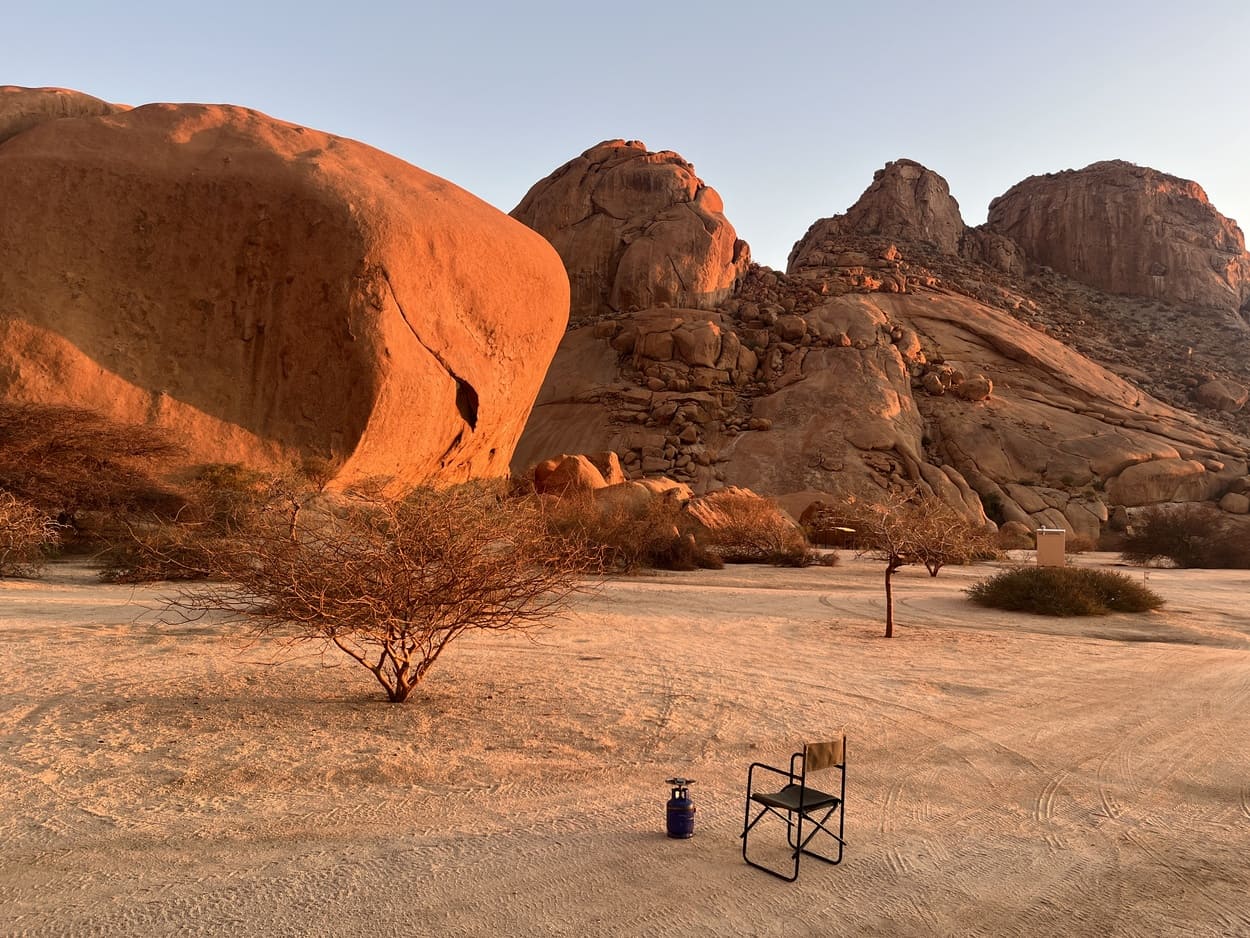
You really don’t want to be driving around in the dark looking for a spot with no plan.
In bigger towns like Walvis Bay, we winged it a little and still found a place, but it was more stressful than it needed to be.
So if you can, plan and reserve your stays. Just know you’ll probably still need to pay in cash when you get there.
We included campground and hotel recommendations in our Explore Namibia Travel Guide since your overnight stops basically shape your whole route here.
Some places don’t accept card payments once you arrive.
ATMs are few and far between, so it’s best to plan ahead and have local currency on you at all times.
Not all campgrounds are the same. Some feel more like rustic resorts, while others are really bare-bones.
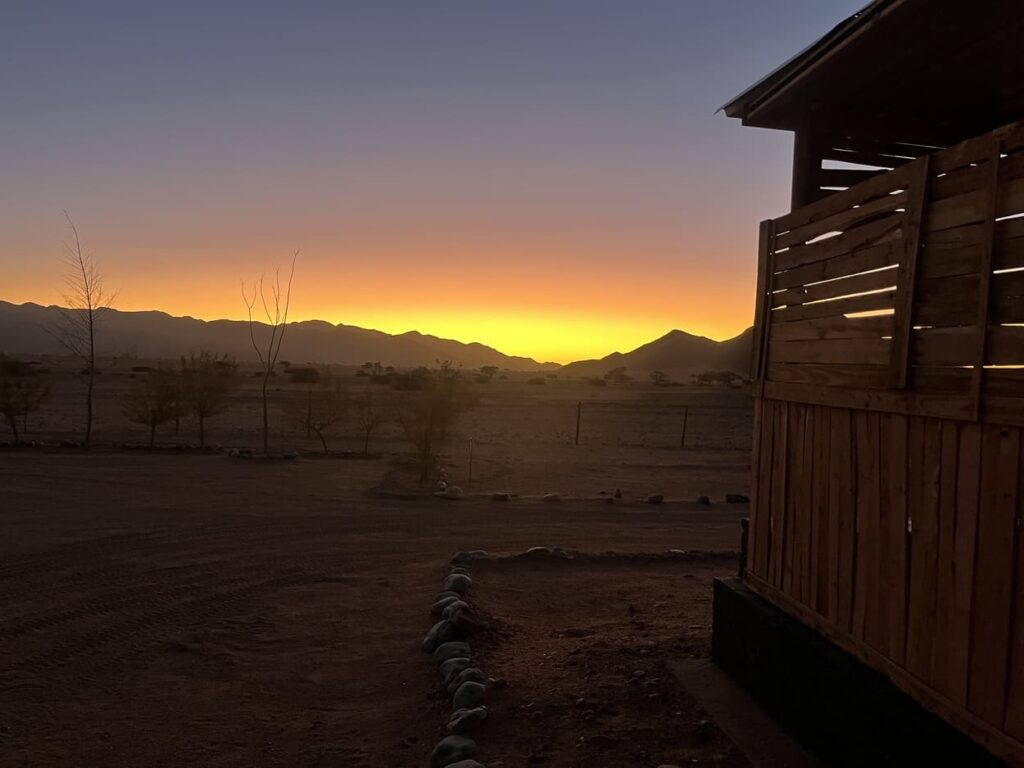
For example, our site near Walvis Bay/Swakopmund was right in front of the beach with private showers and bathrooms.
Near Sossusvlei, we also had a nice setup with a hot shower.
But at Spitzkoppe, our campsite had the simplest bathroom. Basically, an enclosed toilet hole.
Some places even have a small shared pool area. Most are fenced or have a security gate at the entrance, which gave us peace of mind when we were camping so far off the grid.
One thing I’ll never forget: the stars.
It’s impossible to describe how clear the sky is out there. Like seeing the entire galaxy with your own eyes.
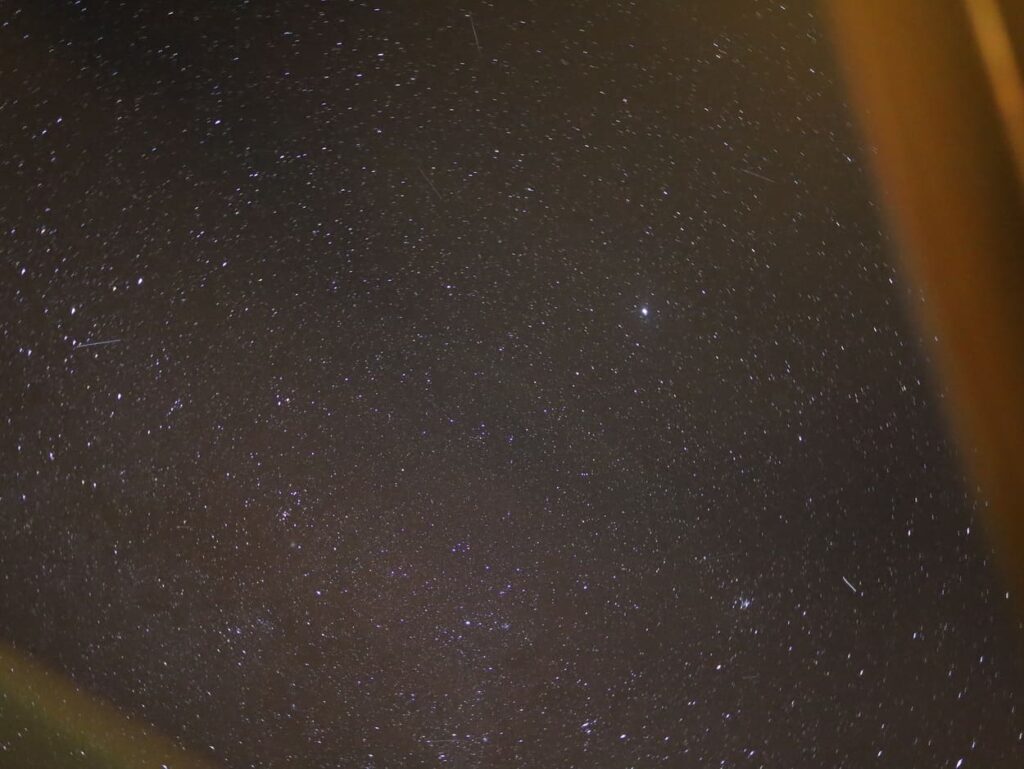
We felt like the only people on the planet, and it was honestly one of the best parts of camping in Namibia.
My biggest rule was cooking dinner before it got dark so we could see what was around us.
The first night, we pushed it too close to sunset and ended up with a baby jackal trying to join us for dinner.
I took my plate straight up to the rooftop tent and decided right then: never again eating in the dark!
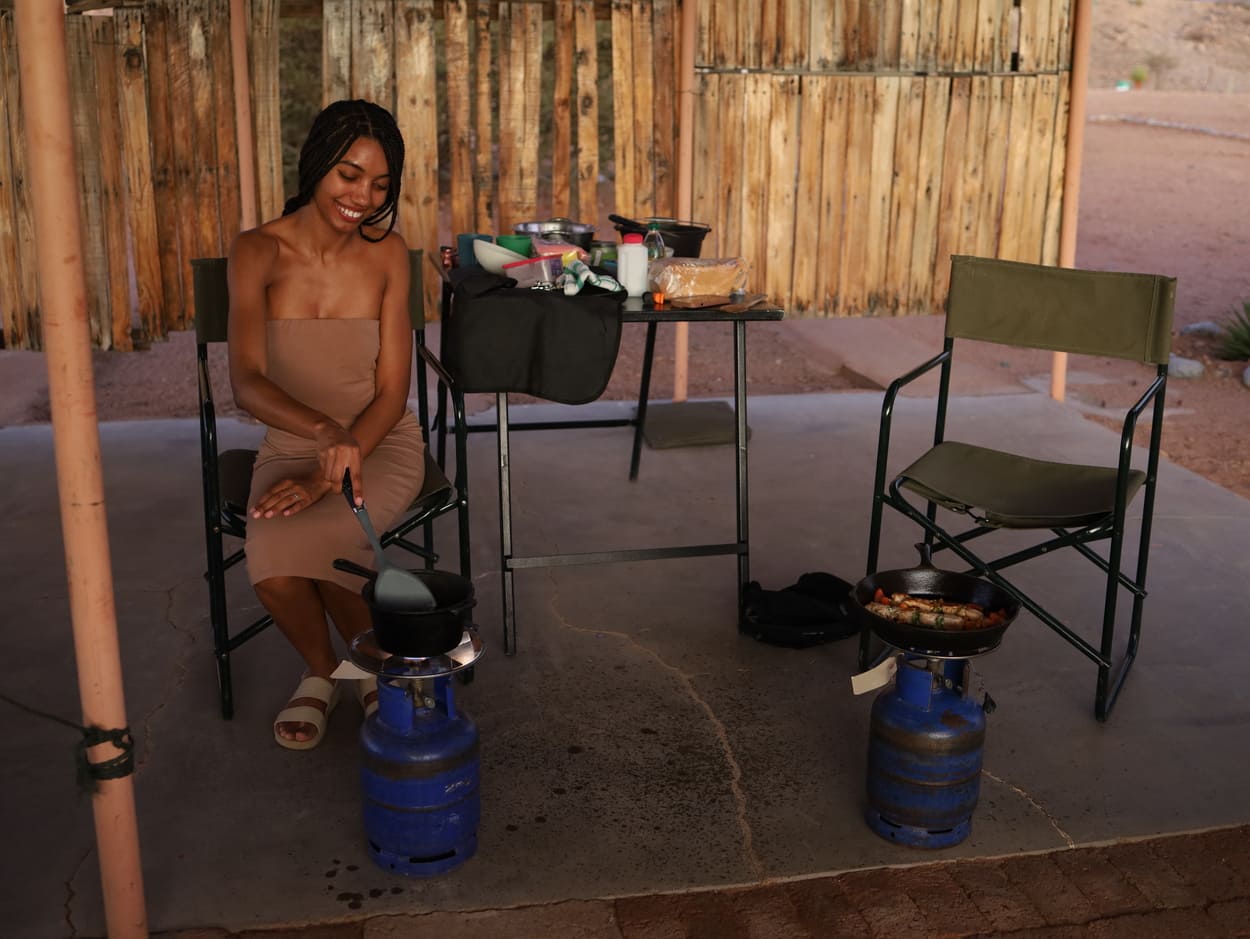
Jackals are scavengers, so keep your food sealed and your trash tied up tight.
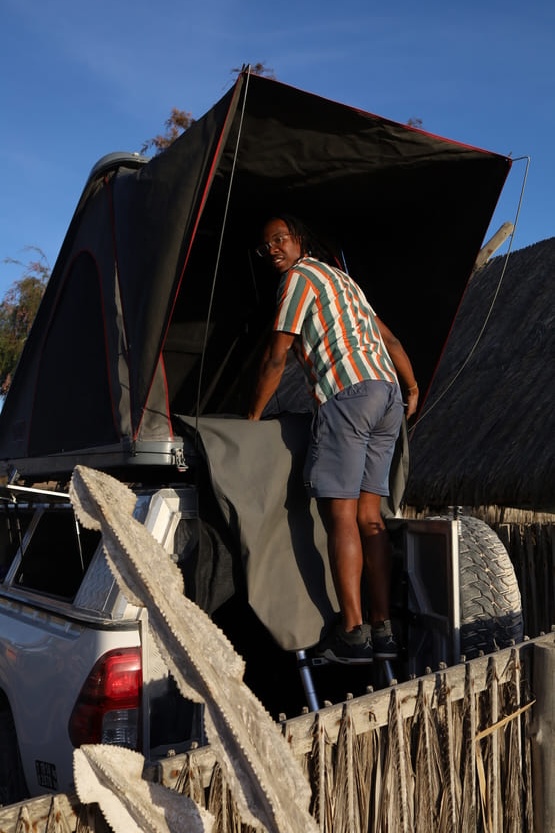
Our 4×4 came with everything we needed for camping:
- a rooftop tent that was very easy to put up and take down (the rental company shows you exactly how it works)
- a fridge for groceries
- propane tanks for cooking
- Pots and pans
- Utensils and plates
- a table and chairs
- and a small water container for washing up.
It even had sheets, pillows, and a comforter. Way more comfortable than I expected.
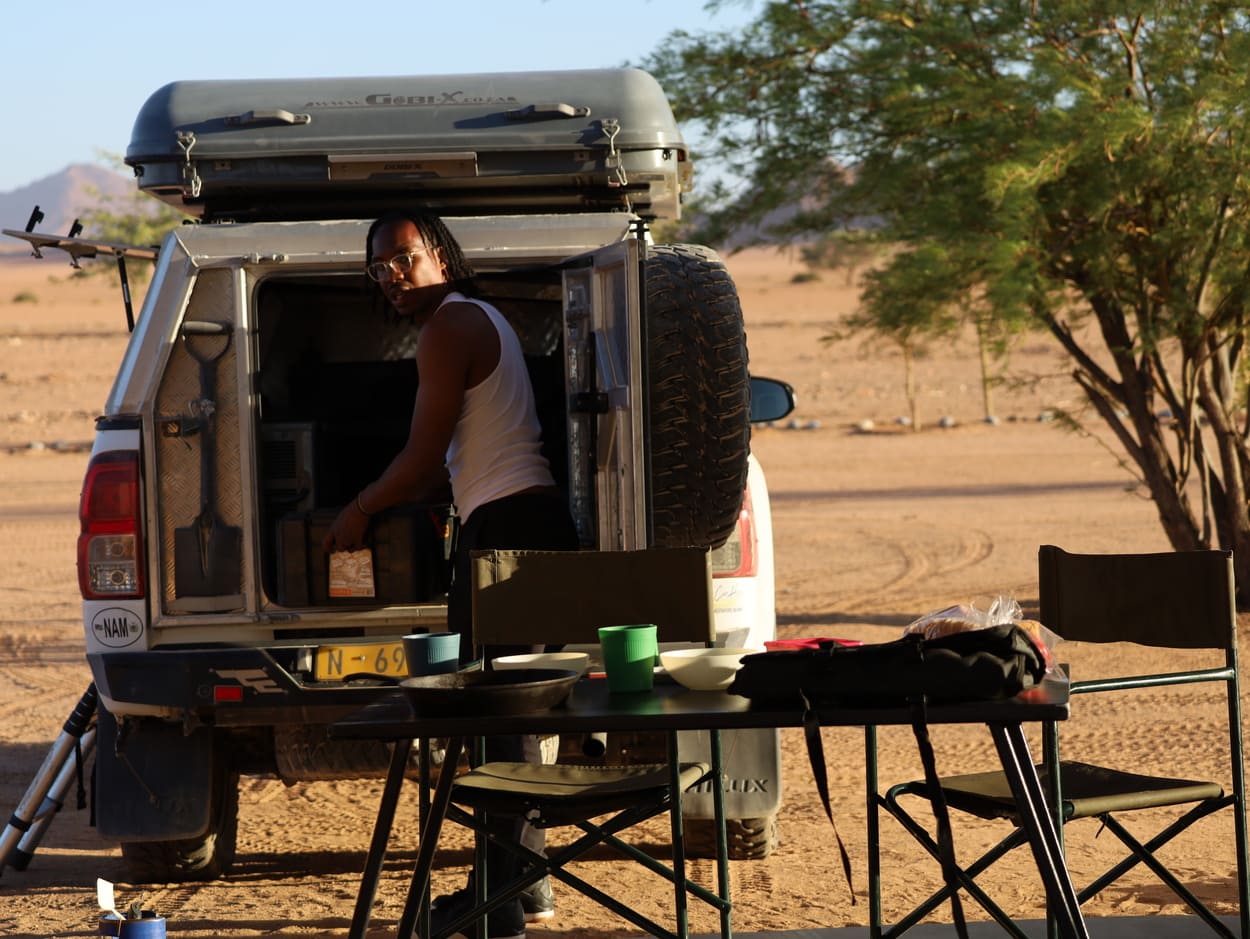
There were lots of locks for the doors, windows, and trunk too, which gave us peace of mind when we left camp to explore.
Oh, but you do need to bring your own lighter!
When we picked up our rental, someone who was finishing their trip handed us theirs, and when we left, we passed it on to another traveler.
Just one of those small things you don’t think about until you really need it.
RELATED ARTICLE: What to Do When Visiting Cairo Egypt
Local Interactions & Atmosphere
To be honest, we didn’t have a ton of interaction with people on the road.
It’s a lot of driving and camping in wide open spaces.
But when we did, like at campgrounds or our first stop at Voigtland, people were warm, helpful, and made us feel right at home.
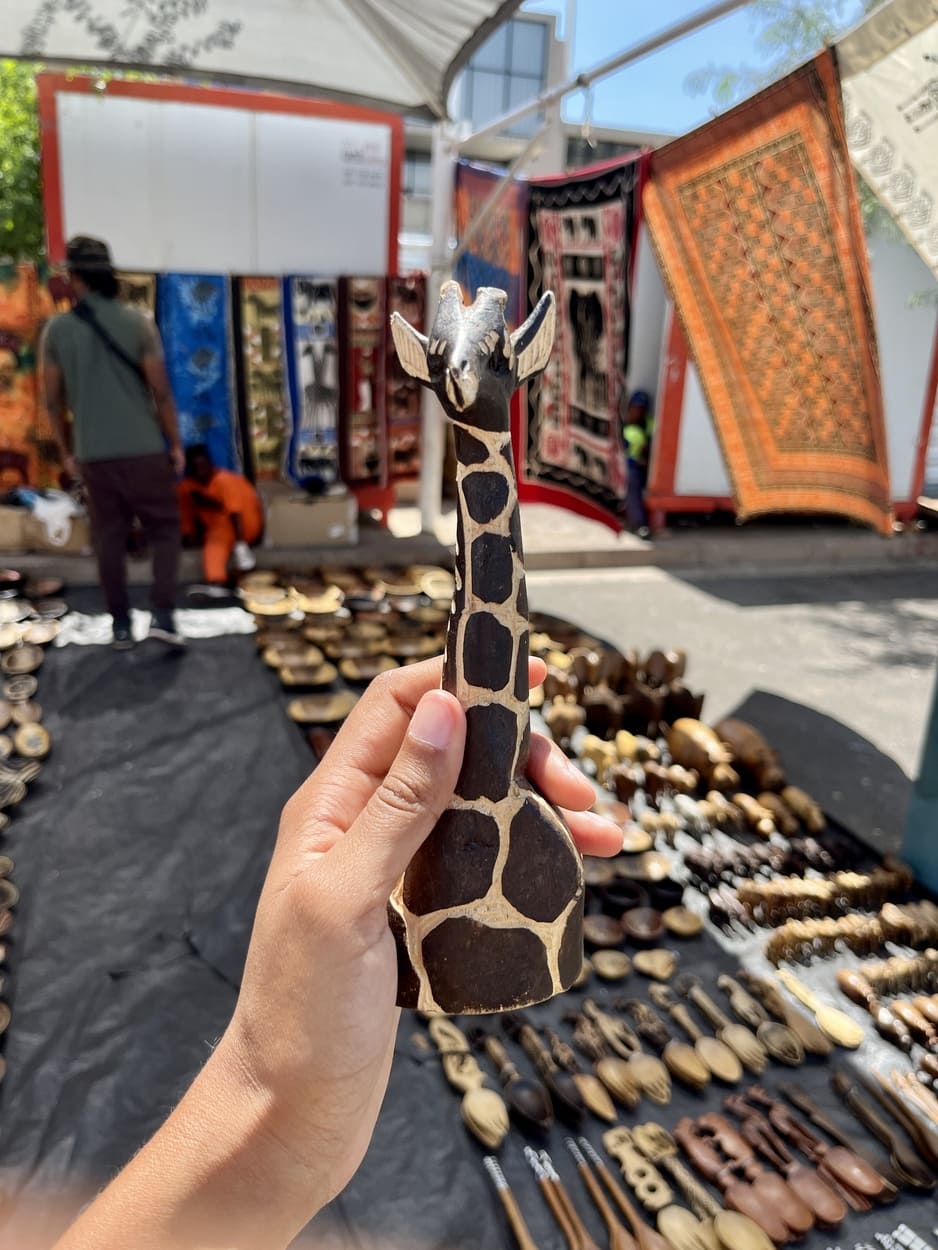
I noticed that at the markets, no one undercut the next person’s sale.
Everyone seemed to look out for each other, which made it feel good to support them.
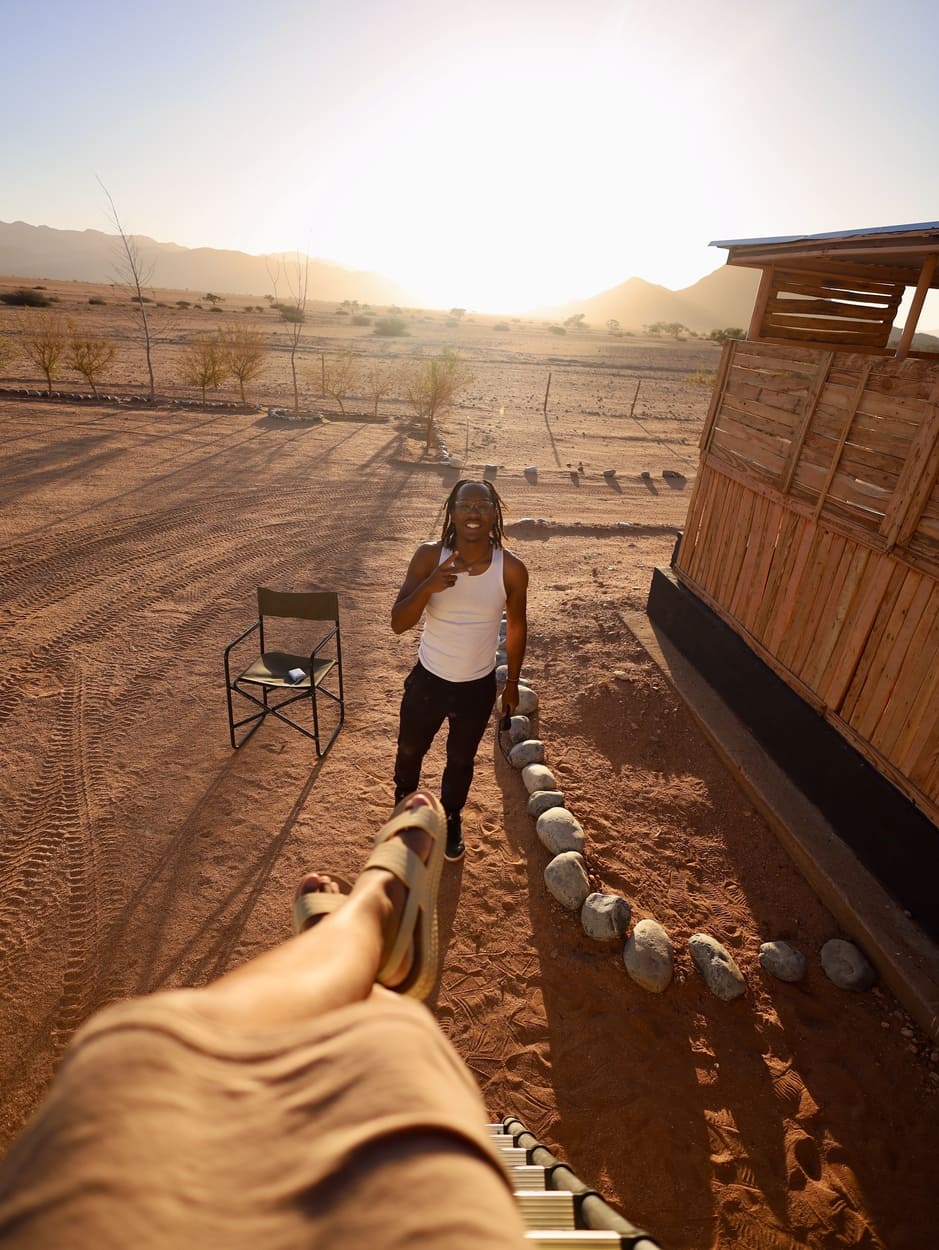
In general, we felt safe pretty much everywhere, but the driving did feel a little more hectic in busier areas like Walvis Bay and Swakopmund.
More cars, more trucks, and people driving faster, so just stay alert and be patient on the roads.
If you feel more comfortable being around other people, you’ll probably feel more at ease in the cities than out in the middle of nowhere.
From our experience, if you’re prepared, Namibia is safe. Even in the places that feel like the middle of nowhere.
In fact, that remoteness is exactly what made me feel calm: no crowds, no chaos, just wide open space and a little trust in the plan we made before we hit the road.
RELATED ARTICLE: How to Spend a Week in Egypt
Should You Go?
If you’ve been wondering whether Namibia is actually safe for a self-drive road trip, I hope this gave you a real look at what it’s like: the roads, the camping, the remoteness, and the unexpected things that make this country so rewarding to explore on your own.
It can feel intimidating before you go.
I felt the same way.
But if you’re prepared and realistic about what to expect, Namibia is one of the safest, calmest road trips you can do in Africa.
For me, the freedom and simplicity of driving ourselves through places that felt completely untouched was what made this trip unforgettable.
So should you go? Absolutely.
Just plan well, go with someone you trust, and enjoy the ride.
And if you want to travel in Namibia the way we did, the Explore Namibia Travel Guide is the exact resource we wish we had before hitting the road.