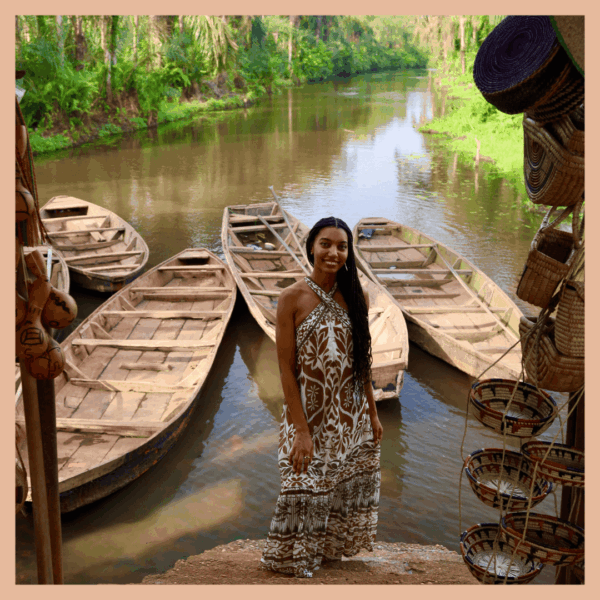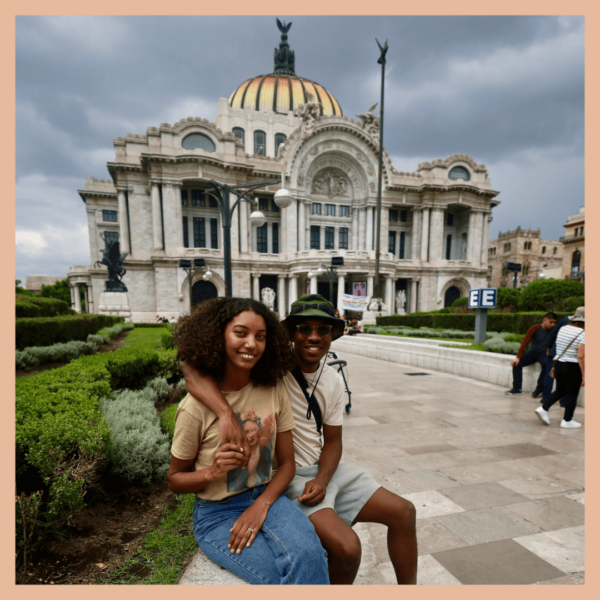
Planning a trip to Salvador da Bahia? Here’s what we spent, where to eat, what to see, and whether this cultural capital is worth visiting.
Disclosure: This post may contain affiliate links, which means we’ll receive a commission if you purchase through our links, at no extra cost to you. Please read full disclosure for more information.
Salvador feels different the moment you arrive.
Not just because it’s hot in November when you’re from New York.
It feels different because of what it represents.
Brazil has the largest population of Africans outside of Africa.
And Salvador da Bahia is often called the “Blackest city in the Americas.”
We came for the beaches, food, and culture.
Below is everything we did, what it cost, where we ate, and what we’d actually recommend, so you can plan your own trip.
First: What It Cost Us to Get There
We didn’t fly straight into Salvador.
We used 25,000 points and $4 USD per person to get to São Paulo from JFK, then paid $84 USD each to fly into Salvador with LATAM.
If you’re using points strategically, Brazil can be surprisingly accessible.
For U.S. travelers, you’ll need a visa.
Ours cost about $80 USD and is valid for 10 years.
It took us one day to get our visas approved, but we still recommend applying early.
Don’t test your luck!
Where We Stayed
We found this Airbnb for $37 USD a night during our time in Salvador (November 2025).
It wasn’t exactly beachfront, but the win was stepping outside (crossing the street) and being at Praia do Rio Vermelho in seconds.
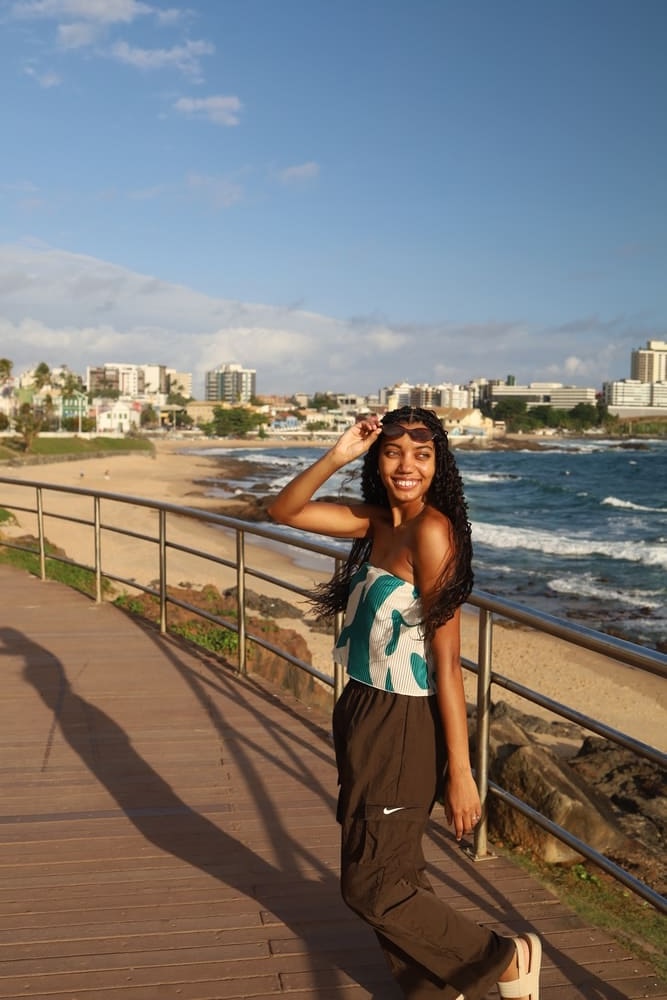
Quiet. Low-key. Local.
If you want to stay somewhere that feels removed from chaos but still connected, that area worked really well for us.
Uber from the airport? Around $9–10 USD.
Local rides? Sometimes only around $3 USD.
Salvador is very manageable cost-wise.
Sunset in Salvador Is a Whole Event
If you only have one evening in Salvador, go to Farol da Barra.
Not because it’s the most photographed lighthouse in the city, but because the energy builds in a way that’s hard to manufacture.
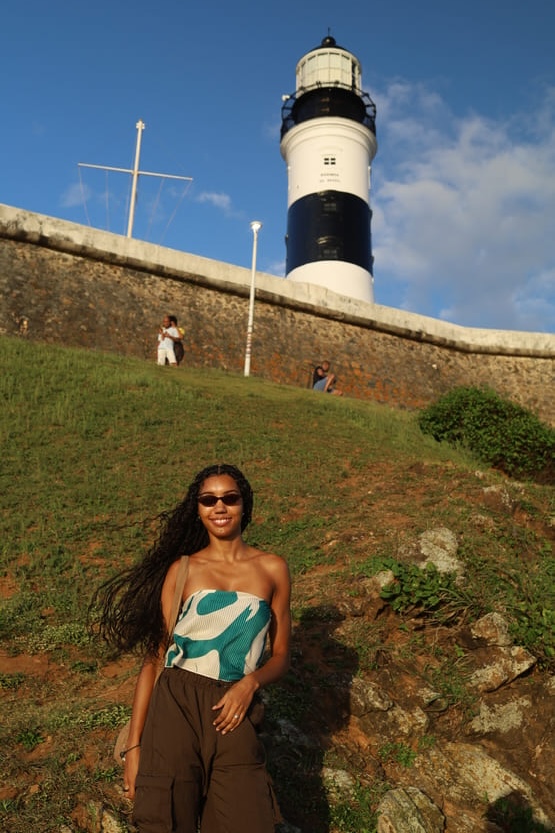
People start lining the rocks before the sun even drops.
There’s sound, movement, and conversation.
Vendors are around selling caipirinhas and hot snacks, and there’s this steady sound of waves hitting the shore in front of you.
Brazil still ranks among the best sunsets (and sunrises!) we’ve seen.
And that’s 60+ countries later.
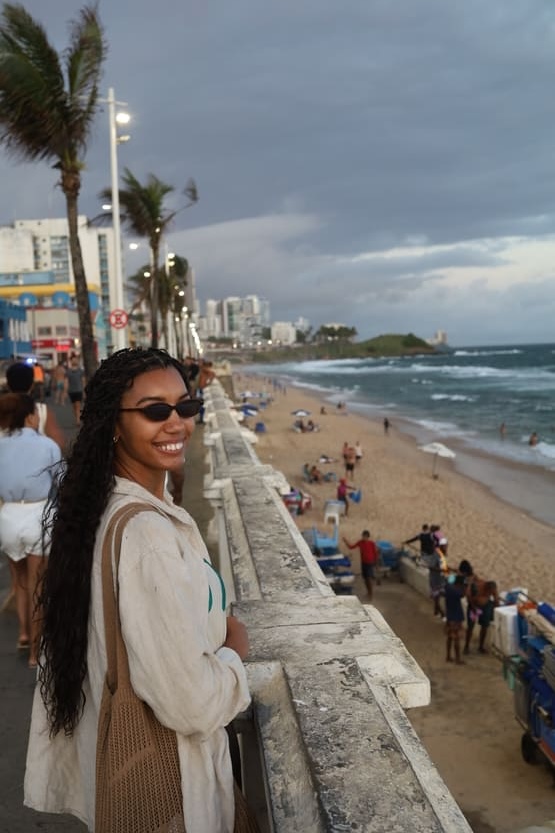
If you want a different perspective, Morro do Cristo is about a 10-minute walk away.
Barra feels communal, where Morro feels more observational.
Both are worth your time, but if it’s your first night, I’d start at Barra.
Planning Rio too? Here’s what sunrise at Dona Marta is really like.
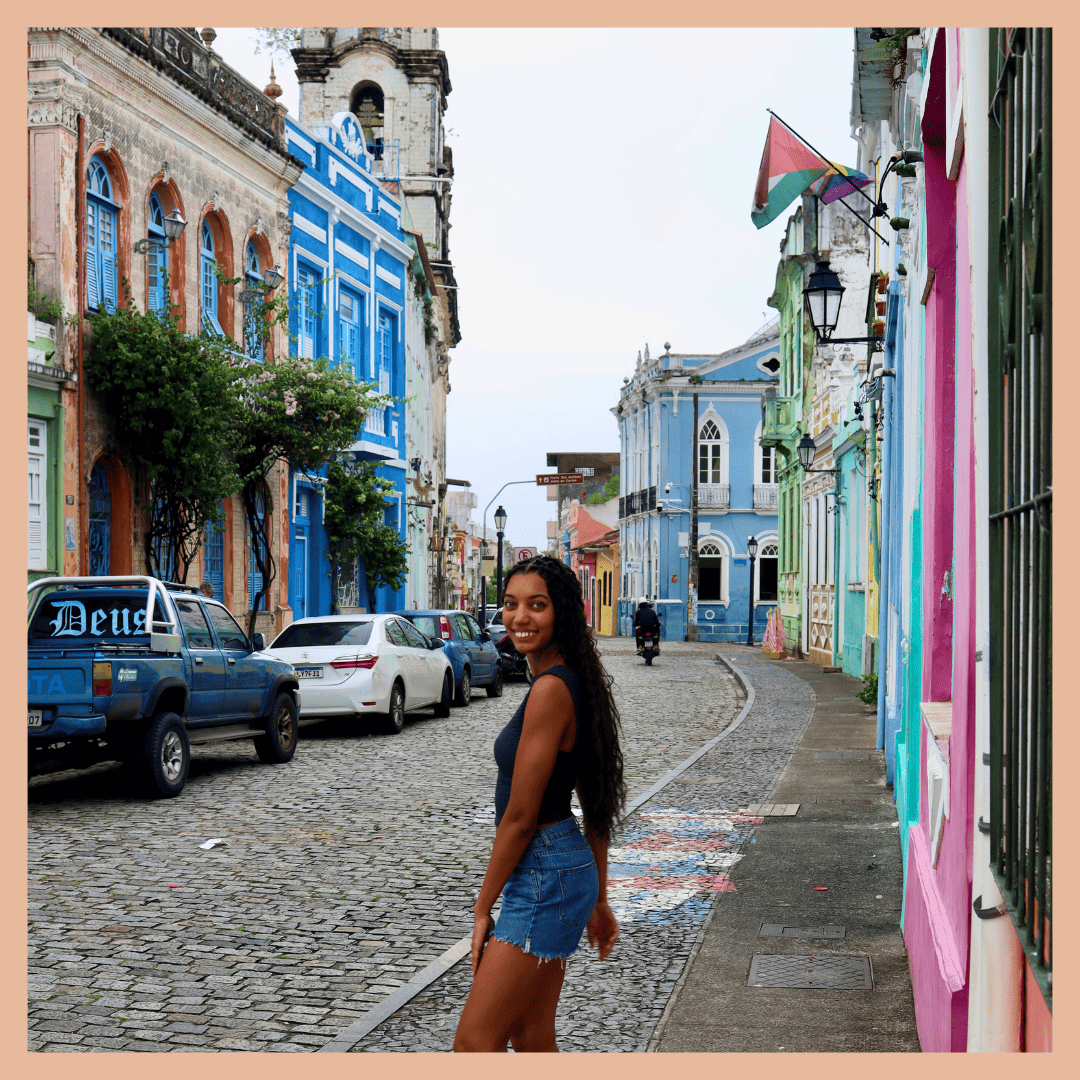
Pelourinho
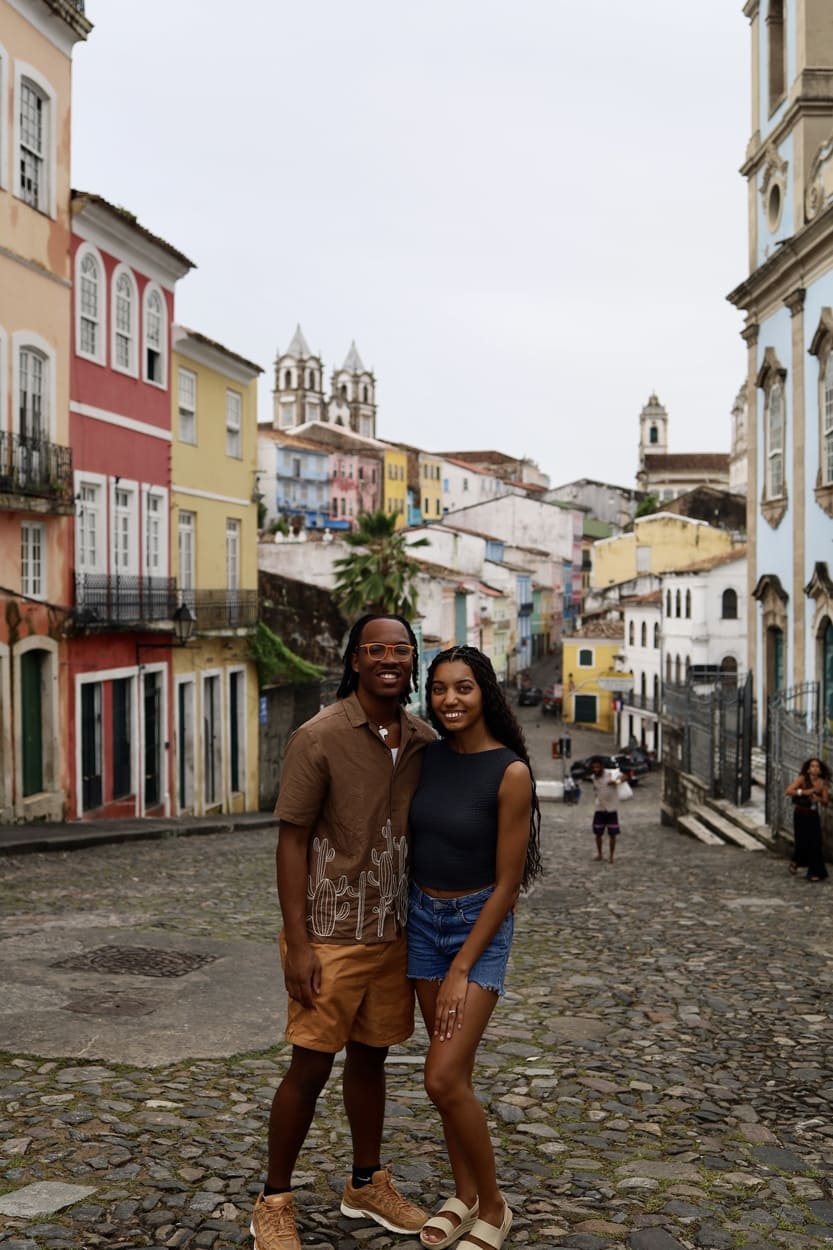
Pelourinho is colorful, musical, and easy to photograph.
The buildings are painted in pastels, drum circles echo through the streets, and there’s movement everywhere.
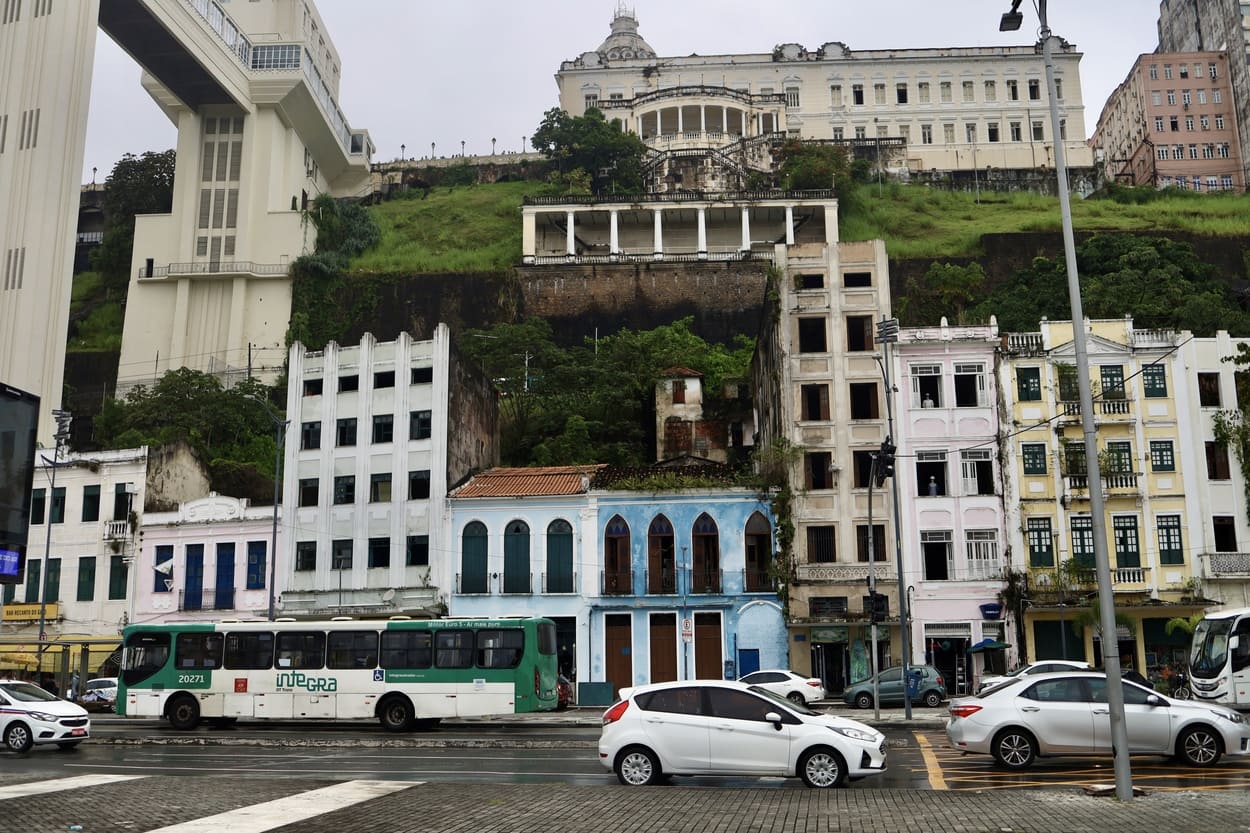
The name translates to “whipping post.”
This was once the site where enslaved Africans were publicly punished, and that history is part of the foundation of the neighborhood.
It isn’t hidden. It’s acknowledged.
Now, you’ll find art, churches, Afro-Brazilian culture, and constant energy in the square.
It’s also where Michael Jackson filmed “They Don’t Care About Us,” which adds another layer to its cultural significance.
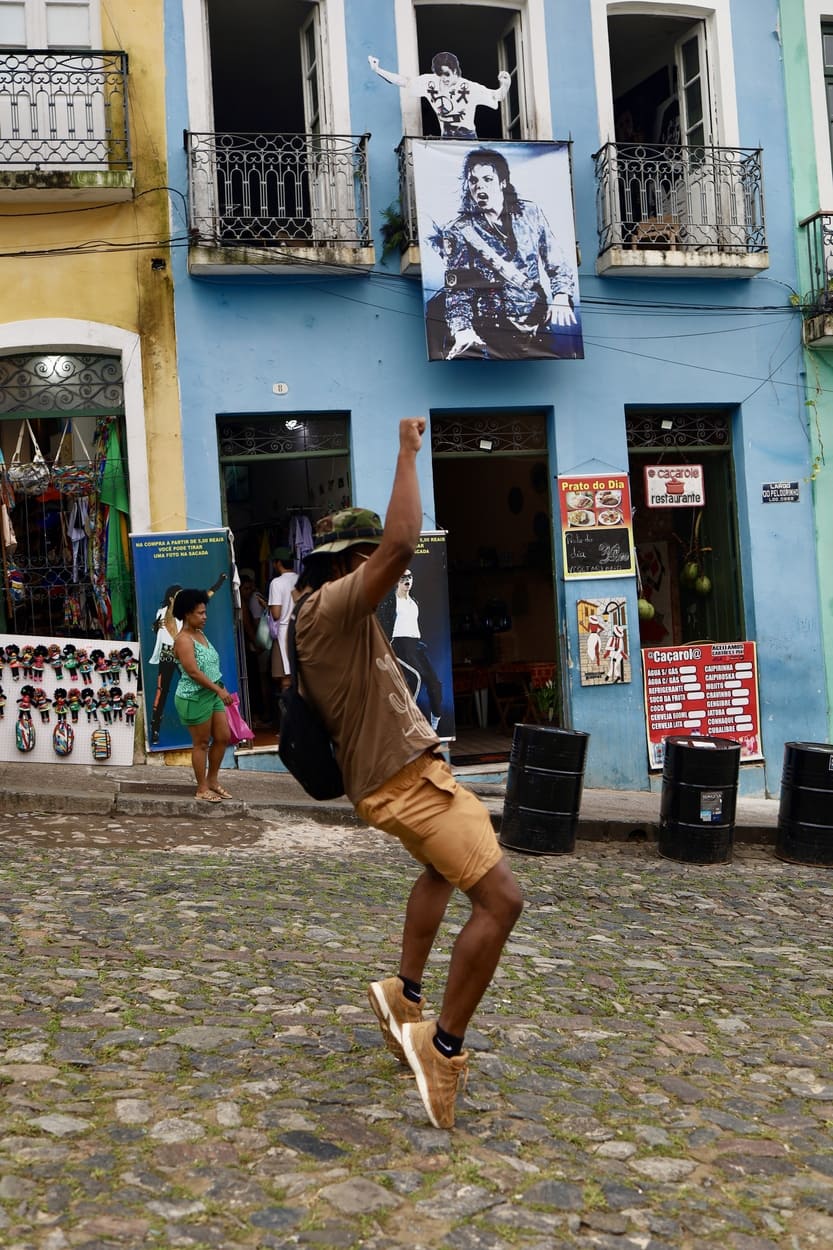
If you only have time for one neighborhood in Salvador, this is it.
Come during the day to explore, and return in the evening if you want more energy.
Wear comfortable shoes, though.
The hills and cobblestones will humble you!
What to Eat in Salvador
Salvador’s food reflects its Afro-Brazilian roots — palm oil, coconut milk, seafood.
You have to try moqueca here, but get a good one.
The version we had at a spot featured on Netflix’s Street Food (Ré Restaurante Dona Suzana) was leagues above the first one we tried.
Creamy, rich, layered stew.
Big enough for two.
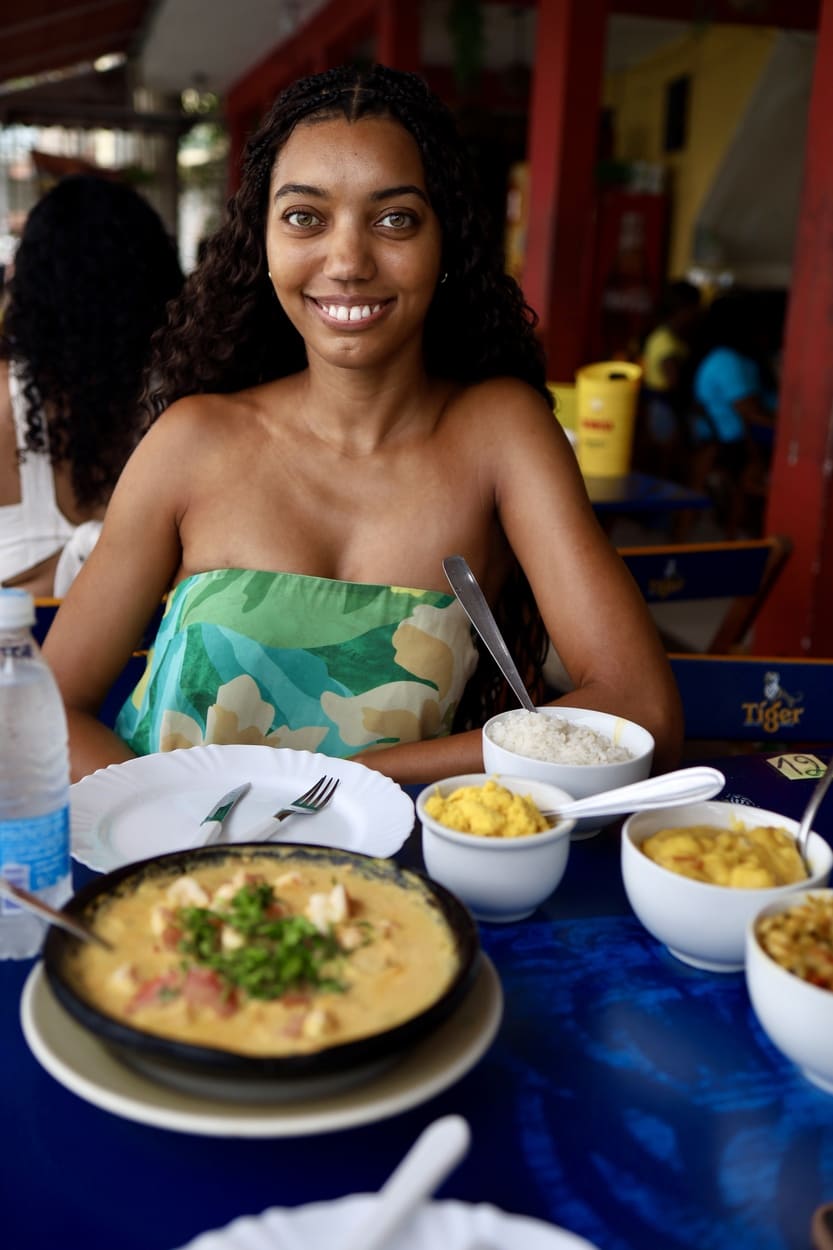
Acarajé is the classic street food.
Deep-fried black-eyed pea fritters stuffed with shrimp.
And actually, one of my favorite meals was at a vegan restaurant in Pelourinho.
Coconut rice, jackfruit, vegetables, nutty, savory.
Salvador doesn’t box itself into one identity.
Coffee lovers, Brazil is the world’s largest producer.
We had some of the smoothest cappuccinos here, and pão de queijo never disappoints.
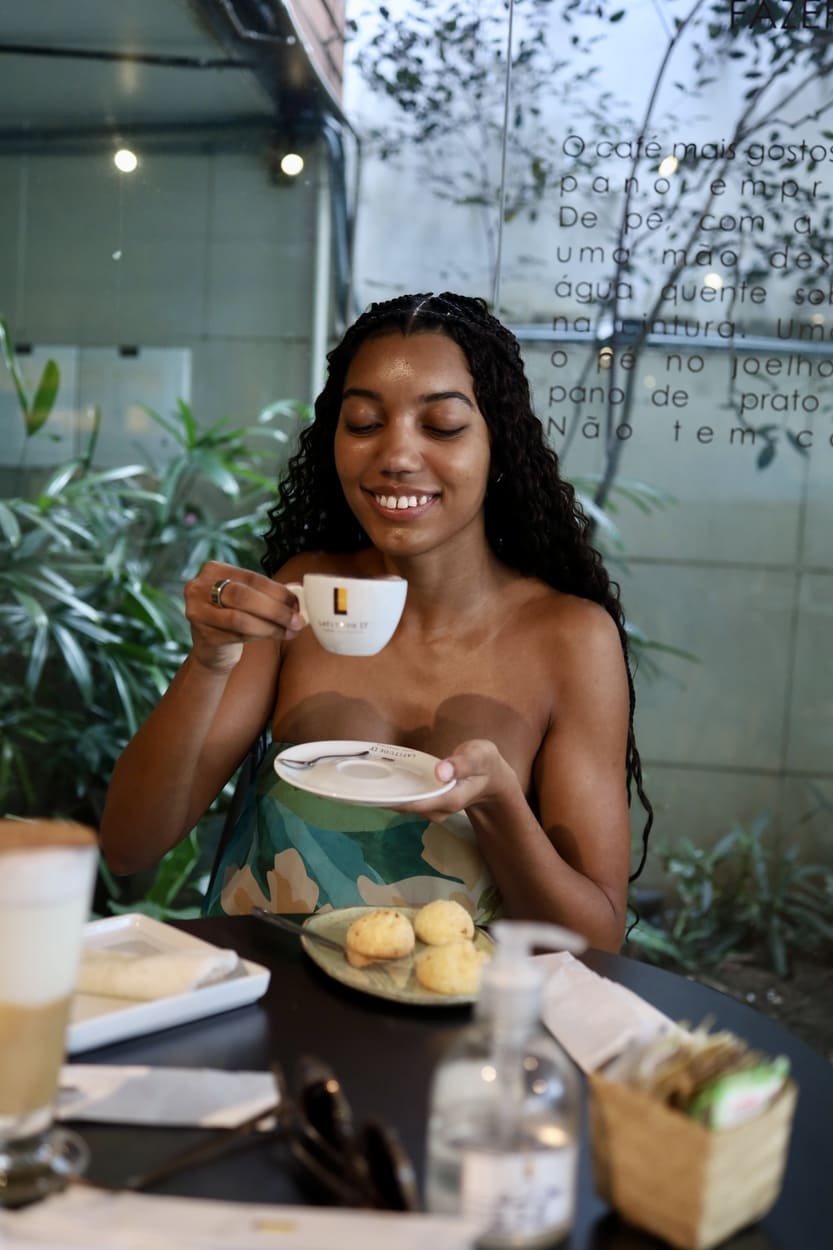
If you’re exploring Salvador over a few days, moqueca is the dish to sit down for properly.
Acarajé is quick and classic.
And good coffee fits anywhere into the day.
That combination gives you a real sense of Bahia.
A Few Things You Should Know Before You Go
English is not widely spoken.
Portuguese only, so download a translator app.
Or better yet, learn some Portuguese! Babbel is how we prefer learning new languages.
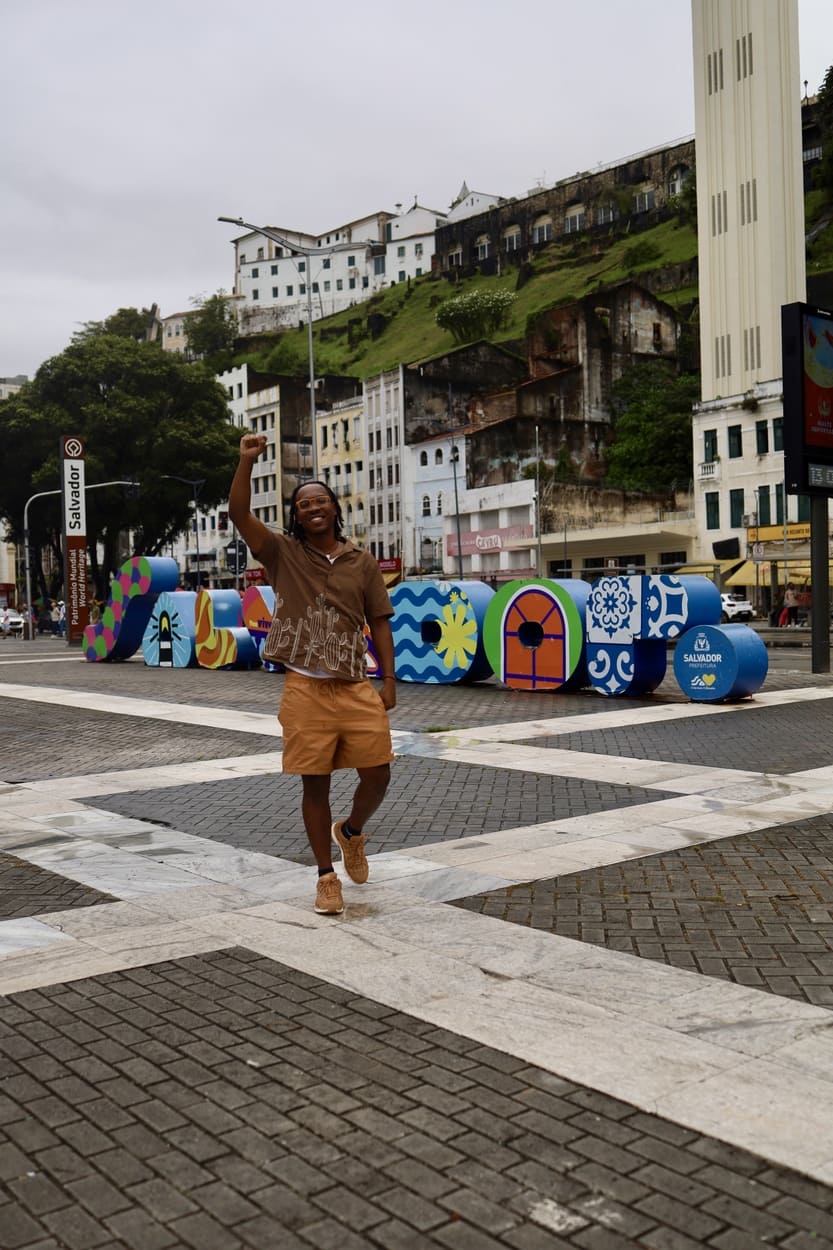
Salvador was Brazil’s first capital, and you’ll feel that age in the architecture.
It reminds us a bit of Havana, but with modern cars.
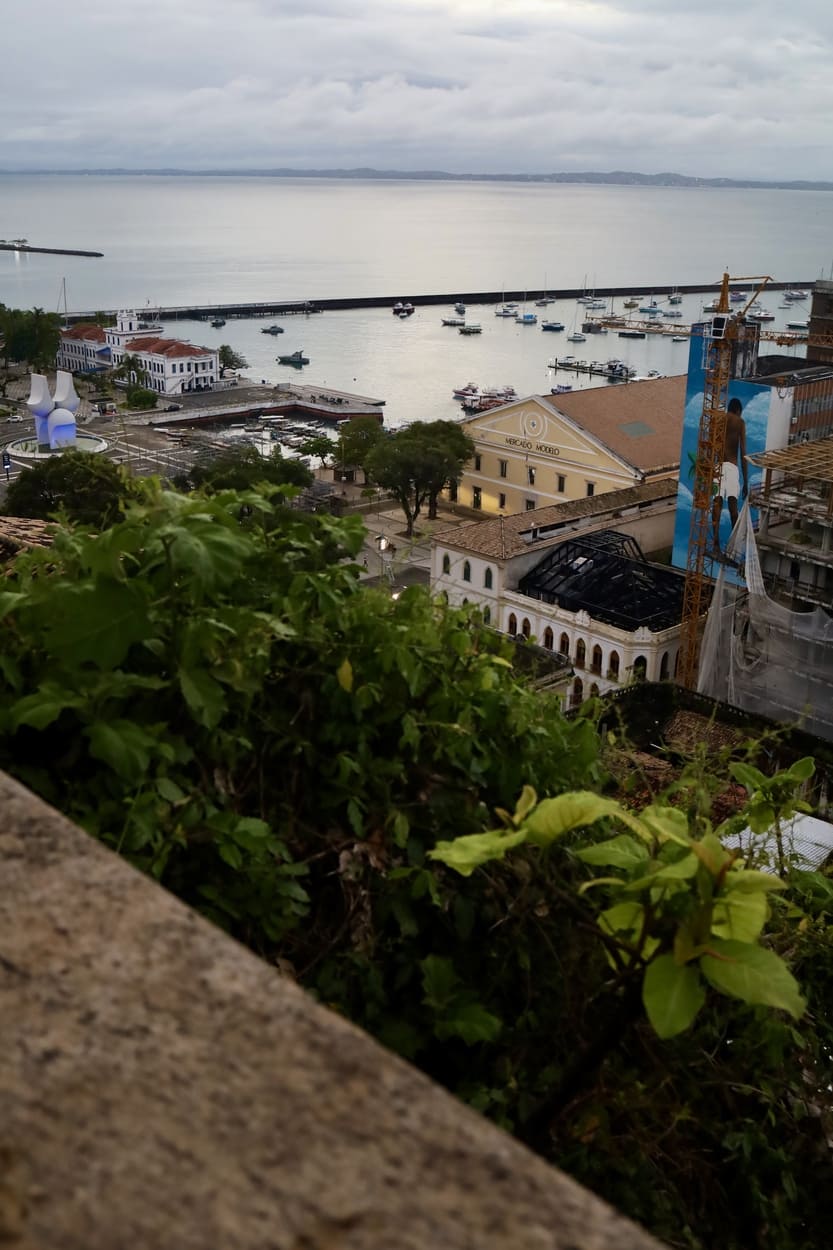
Markets like Mercado Modelo are great for souvenirs, but check multiple floors before buying. Prices shift.
The elevators connecting the upper and lower city are practical and kind of cool.
They save your legs, and you’ll want that energy for walking Pelourinho.
FAQ
Is Salvador safe for tourists?
We saw strong police presence in major areas like Pelourinho. As with most cities, stay aware and avoid isolated areas at night.
How many days do you need in Salvador?
2–3 days is a good introduction. More if you want beach days and deeper cultural exploration.
What is Salvador known for?
Afro-Brazilian culture, moqueca, colorful colonial architecture, and historic significance as Brazil’s first capital.
So… Is Salvador Worth Visiting?
Yes.
Salvador gives you culture you can feel, history that’s impossible to ignore, and food that reflects exactly where you are.
The beaches are beautiful, but they’re only part of the experience.
If you’re building out a Brazil itinerary and want more than just Rio, Salvador earns its spot.