Porto-Novo is quiet on purpose. If you like trips that teach you something, put this day on your Benin itinerary.
Disclosure: This post may contain affiliate links, which means we’ll receive a commission if you purchase through our links, at no extra cost to you. Please read full disclosure for more information.
Porto-Novo is Benin’s official capital, but you won’t feel that in the way most people expect.
It’s not a skyline city. It doesn’t have “capital energy.”
It’s calmer than Cotonou, slower on the surface, and full of history that doesn’t jump out until someone points it out.
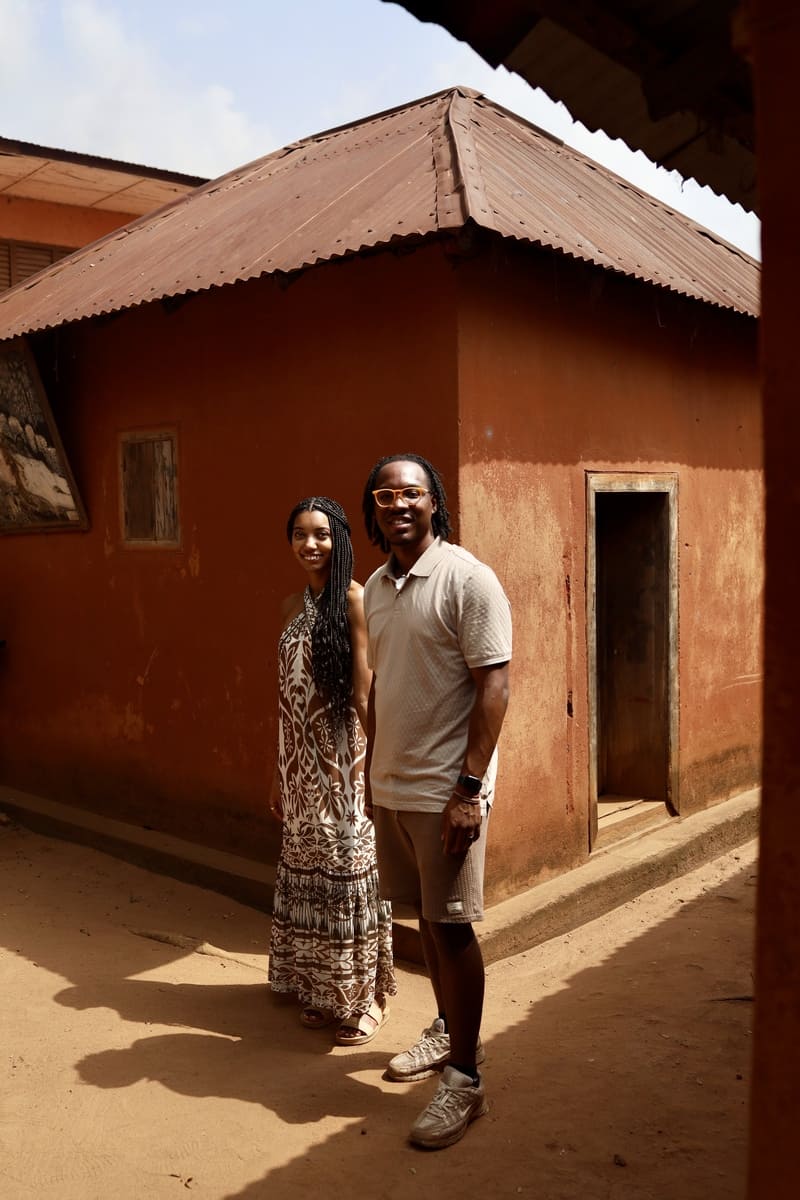
We spent the day moving through Porto-Novo with Adebayo as our driver from Letouriste.bj and Mauriac, founder of BENINOW, and if you’re planning a Benin trip, this is what I’d want you to know before you go.
Before diving into Porto-Novo specifically, you may want to read our full breakdown of what traveling through Benin actually looks like.
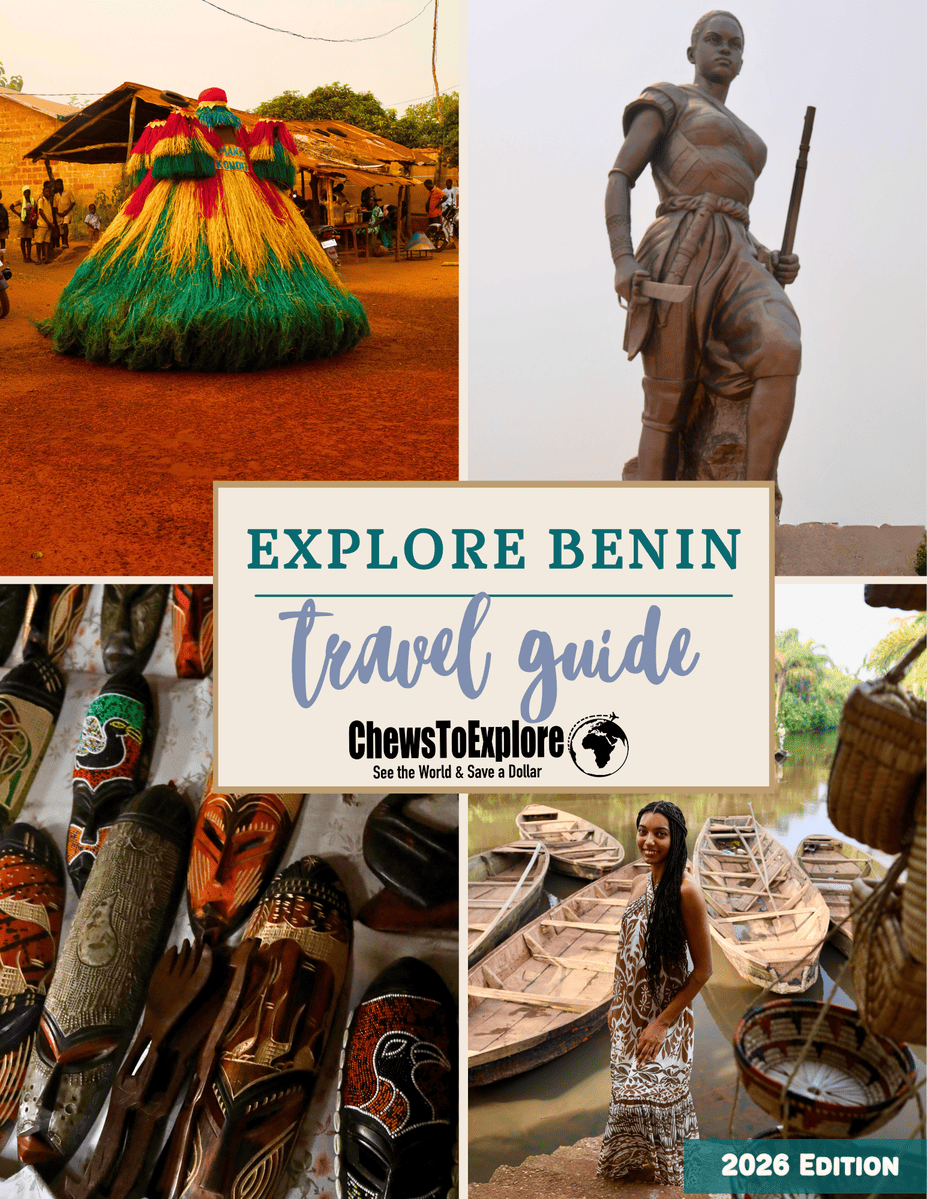
And if you’re building your itinerary right now, our “Explore Benin Travel Guide” has the full route, timing, and logistics laid out step-by-step.
Honmè Palace
Our day started at the Royal Palace of Honmè, once home to King Toffa, and now a museum.
Honmè roughly translates to “many doors,” and you understand why as soon as you step inside.
There are doors everywhere.
These doors weren’t designed for convenience, but truly for hierarchy.
The king entered through tall, wide doors.
Everyone else used smaller ones.
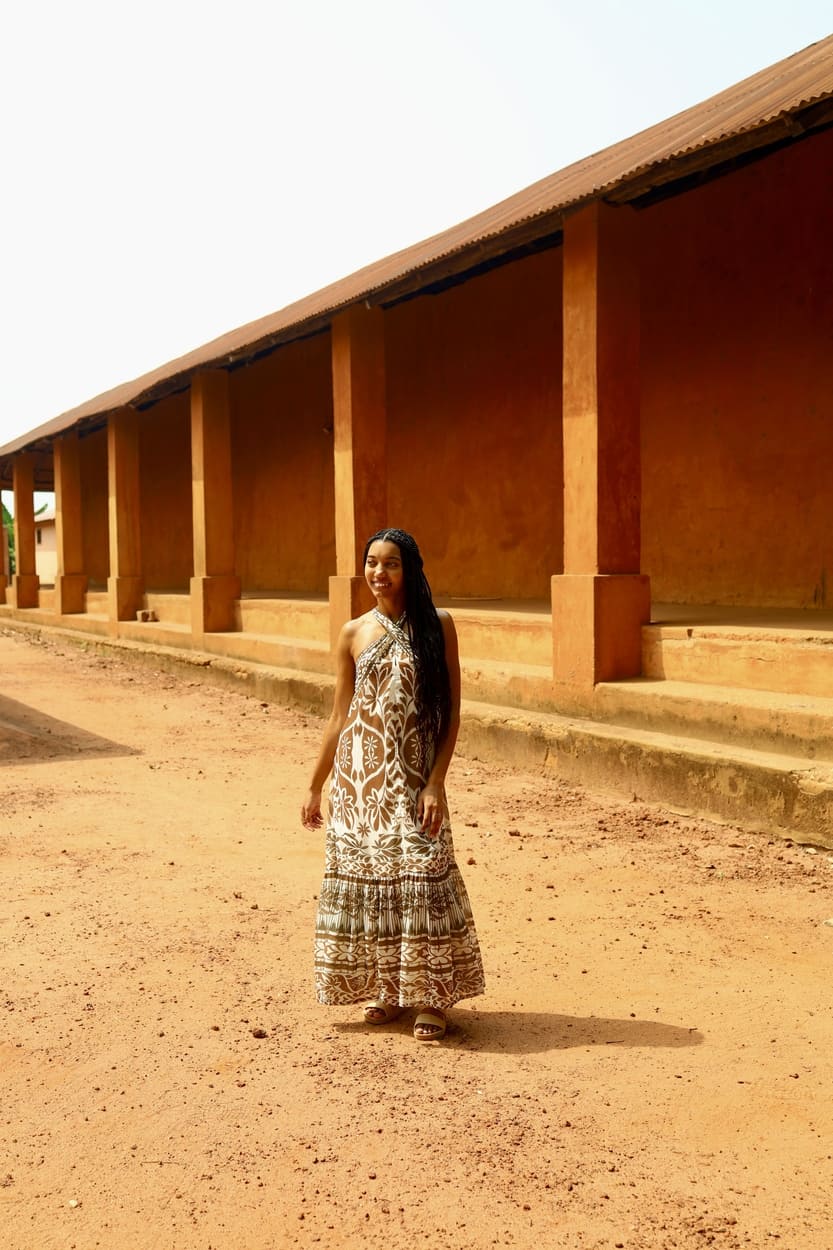
So even as a visitor today, you find yourself ducking over and over again as you move through the palace.
Filming isn’t allowed inside, but you can take photos outside.
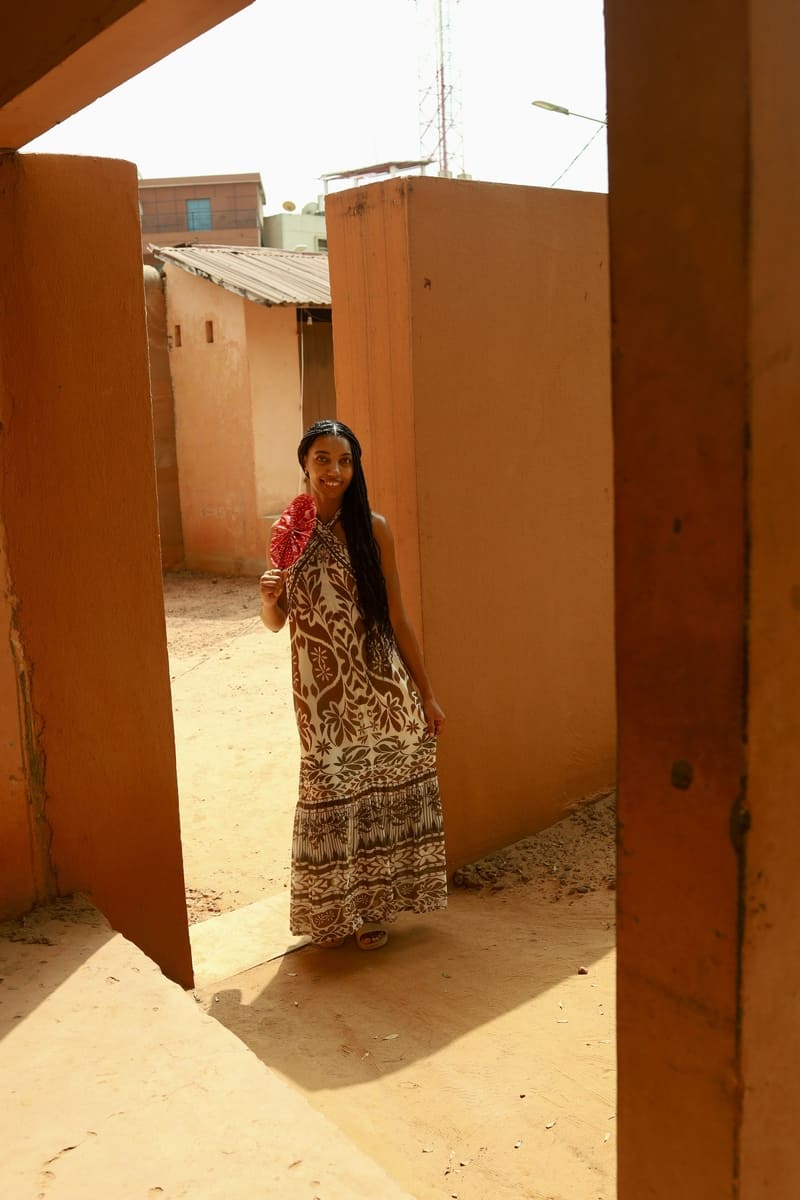
There’s usually a vendor nearby selling handmade goods.
I picked up a simple fan there and it ended up being the MVP of my day because Porto-Novo does not play about heat.
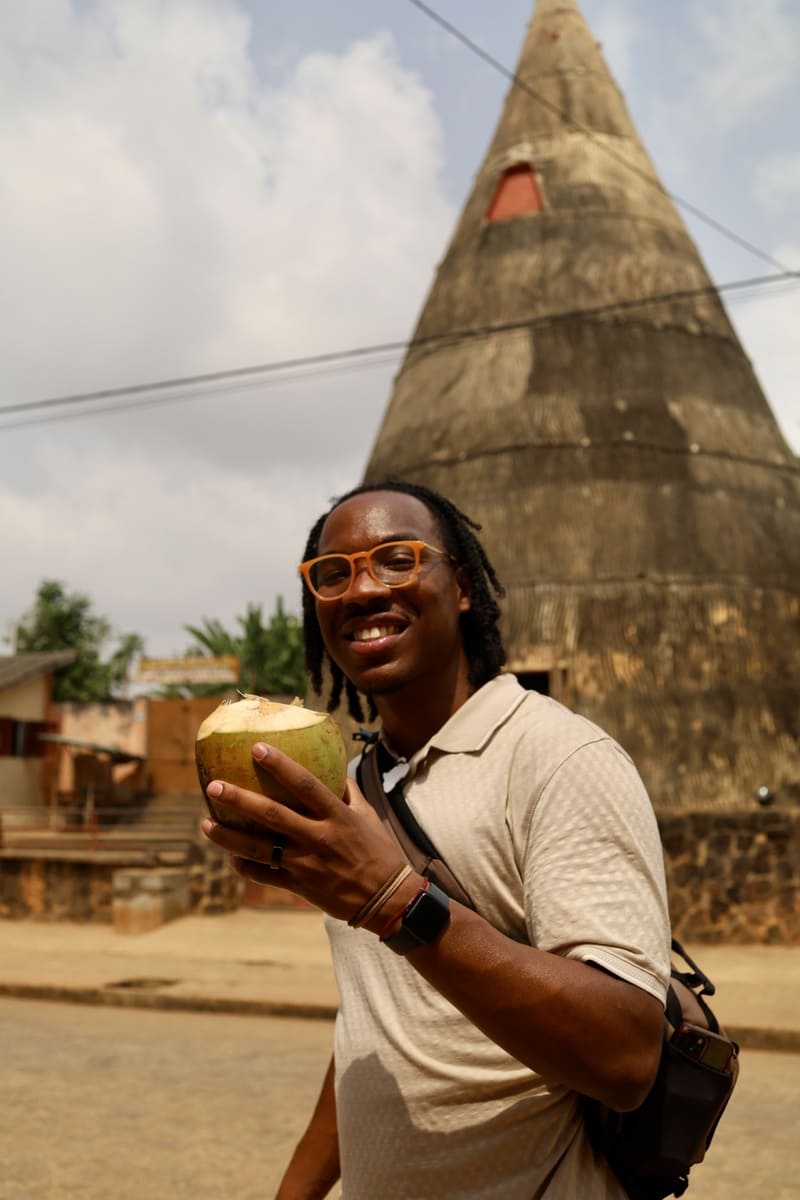
Right across the street is a Zangbeto temple. It’s not a place tourists walk into, though.
We viewed it from the outside, bought a coconut from a local, and kept it moving.
The Pantheon (and the Names You’ll Be Thinking About After)
The Panthéon Negro Et Africain De Porto Novo was one of the most informative stops of the day.
It’s one of those places where you walk in expecting something small, and then you realize it’s giving you a diaspora-wide history lesson in one room.
Our local guide walked us through leaders from Benin and across the African diaspora, and it wasn’t framed as distant history either.
It felt connected to everything we’d already been learning throughout the trip.
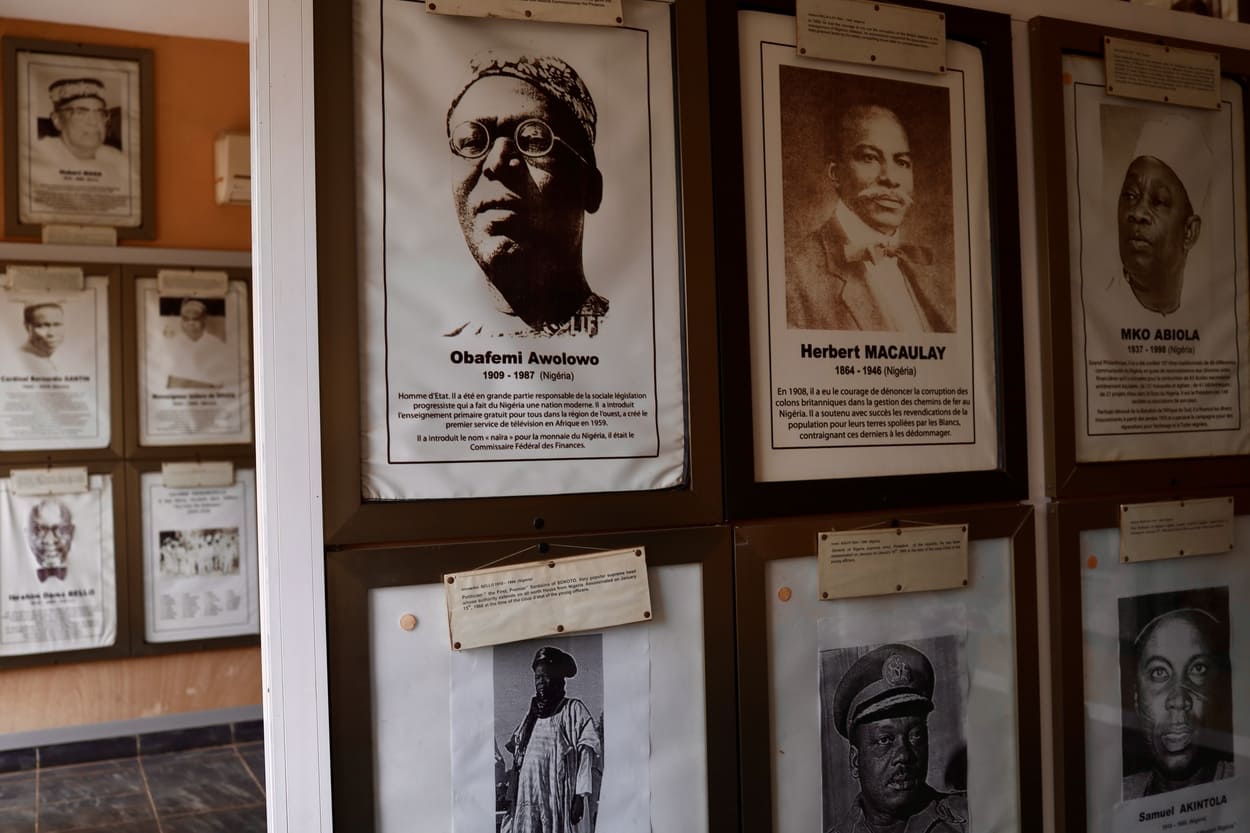
A few names that stood out:
King Béhanzin
Even if you didn’t know his name before Benin, you’ll start hearing it quickly. His legacy is tied to resistance, power, and the way spirituality and leadership have always been intertwined in Dahomey’s story.
King Toffa
Toffa collaborated with the French and is still recognized as a king today. Whether people agree with his choices or not, his influence is undeniable. He was one of the most powerful figures in Porto-Novo’s history.
Cardinal Bernardin Gantin
A major religious figure from Benin whose influence reached far beyond the country.
Sylvanus Olympio
The first president of Togo, who pushed for a unified African currency. His story gets heavy quickly.
Léopold Sédar Senghor
The first African to teach French in France, and later the first president of Senegal.
Yaa Asantewaa
A military leader in Ghana and one of the earliest women to lead armed resistance against colonial rule.
Amadou Hampâté Bâ
Known for the quote, “In Africa, when an elder dies, a library burns.” It hit differently hearing it here, in a place that clearly values memory as responsibility.
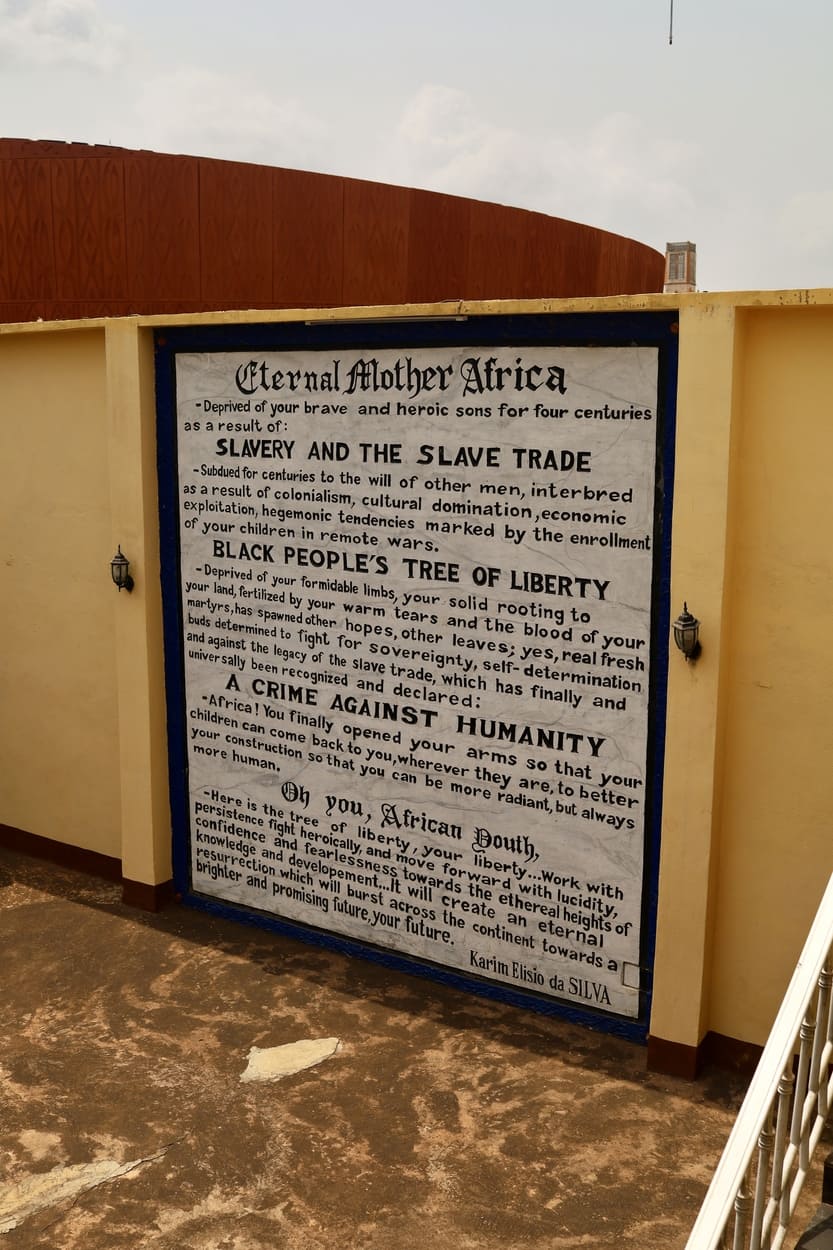
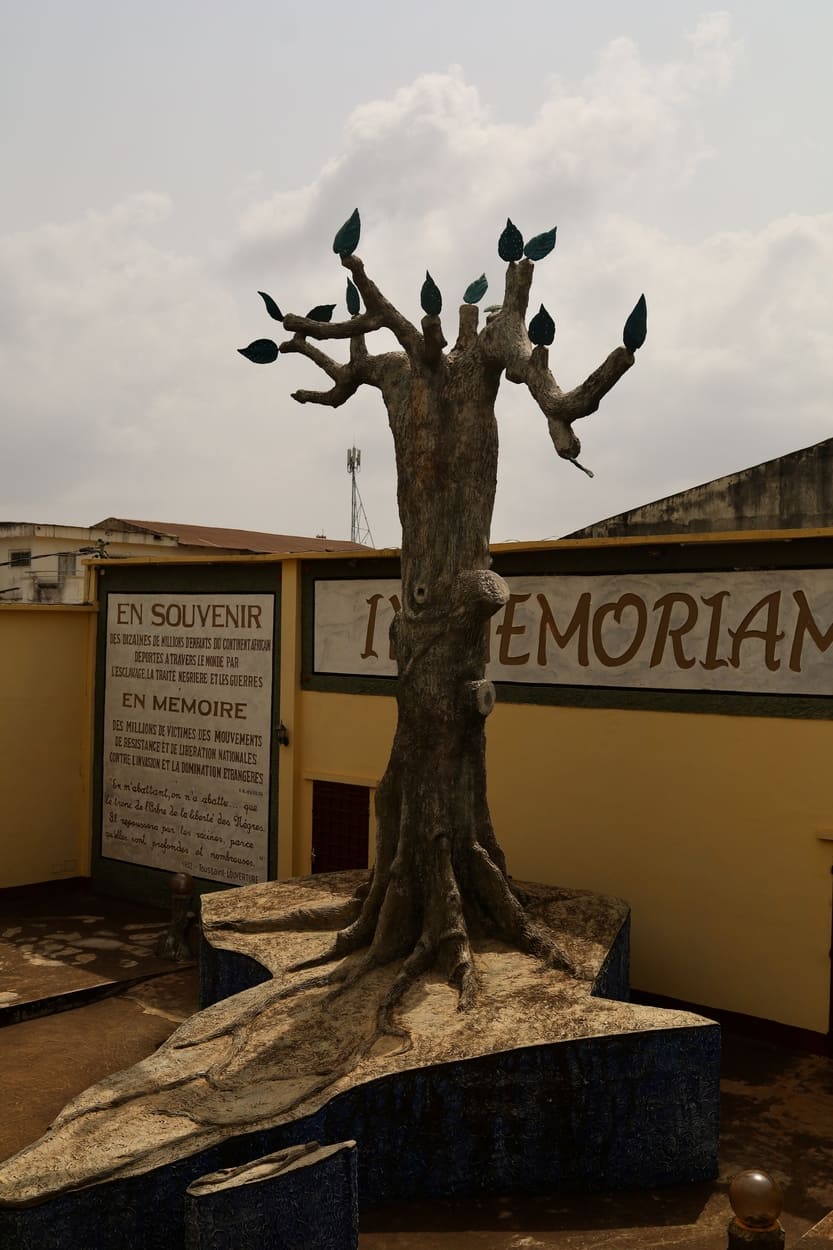
Outside the Pantheon, there’s a large tree monument shaped over the African continent.
Its branches are cut back, intentionally.
It represents everything that’s tried to break Africa apart over time, slavery, oppression, political violence, all of it.
But the roots are still strong.
The Black River Boat Ride
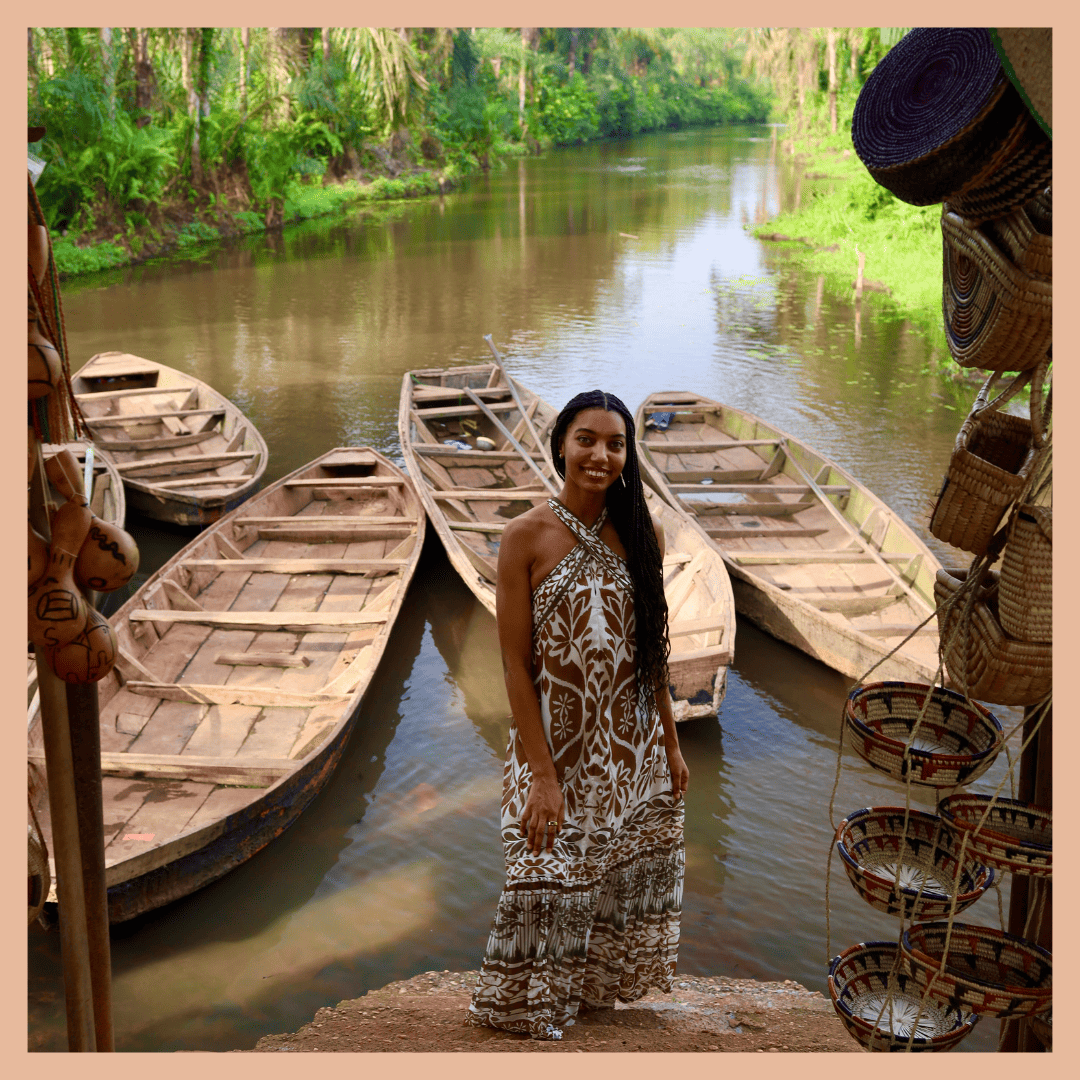
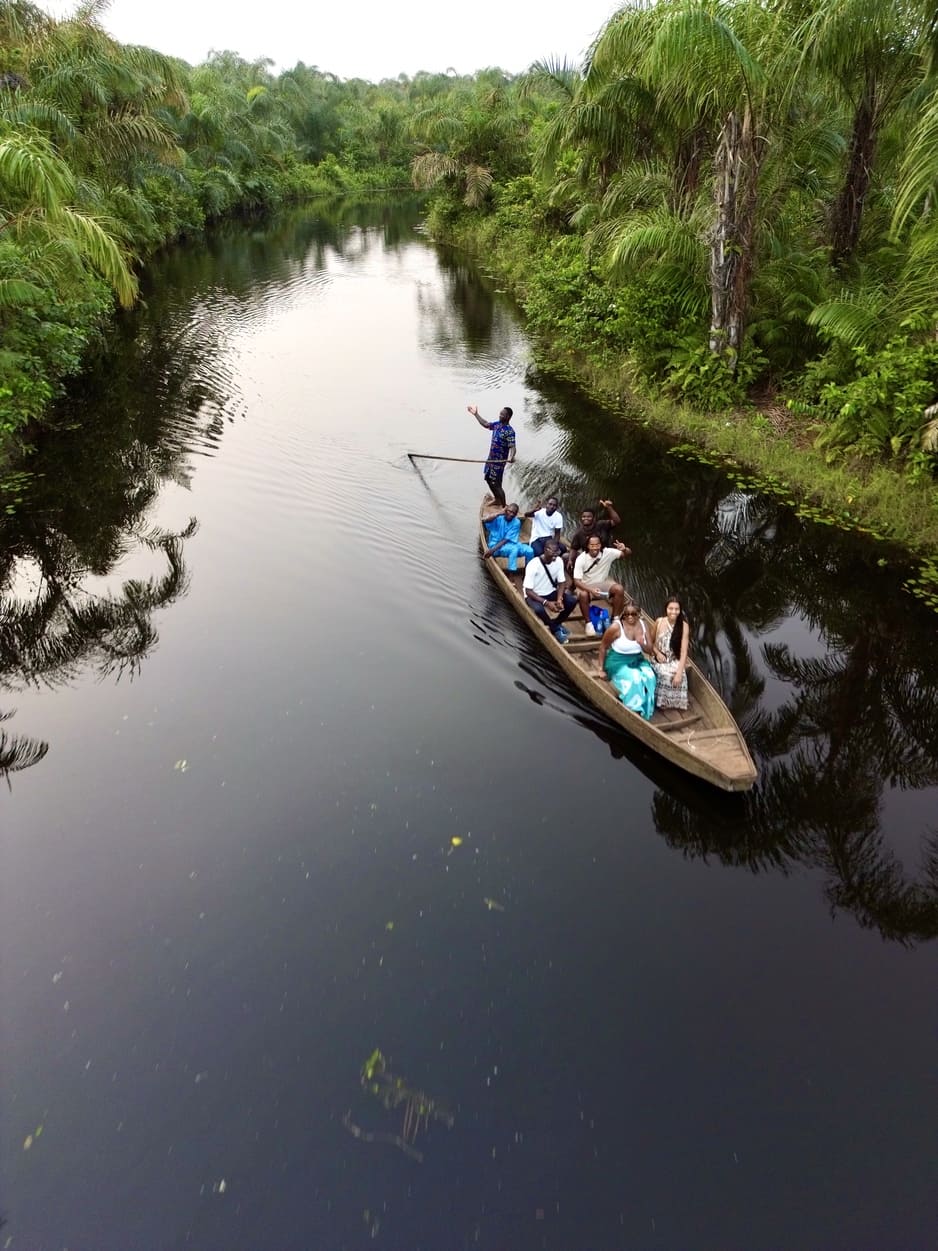
Later in the day, we boarded a wooden boat and started moving along the Black River.
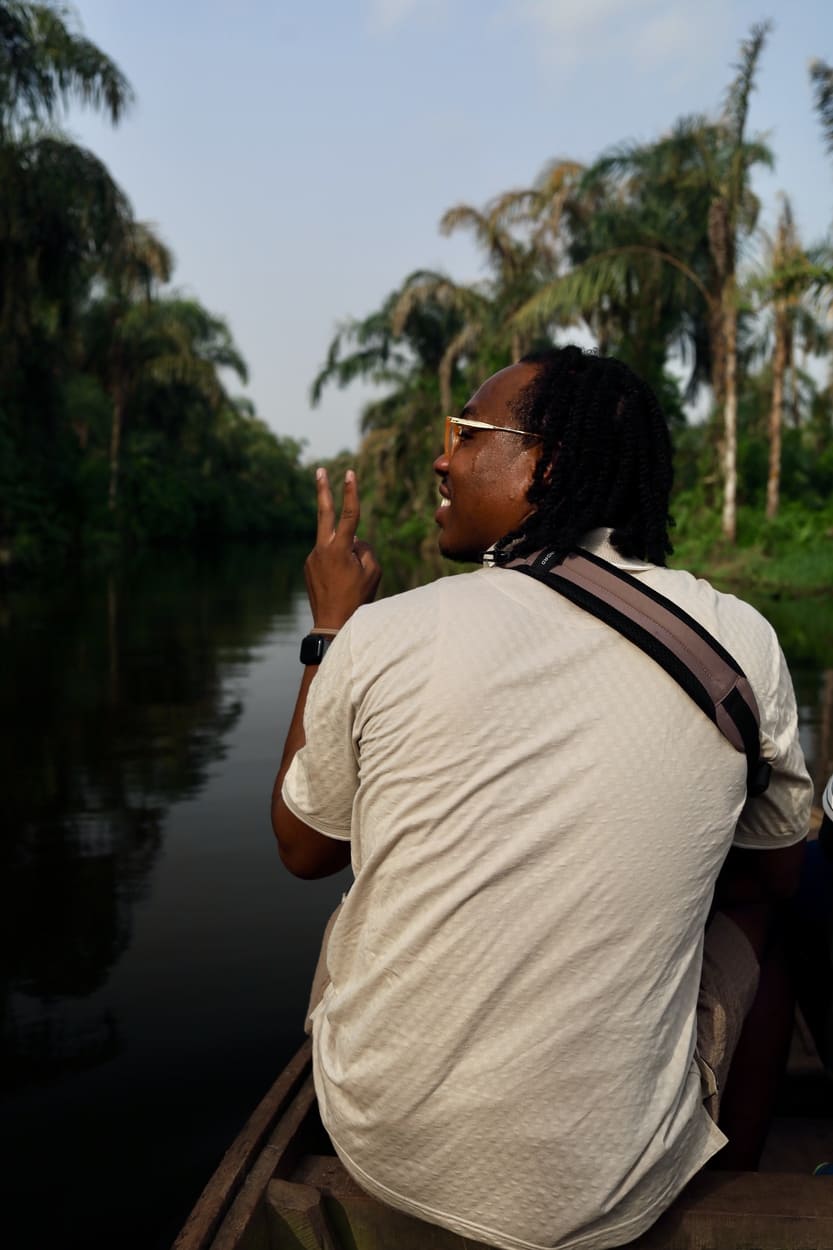
And yes, it’s actually black. Not dirty, not murky. Just dark water that stays clear.
We floated through slowly while learning about the river’s significance and the spiritual meaning it holds for surrounding communities.
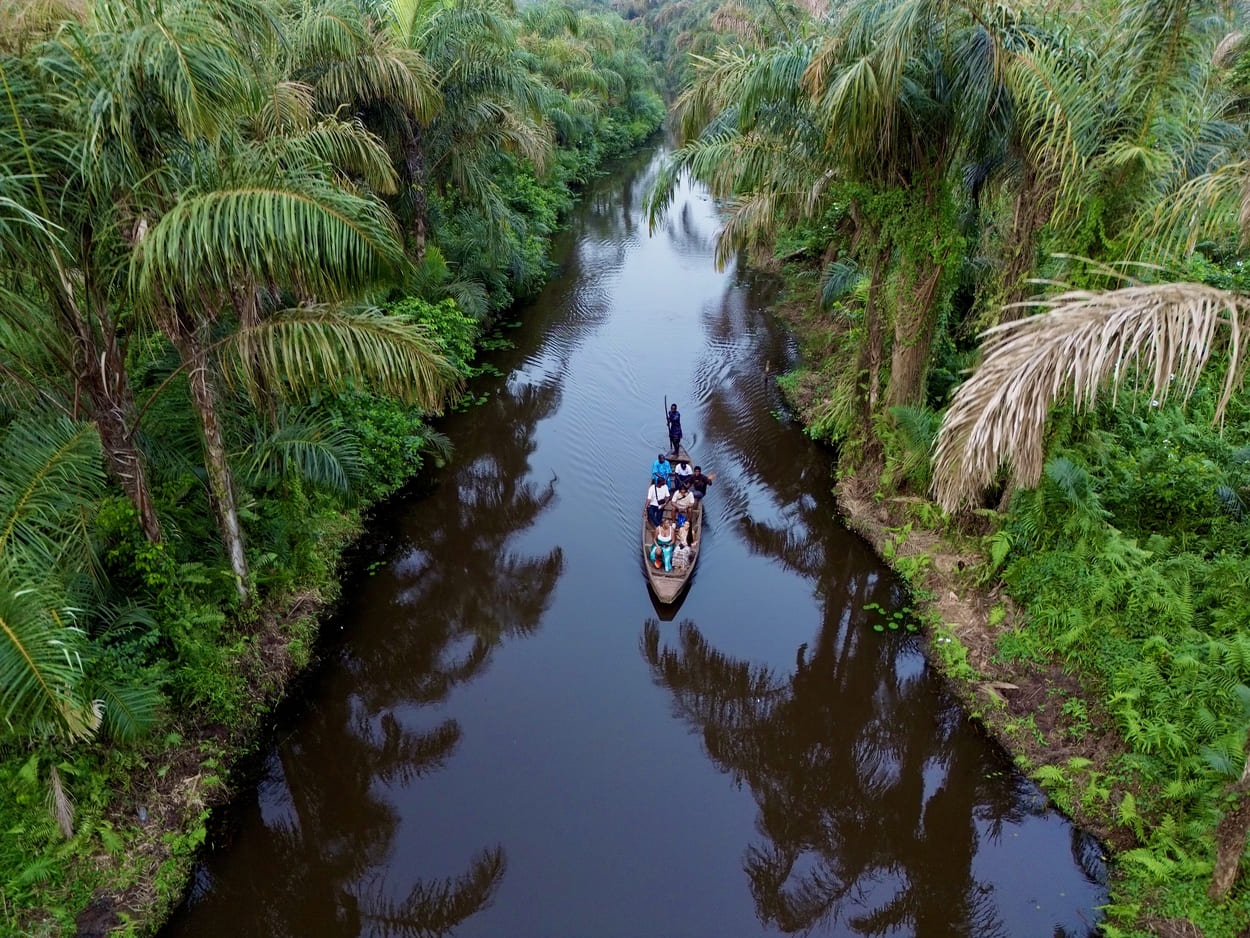
The whole experience felt quiet.
Nobody was rushing us. Nobody was forcing a moment. It was just… calm.
On the other side, we explored a village and got a glimpse into everyday crafts, including pottery-making and basket weaving.
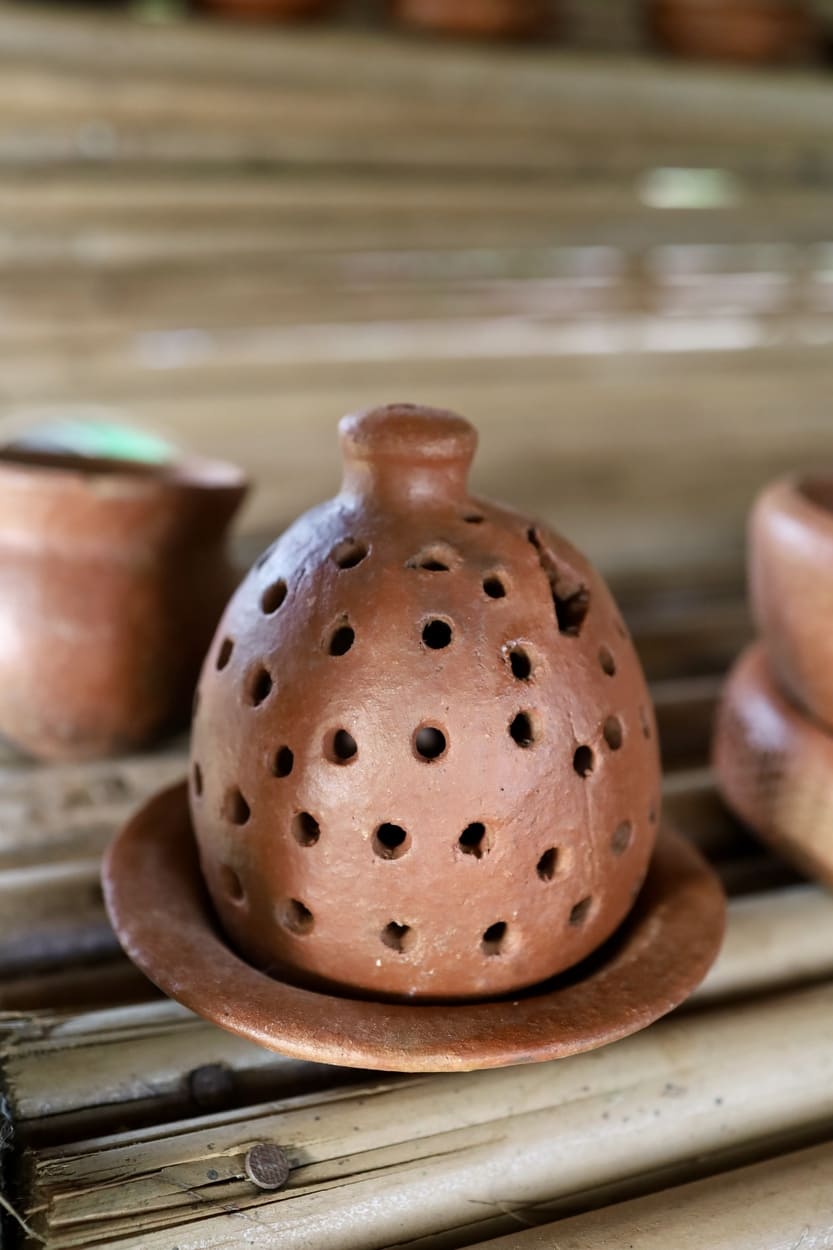
It felt simple and local in the best way.
Then we got back on the boat and rode back the same way we came.
RELATED ARTICLE: Ganvié, Benin: Visiting a Village Built Entirely on Water
Grand Mosque of Porto Novo
One major stop we didn’t get to (time ran out) is the Grand Mosque of Porto-Novo.
It’s one of the city’s most recognizable landmarks and the architecture is the kind that makes you do a double-take.
I saw it as an exhibit photo in a museum in Ouidah, and even as “a picture of a picture,” it stood out.
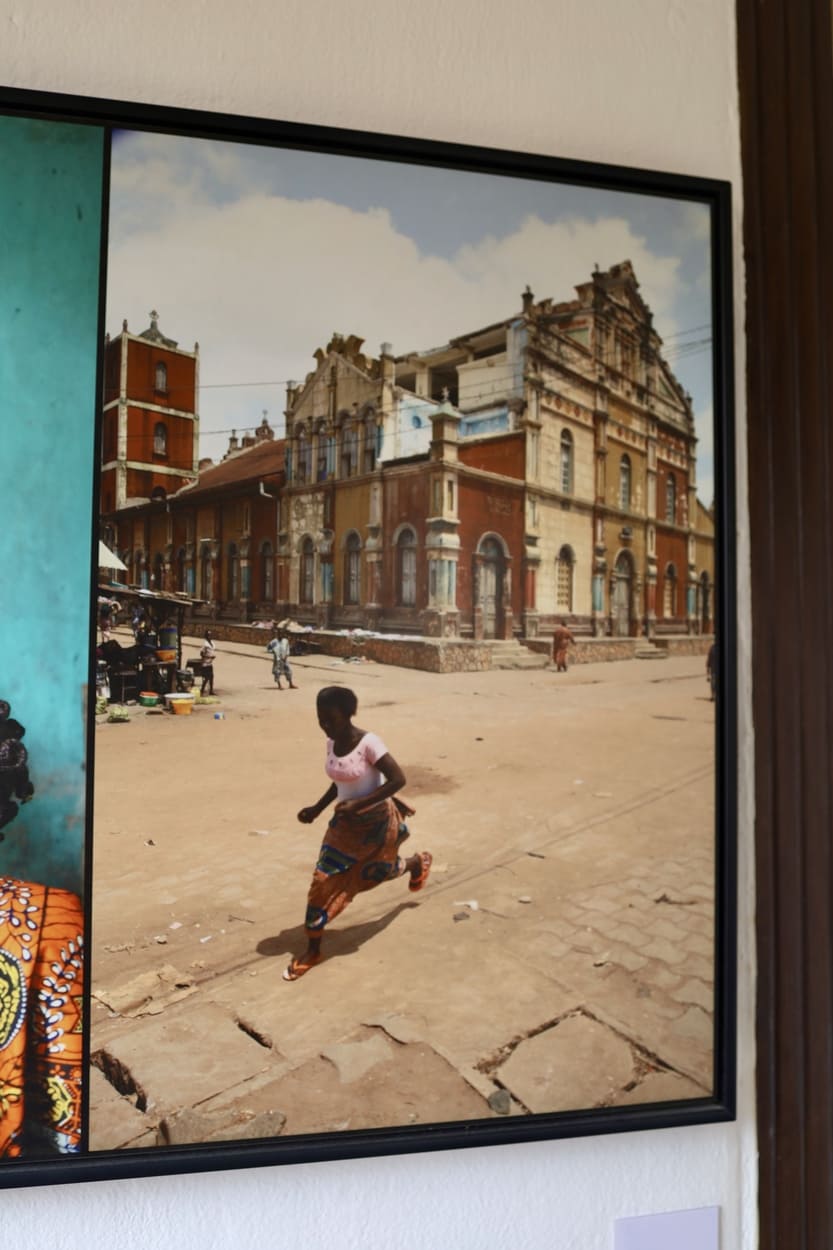
If you have extra time in Porto-Novo, I’d put it on your list.
Should You Add Porto-Novo to Your Benin Itinerary?
If you want your trip to Benin to make sense beyond the highlights, yes.
Porto-Novo adds context.
It connects Benin’s political history, royal history, and diaspora ties without requiring multiple days or a huge detour.
It’s also a good way to break up a trip that’s heavy on big-name stops like Ouidah and Abomey.
Porto-Novo felt noticeably relaxed compared to larger West African capitals. If you’re researching broader safety in Benin before planning your trip, we shared our full experience.
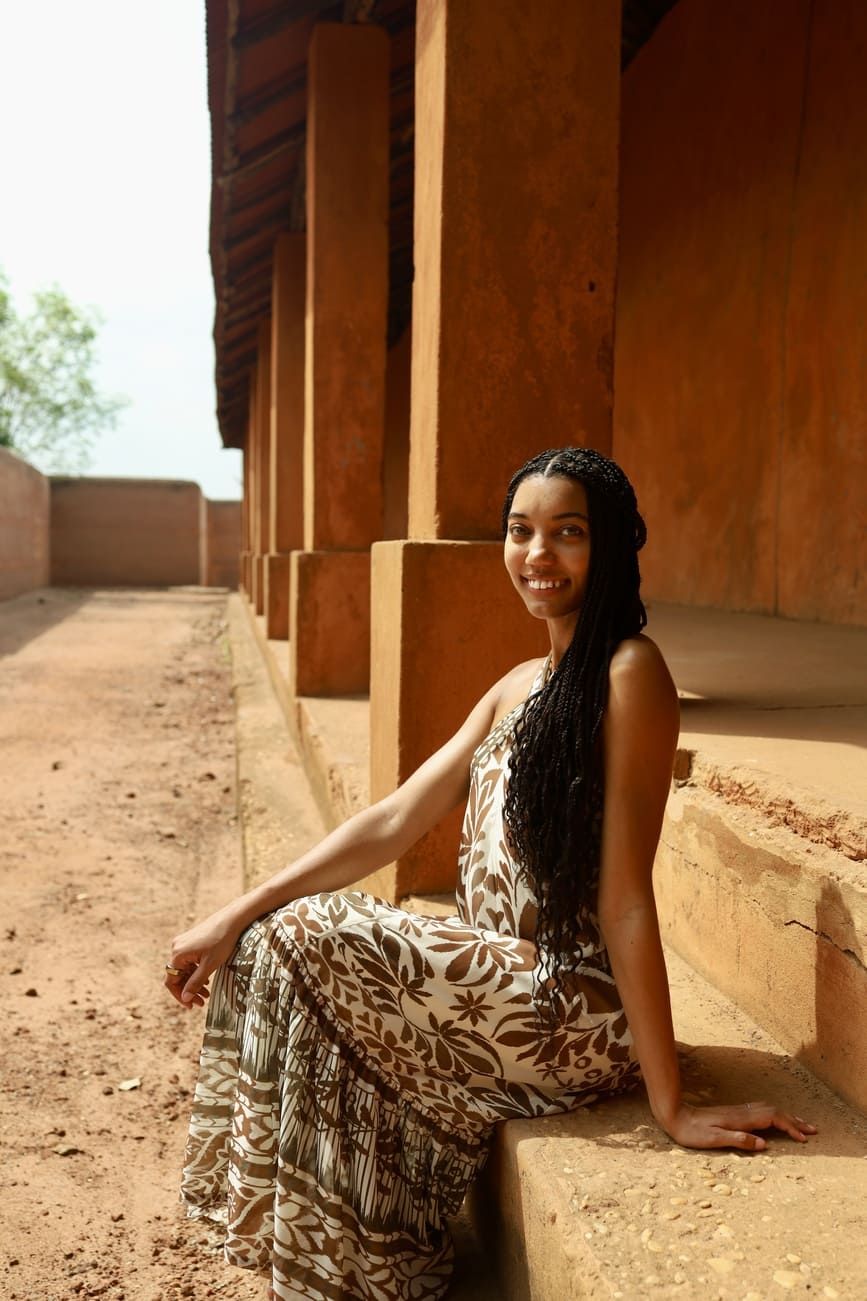
We explored Porto-Novo with Mauriac (BENINOW) and our driver Adebayo (Letouriste.bj), and having both made the day smoother and more meaningful.
Porto-Novo isn’t difficult to navigate, but you’ll appreciate having someone who can explain what you’re looking at while you’re looking at it.
Read next: Zangbeto in Benin | Things to Do in Cotonou | Abomey Highlights | What to Expect in Togo’s Capital
Explore Benin Travel Guide: Full itinerary, logistics + stops that are worth your time here.