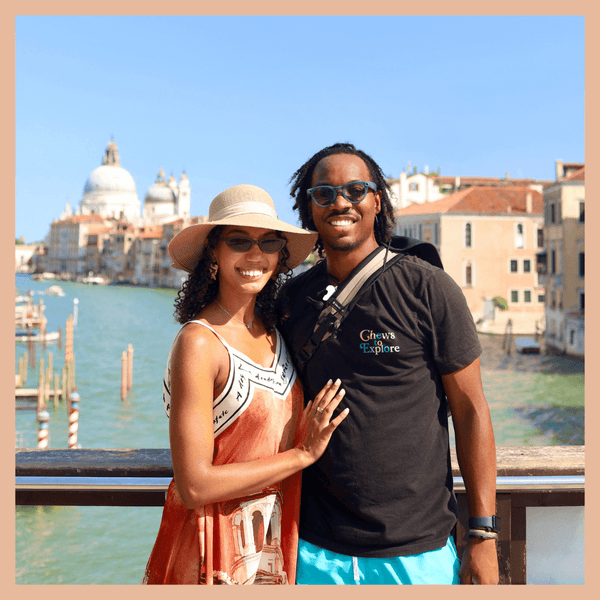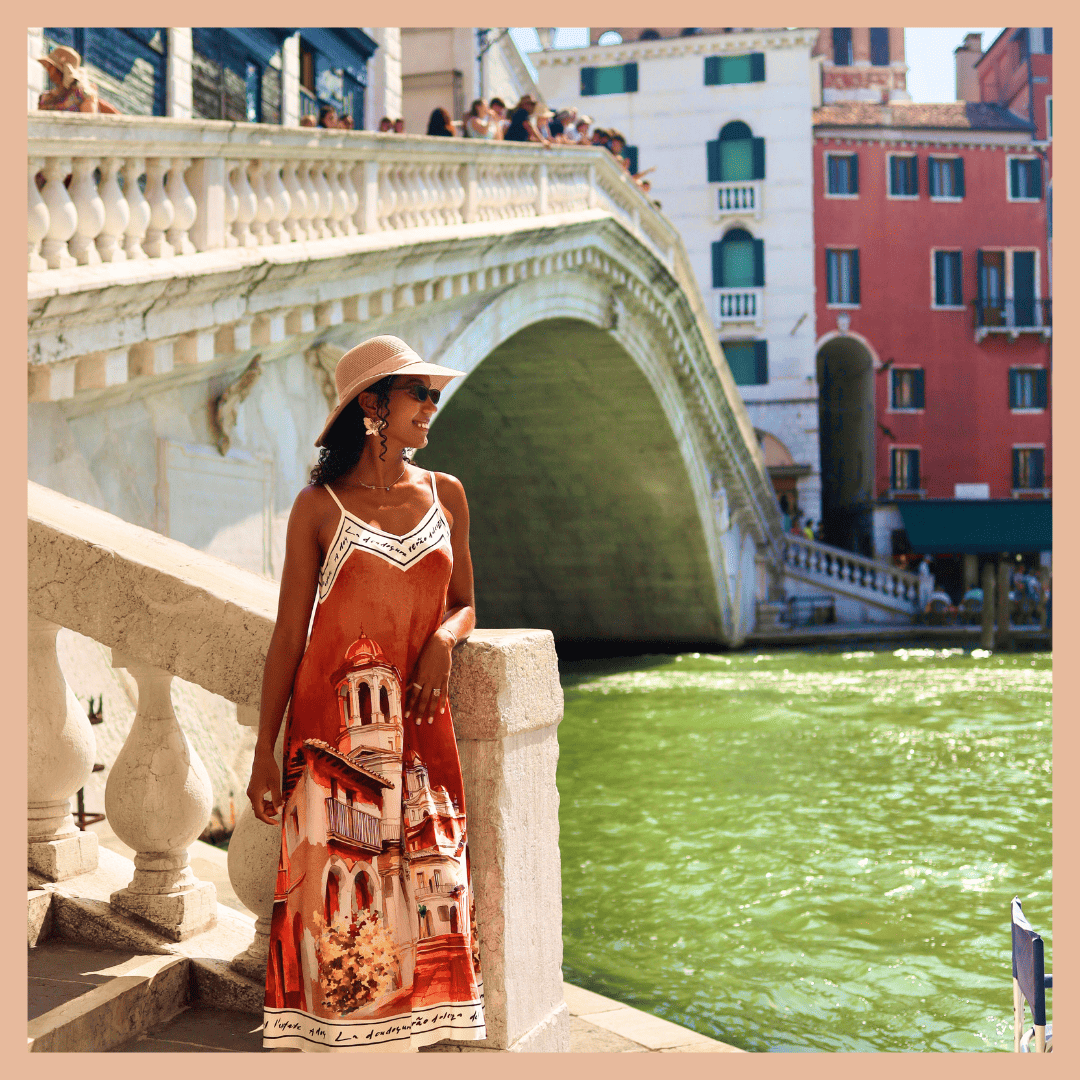
From budget picks in Mestre to the best island neighborhoods. Plus exactly where we stayed, what it cost, and where we almost went wrong.
Disclosure: This post may contain affiliate links, which means we’ll receive a commission if you purchase through our links, at no extra cost to you. Please read full disclosure for more information.
Before we planned this trip, I genuinely thought “Venice” meant one small city built on canals. Book a hotel, walk everywhere, done.
I had no idea the metro area sprawls onto the mainland, that there’s a whole district called Mestre, and that a lot of travelers stay there and just hop a short train or bus in each day.
If you’re staring at Venice hotel prices right now wondering why everything costs this much, it’s not you. Venice is one of the most expensive places to sleep in Italy. Knowing your real options is the difference between overpaying and actually enjoying your trip.
Use the map below as you read. Every pin is a live price for that area right now. Drag it, zoom into a neighborhood, and compare what a night actually costs in Cannaregio versus Mestre versus San Polo before you commit to one. Think of it as your second screen for this whole post.
Here’s exactly what we did, why, what it cost, and your other options if Mestre isn’t the right fit.
You Don’t Have to Stay ON Venice’s Island
Venice’s historic center (the postcard part with the canals) is small, and its hotel supply is old, limited, and priced like it. Just across the lagoon, Mestre is technically part of greater Venice, connected by a short train or bus over the bridge.
A lot of first-timers (me, a few months ago) don’t find this out until they’re mid-panic pricing hotels. So let’s talk about it honestly, including the mix-up that almost had us in the wrong city entirely.
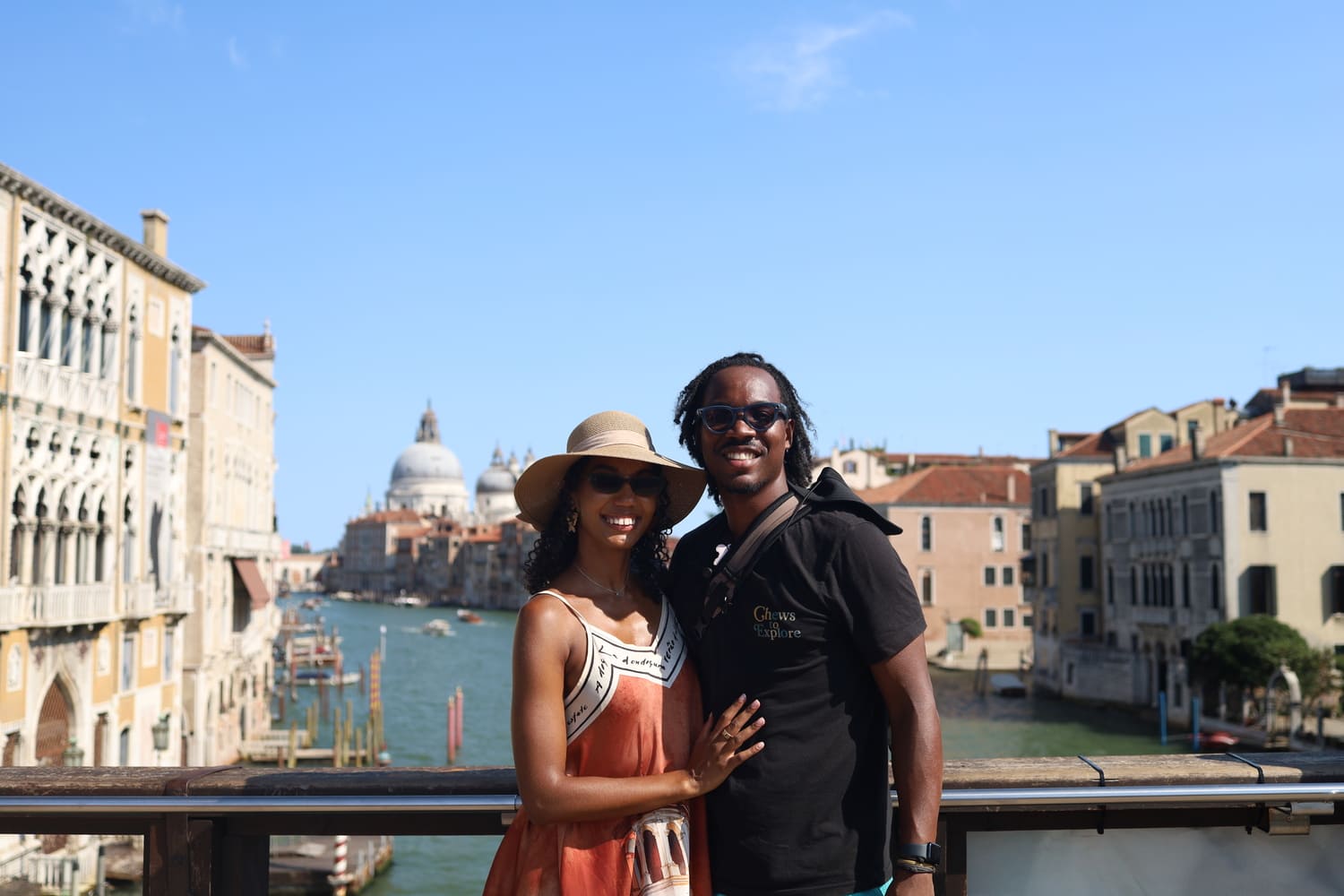
1. Mestre: Where We Stayed (And What It Cost)
Best for: Budget travelers, longer stays, or anyone road-tripping through Italy. Vibe: Practical and modern, a short bus or train ride from the postcard part of Venice.
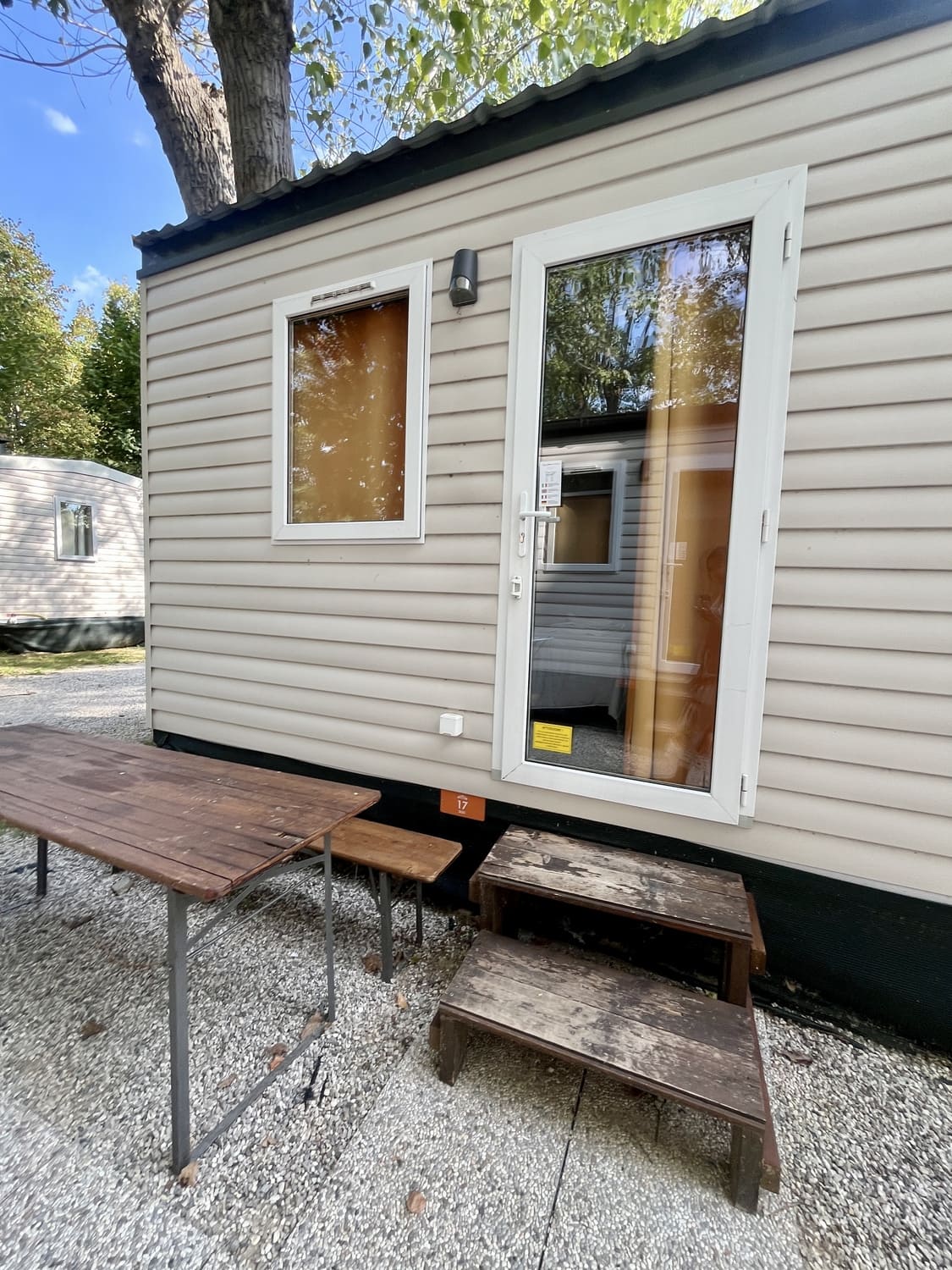
We spent both our Venice-area nights at Camping Rialto, just outside Mestre. Not “camping” in the traditional sense.
We booked one of their modern mobile homes, a one-bedroom with a private bathroom, for about €65/night. They also have mini-chalets and fully equipped wooden chalets at different price points, so your rate depends on what you book.
Being surrounded by camper vans made us realize how many people road-trip through Italy this way. It reminded me a lot of road-tripping through Namibia, oddly enough.
The honest review: it was clean, and the bathroom was bigger than the one on our cruise ship, which says something when you consider a cruise cabin bathroom is basically a phone booth. There’s also an outdoor pool, on-site laundry, and a restaurant.
Two things worth knowing before you book:
- Wi-Fi doesn’t reach the rooms, only the lobby. Plan accordingly, or enjoy the excuse to disconnect.
- The hot water isn’t broken, it’s just particular. Turn on the sink’s hot water first, let it continue to run, then turn on the shower. Skip that order and you’ll think something’s wrong with the room when there isn’t.
Book Camping Rialto here.
If a mobile home isn’t your speed, Mestre also has standard hotels clustered right around the train station, which means you can walk off a train and be checked in within minutes:
Hotel Plaza sits right in front of Mestre station, so it’s the pick if you want zero walk with luggage. Budget to mid-range, right in front of Mestre station, spacious rooms, consistently strong reviews.
Book Hotel Plaza here.
Best Western Plus Hotel Bologna is also across from the station, but known for being noticeably quieter inside than you’d expect for how central it is, plus staff who handle multiple languages well if that matters for your group.
Book Best Western Plus Hotel Bologna here.
Best Western Hotel Tritone is the third station-adjacent option, a reliable, well-reviewed pick if the first two are booked up.
Book Best Western Hotel Tritone here.
(Zoom into Mestre on the map above to see what these, and everything nearby, are actually going for right now.)
Here’s the actual tradeoff with Mestre: you’re saving real money and cutting your transit time in half compared to some island options, but you give up the quiet, empty-streets version of Venice that only shows up after the day-trippers clear out, and you’re adding one extra transit step to every single day of your trip.

One more thing worth knowing if you’re staying in Mestre: Venice had been charging day visitors an entry fee on select peak days (in 2026, 5 to 10 euros per person from April to late July). Mestre counts as part of the municipality of Venice, so sleeping there means you’re exempt, though you’re expected to register for a free QR code beforehand. Our trip fell outside the window, but the rules have changed year to year, so check the official site before you book.
2. Cannaregio: Our Favorite Venice Neighborhood to Explore
Best for: First-timers who want it quieter and more local. Vibe: Residential, canal-side, an endless cicchetti scene.
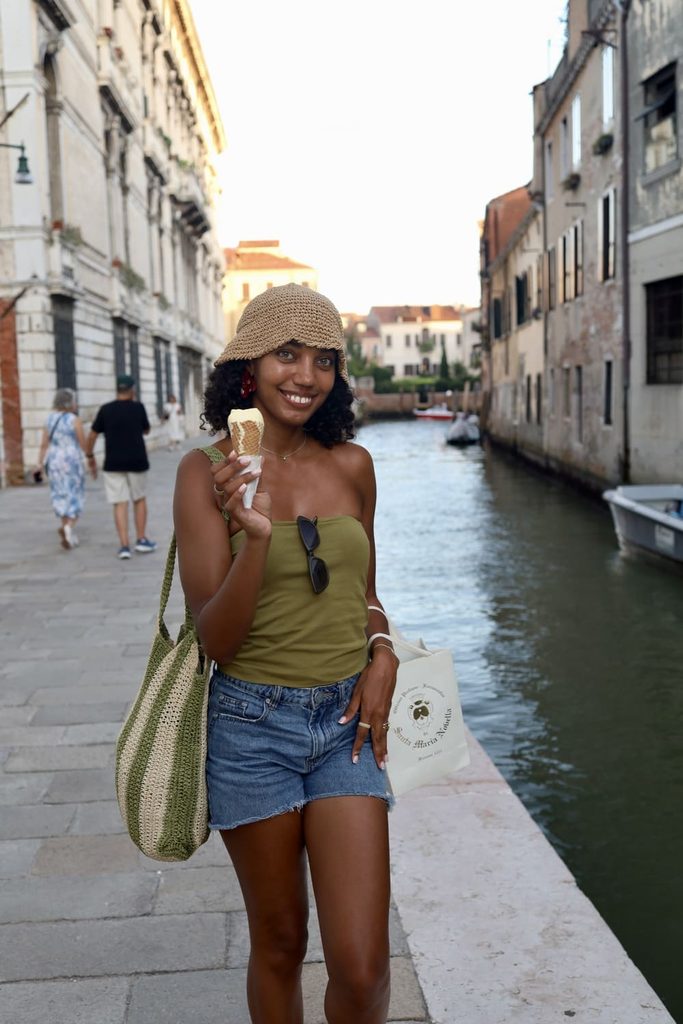
Cannaregio was hands-down our favorite part of Venice to walk, eat, and get lost in, and one of the better places to actually base yourself. It’s home to the old Jewish Ghetto and noticeably fewer crowds than anywhere near San Marco.
Ca’ Rosetta is a guesthouse tucked a few steps from the neighborhood’s best bacari (wine bars), so you’re rolling out of bed straight into the cicchetti crawl.
Book Ca’ Rosetta here.
B&B Al Pozzo di Luce sits right next to the Fondamente Nove vaporetto stop, which makes it the easiest base if Murano and Burano are on your list as day trips.
Book B&B Al Pozzo di Luce here.
Hotel al Sotoportego is canal-side with both view and non-view room options, so it’s worth checking what the view rooms actually look out on before you book if that’s the deciding factor for you.
Book Hotel al Sotoportego here.
3. San Polo: The Most Central Venice Neighborhood
Best for: Maximum walkability. Vibe: Central, busy, right by the Rialto Bridge and market.
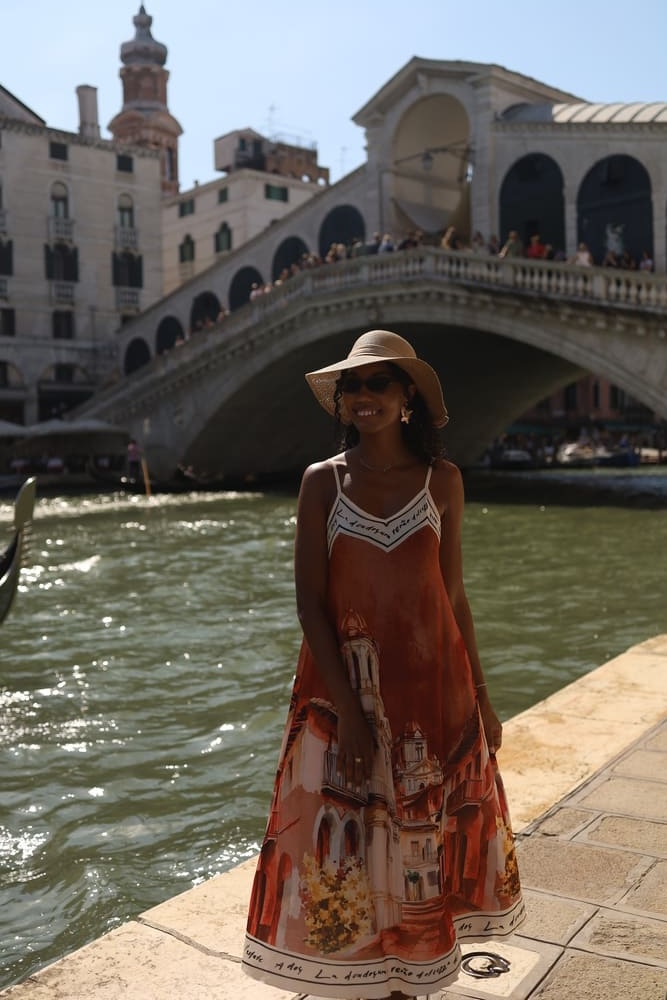
San Polo sits dead-center in Venice, walking distance from almost everywhere, including the Rialto Bridge and its market. It’s busier and pricier because of that, but if walkability is your top priority, it’s hard to beat.
Ca’ Angeli is a good-value guesthouse right along the Grand Canal, so you get that Grand Canal address without the typical Grand Canal price tag.
Book Ca’ Angeli here.
The Acca Hotel is small, modern, and tucked near Campo San Polo, a quieter square than most in this neighborhood despite the central location.
Book The Acca Hotel here.
Palazzo Morosini Degli Spezieri is apartment-style with kitchens, which makes it the pick here if you’re staying more than a couple of nights and want to cook even one meal instead of eating out every single time.
Book Palazzo Morosini Degli Spezieri here.
4. Dorsoduro: Venice’s Younger, Artsy Neighborhood
Best for: Museum-goers and a younger crowd. Vibe: Artsy, university energy.
Home to the university, the Accademia, and the Peggy Guggenheim Collection, Dorsoduro has a noticeably younger feel than the rest of the city. It’s a short walk from San Marco and has its own strong bar scene along Fondamenta delle Zattere, which is exactly where I had my favorite Bellini of the trip, at a tiny kiosk called Al Chiosetto.
Cà Santo Spirito is a value-oriented B&B near the Basilica della Salute, good if you want Dorsoduro’s energy without Dorsoduro’s higher-end prices.
Book Cà Santo Spirito here.
Palazzo Veneziano is upscale and right on the water at the neighborhood’s southern edge, the pick if you want Dorsoduro’s artsy reputation with a more polished stay.
Book Palazzo Veneziano here.

5. Santa Croce: Quiet, Local, and Close to the Station
Best for: An early train or flight, without giving up a local feel. Vibe: Quiet, residential, less touristed than almost anywhere else on the island.
Santa Croce gets undersold as “just the practical one,” and that’s not really fair to it. It’s actually one of the least touristy sestieri in Venice, with narrow alleys, local squares, and a real neighborhood feel once you’re a few streets off the main path toward Rialto.
The tradeoff is that main path itself, which does get heavy foot traffic. But if you want an early departure and a quieter stay, this is a genuinely good combination, not just a compromise.
Ca’ Riza sits right on the border of San Polo and Dorsoduro, a budget pick that puts you within easy reach of both neighborhoods’ restaurant scenes.
Book Ca’ Riza here.
Hotel Antiche Figure is directly across the Grand Canal from the train station, about as close as you can get for an early departure without sacrificing being in Venice proper.
Book Hotel Antiche Figure here.
6. The Splurge: A Private-Island Resort Stay
Best for: Honeymoons, anniversaries, or anyone who wants the trip itself to include a few days of doing nothing but resort. Vibe: Secluded, resort-style, worlds away from the crowds.
If you’re celebrating something big and budget isn’t the deciding factor, the JW Marriott Venice Resort & Spa sits on its own private island, Isola delle Rose, about 15 to 20 minutes by private boat shuttle from St. Mark’s Square. Review scores across major booking sites consistently land around 9 out of 10, with guests highlighting the grounds, the rooftop infinity pool, and the quiet.
Worth being upfront about: this has the same core tradeoff we flag below for Murano, Burano, and Lido. It’s still an island, and every trip into Venice still means a boat ride each way. The difference is really about what you’re planning to do with your days.
Murano and Burano are worth a half-day each, so basing yourself there for a longer stay means repeated daily ferry runs into Venice just to have something to do.
The JW Marriott has enough on-site (multiple restaurants, a full spa, pools, gardens) that most guests aren’t making that same daily round trip; they’re doing Venice once or twice and spending the rest of the stay at the resort itself.
If your plan is to be out sightseeing in the city every day, the JW Marriott isn’t the efficient pick, and a hotel actually on the main island will serve you better.
Book JW Marriott Venice Resort & Spa here.
Where Not to Stay in Venice
- Right around Piazza San Marco. You’ll pay peak prices to sleep in the most crowded square in the city, packed wall-to-wall roughly 10am to 6pm. Gorgeous to visit, rough to sleep near.
- Murano, Burano, or Lido as your home base. Wonderful for a day trip, but if you’re staying there to save money or find quiet, the ferry commute back into Venice will eat into your days more than it seems like it will on paper, especially on a first visit.
Venice Hotel Do’s and Don’ts
- Do book Cannaregio or San Polo well in advance if you want the island experience. Rooms fill fast in peak season.
- Do confirm Wi-Fi reaches your actual room, not just the lobby, especially at smaller properties.
- Do seriously consider Mestre if you’re traveling longer than a few nights. The savings add up fast.
- Do double-check which stop you’re getting off at heading to the mainland (ask us how we know).
- Don’t assume no hot water on day one means something’s actually wrong. Ask staff first, it might just be a specific order of operations.
- Don’t book within a couple blocks of San Marco expecting a quiet stay.
- Don’t rule out the mainland just because it’s the less popular pick. The savings and convenience are real.
How Many Days Do You Need in Venice?
We spent two nights in the Venice area and felt like that was enough to explore properly without rushing: one evening in the quieter neighborhoods, one full day hitting the major sights, and buffer time for getting pleasantly lost.
If Venice is your only stop in Italy, aim for two to three nights minimum. If it’s an add-on to a longer trip like ours was, one full day and evening is enough to fall for it.
FAQ
Where to stay in Venice on a budget?
Mestre. It’s on the mainland, often far cheaper than the island (we paid about 65 euros a night at Camping Rialto), and the bus into Venice takes 10 to 15 minutes. Zoom into Mestre on the map above to compare current prices.
Do I have to pay Venice’s day-trip fee if I stay in Mestre?
Not if you’re staying overnight, since Mestre is part of the Venice municipality. In 2026, overnight guests were exempt but still had to register for a free QR code, and the fee only applied on select days from April through late July. Check the official site for your dates.
Should I store my luggage if I’m not heading straight to my hotel?
Yes. We used Kipoint Kibag inside of Venezia Santa Lucia train station (about €6 for 4 hours), though we later spotted a flat €5-for-the-day option just outside, worth comparing before you commit.
What’s the best neighborhood for a first-timer if money isn’t a huge concern?
Cannaregio or San Polo. Cannaregio gets you the quieter, more local experience. San Polo gets you maximum walkability.
Final Thoughts on Where to Stay in Venice
If you’re on a budget or staying more than a couple of nights, Mestre is worth taking seriously, it’s not a downgrade, just a different trip.
If you want the island itself, Cannaregio gave us the best version of that.
And if this is a big-occasion trip, the private island splurge is worth it as long as you go in knowing it’s a resort stay first and a Venice base second.
Once your home base is sorted, check out our full best things to do in Venice guide for how we spent our two days: the cicchetti crawl, the Bellini we’re still thinking about, and the Jewish Ghetto walk we’d send anyone to first.