We wore the cloth, met the Queen Mother, and ended the day at a Zangbeto ceremony. Here’s what Abomey is really like.
Disclosure: This post may contain affiliate links, which means we’ll receive a commission if you purchase through our links, at no extra cost to you. Please read full disclosure for more information.
Abomey is one of those places that changes how you understand Benin.
Yes, it’s beautiful.
Yes, you’ll take photos.
But the real reason to go is what it unlocks, the symbols, the pride, and the traditions that are still alive right now.
We visited Abomey as a day trip from Cotonou with Massoud from Letouriste.bj and Mauriac, the founder of BENINOW.
If you’re planning to do Abomey, I’d do it with a guide who’s connected.
It’s the difference between “seeing a palace” and actually understanding where you are.
This is what a full day in Abomey actually looked like for us, plus what I’d want you to know before you go.
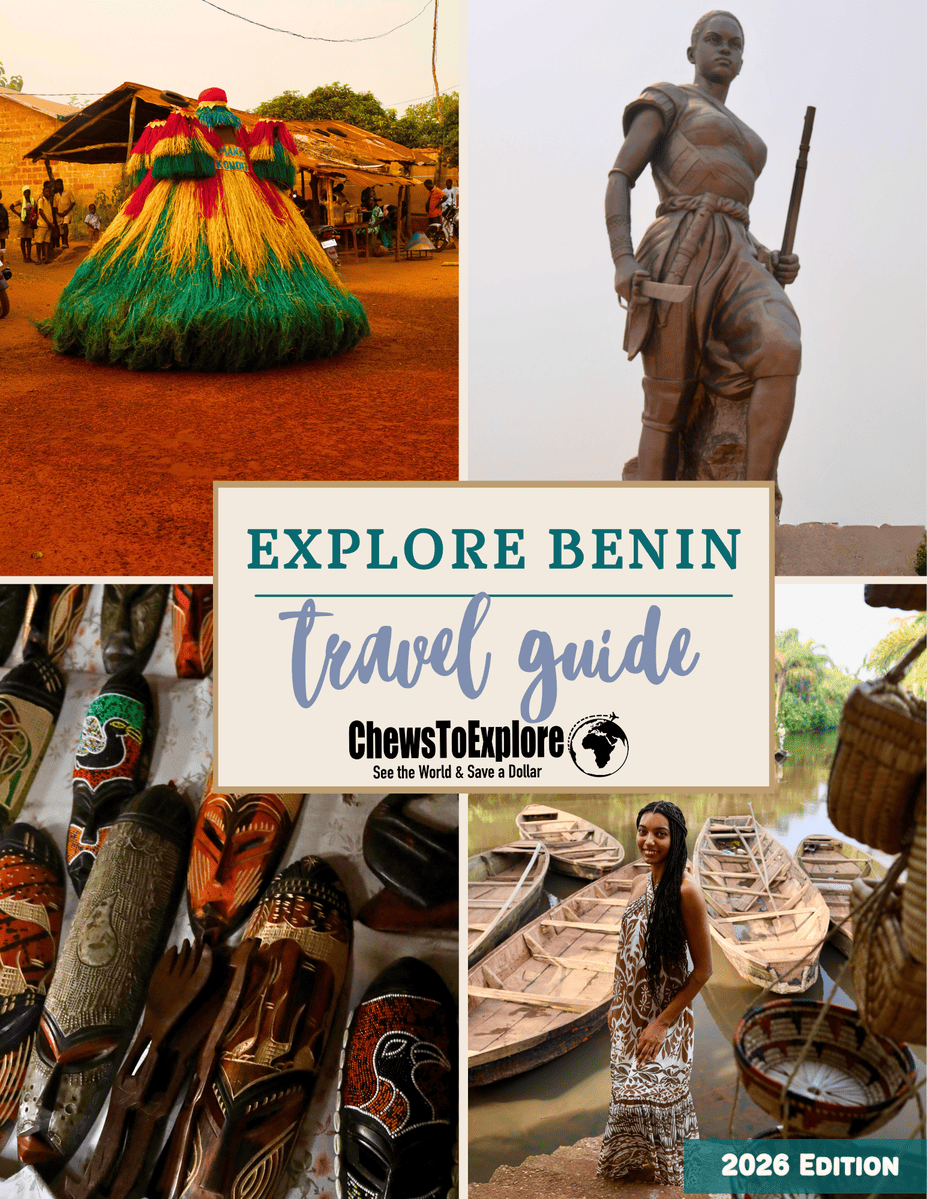
If you want the full Benin trip plan in one place, grab our “Explore Benin Travel Guide.”
Getting to Abomey from Cotonou
From Cotonou, Abomey is about a 3-hour drive.
We left early, while it was still dark out.
Before choosing which cities to prioritize, it helps to understand how the southern circuit connects. We break that down in our Benin overview guide.
We grabbed a little breakfast at our hotel La Villa Saint Jean, then Mauriac picked us up with our driver Adebayo (they coordinated everything).
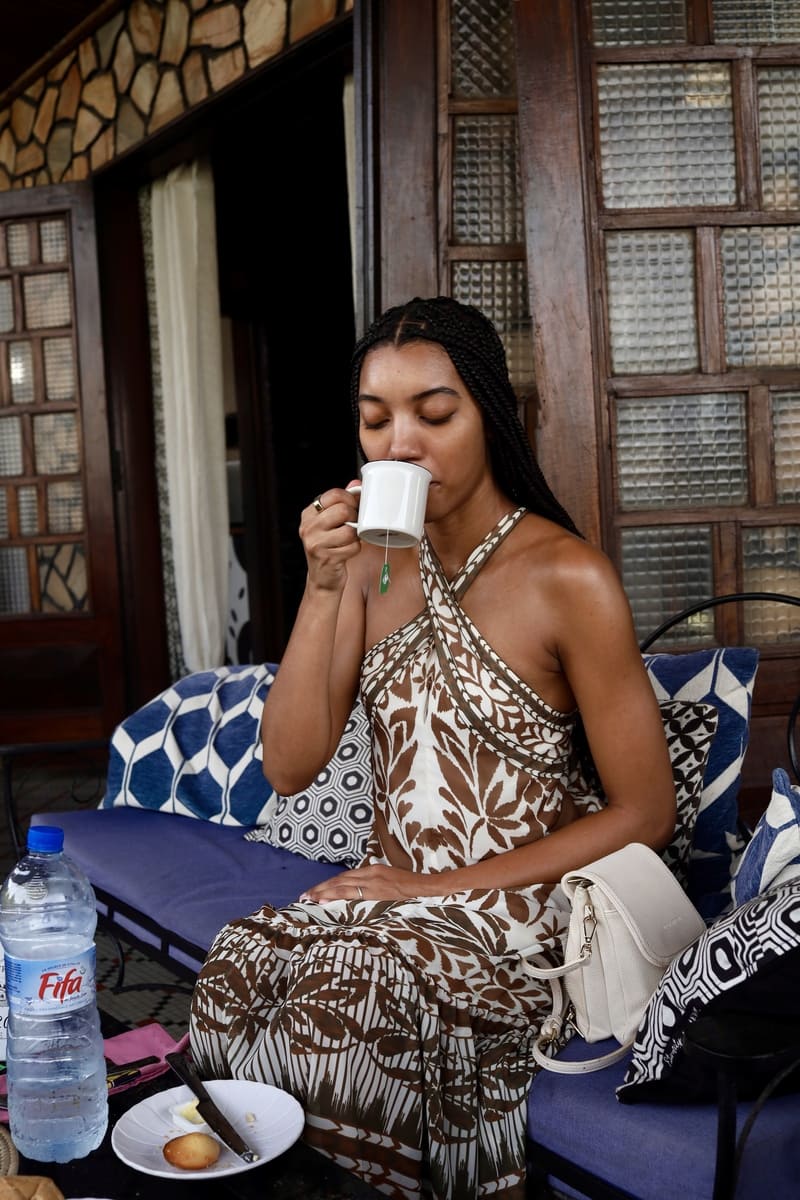
Having a driver matters for this day because it’s a long route and you’re hopping between stops.
You don’t want to spend your energy figuring out logistics.
Also, the drive itself is part of the experience.
You’ll notice pretty quickly that motorbikes run the city.
They’re everywhere, and it makes sense.
They’re the most affordable way for people to move around day-to-day.
Chew Tip: If you visit Abomey, treat it like a full day. This isn’t a quick stop you squeeze in “if you have time.”
Entering the Royal Palace of Abomey
The Royal Palaces of Abomey are a UNESCO World Heritage Site and they were once the seat of the Kingdom of Dahomey.
If you’ve watched The Woman King, this is the Dahomey you’re thinking of.
Before we even stepped into the palace experience, we had to dress the part.
They wrapped us in traditional cloth covered in royal symbols, and it had us looking like we had royal business to handle.
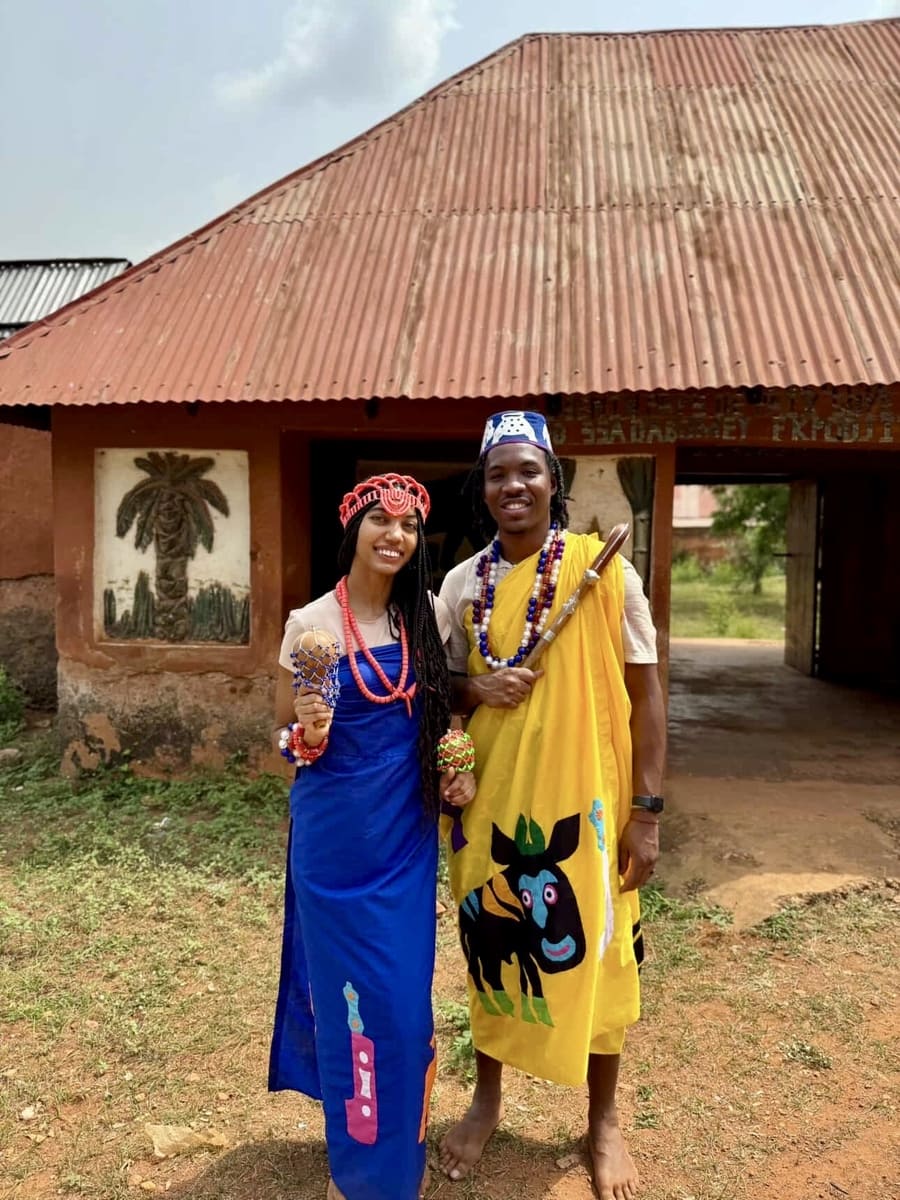
Then came a cleansing ritual before meeting the Queen Mother.
And when she arrived… it wasn’t subtle.
She came in with the kind of presence where you stop talking without being told to stop talking.
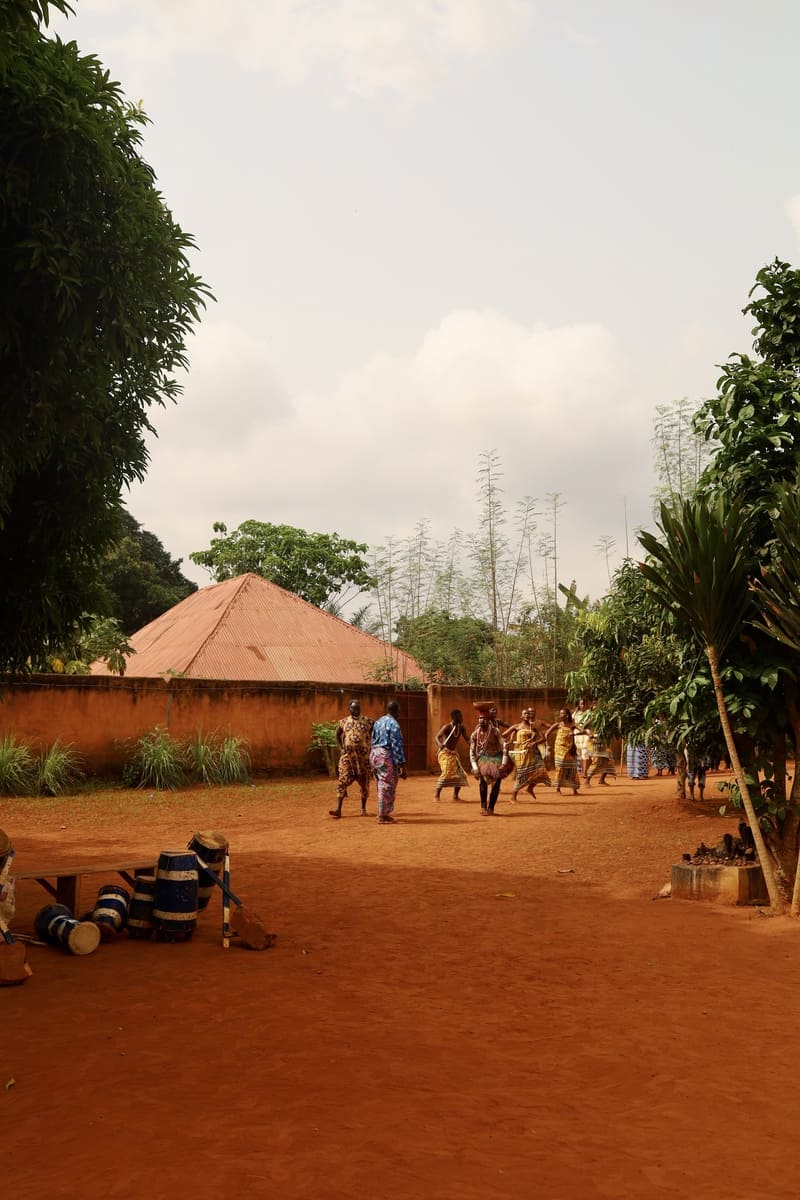
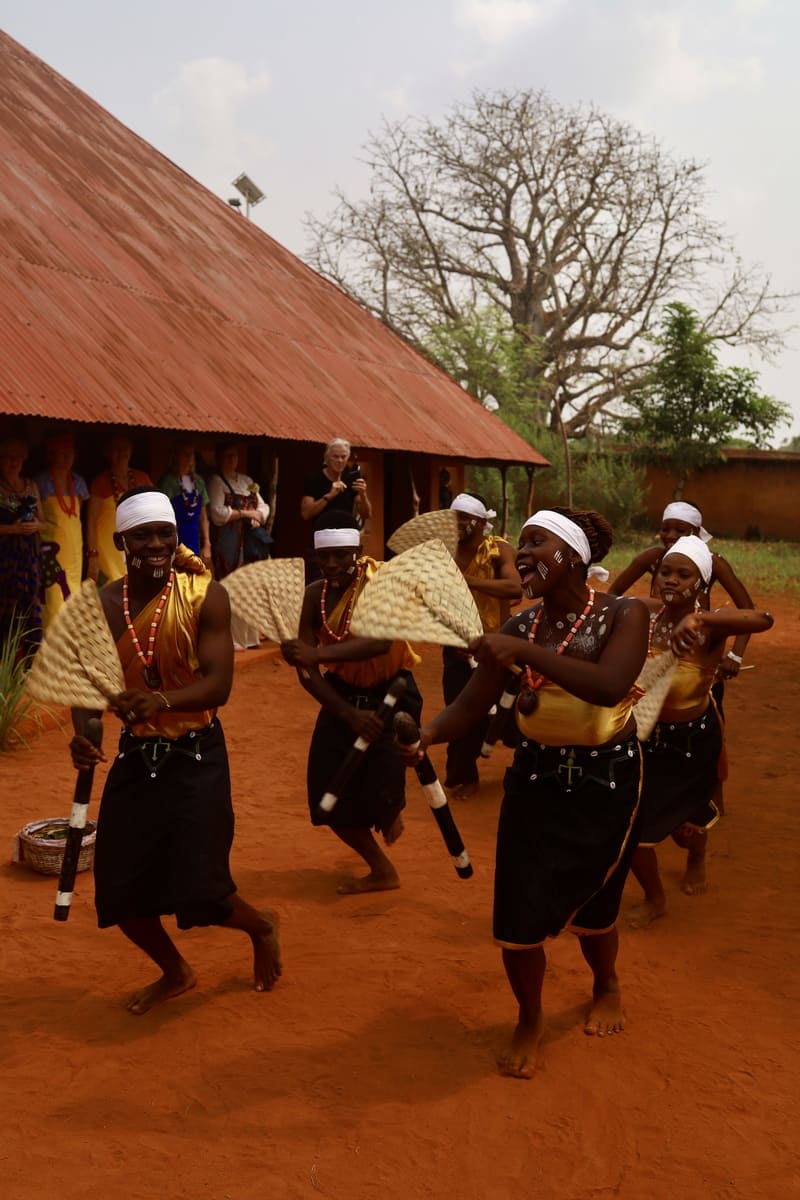
There was drumming, singing, dancing, performances, and food cooked by the Queen Mother herself.
And it wasn’t giving “tourist demo.”
It felt like we were genuinely being welcomed.
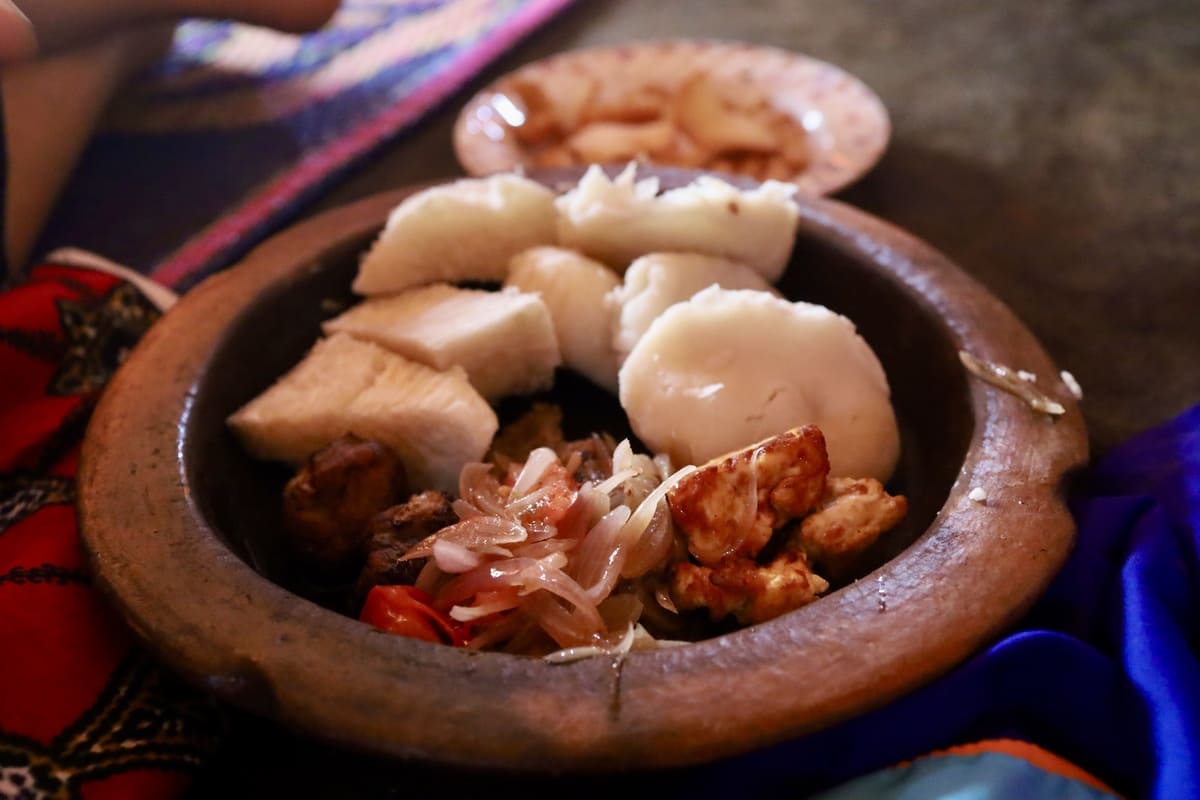
They also served a palm wine drink, Sodabi, they referred to as medicine because they believe it can cure a lot of things.
All I’ll say is: it was potent. A very strong welcome!
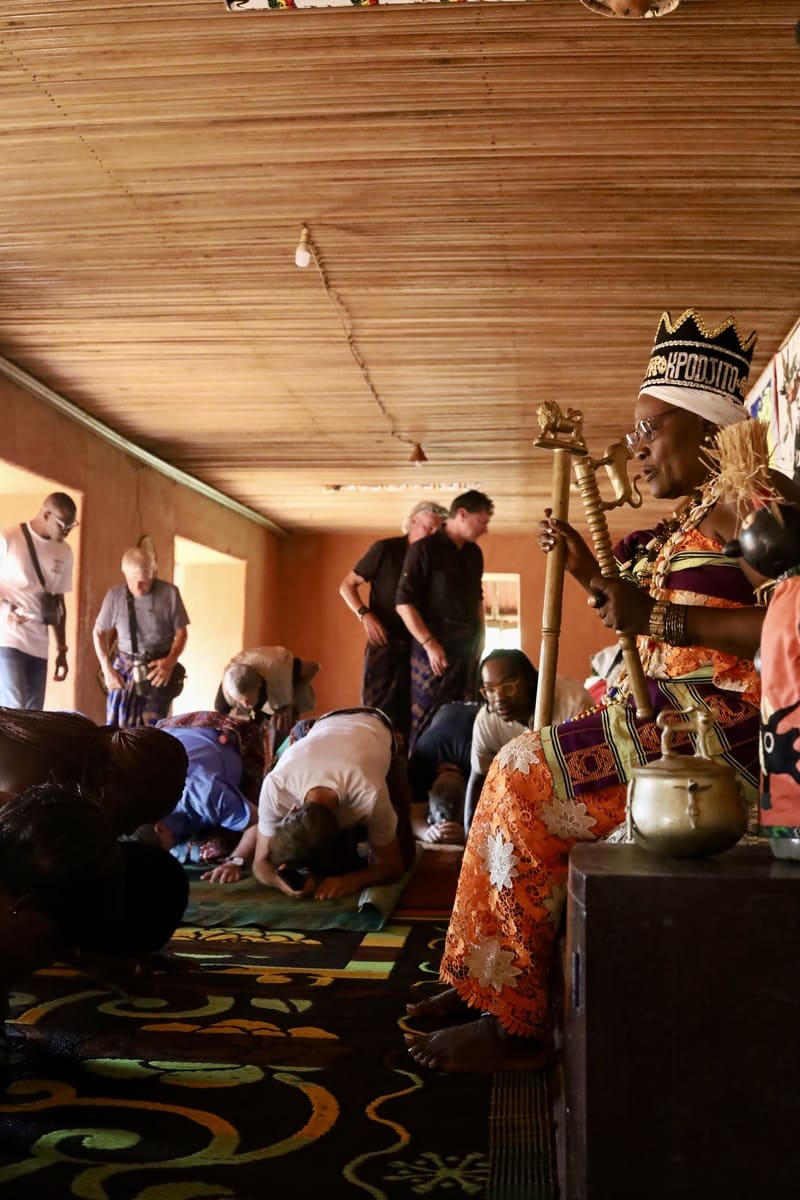
This was the moment where I realized Abomey isn’t set up for visitors to stand in the background and observe.
You get pulled in.
If there’s dancing happening, you might end up dancing too, especially after some Sodabi.
The Courtyards and the Details People Miss
The palaces include three courtyards, and every part carries meaning.
One of the traditions that hit me most was how guests are welcomed.
Before anyone asks why you came, you’re offered water.
It’s simple, but it says a lot. Comfort and humanity come first.
Another symbol that really stuck with me was a clay vase full of holes.
The whole idea is that you’re supposed to fill it with water… but obviously you can’t, because it would just pour right out.
Unless everyone participates.
We were told that if each child of Dahomey places their hands over the holes, only then can the vase actually hold water long enough to be filled.
That’s the message.
By yourself, it doesn’t work.
Together, it does.
Unity is power.
And once someone points out the symbolism in Abomey, you start seeing it everywhere.
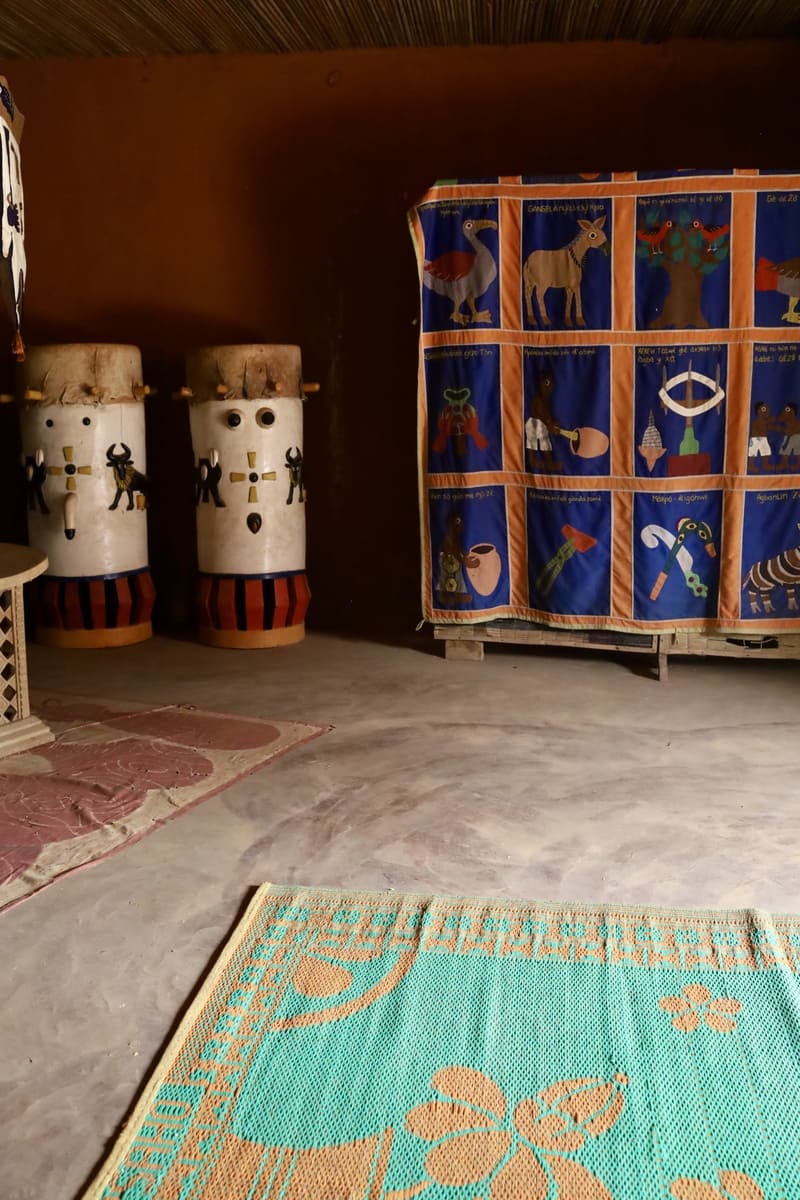
In the cloth. In carvings. In architecture.
Even as you drive through the city, the symbolism shows up again and again.
Shopping Inside the Palace Grounds
One of the courtyards has artisans selling handmade pieces, and this is one of those moments where you suddenly understand why people come home with luggage problems.
It’s me, I’m people.
You’ll see things like:
- Bronze bracelets where you can get your name engraved
- Handmade maps, carvings, and artwork
- Textiles tied to royal symbolism
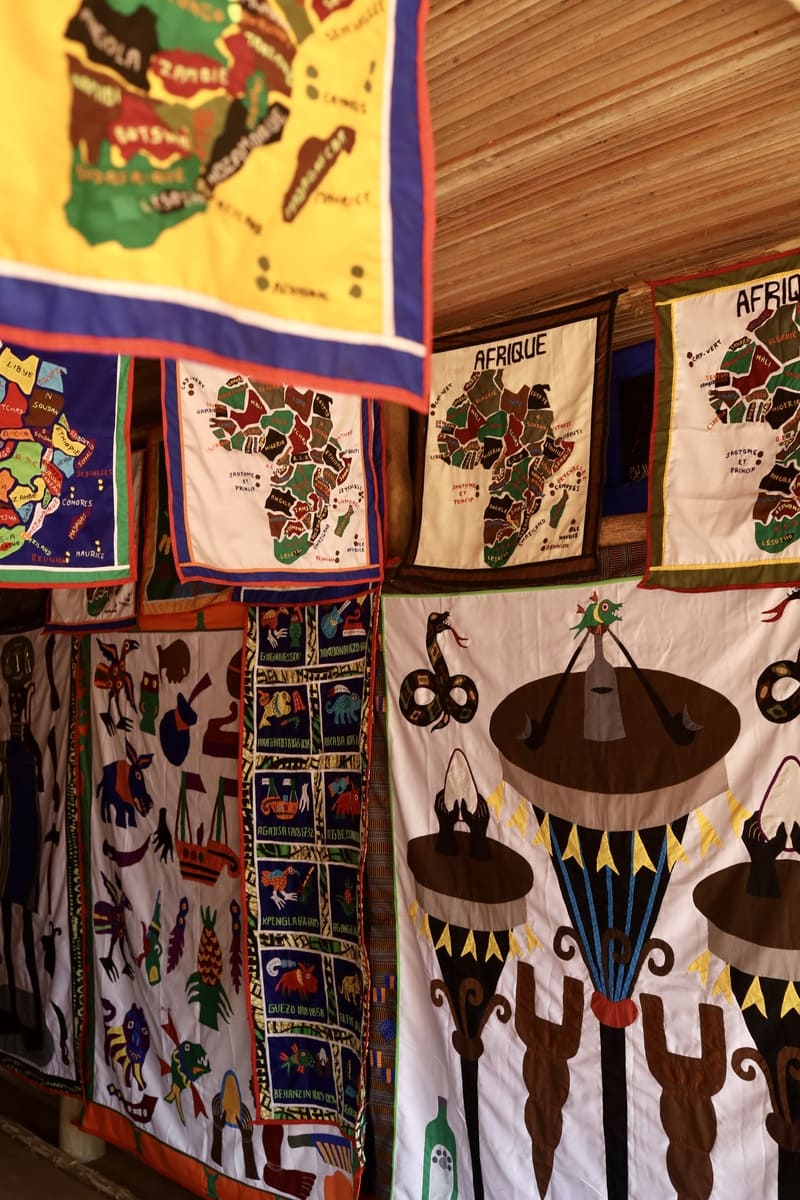
We also learned that Benin is the largest producer and exporter of cotton in Africa, which gives the textiles even more context once you’re shopping.
You might want to leave with one of everything. Don’t ask how I know.
The Kings of Dahomey & Resistance to the French
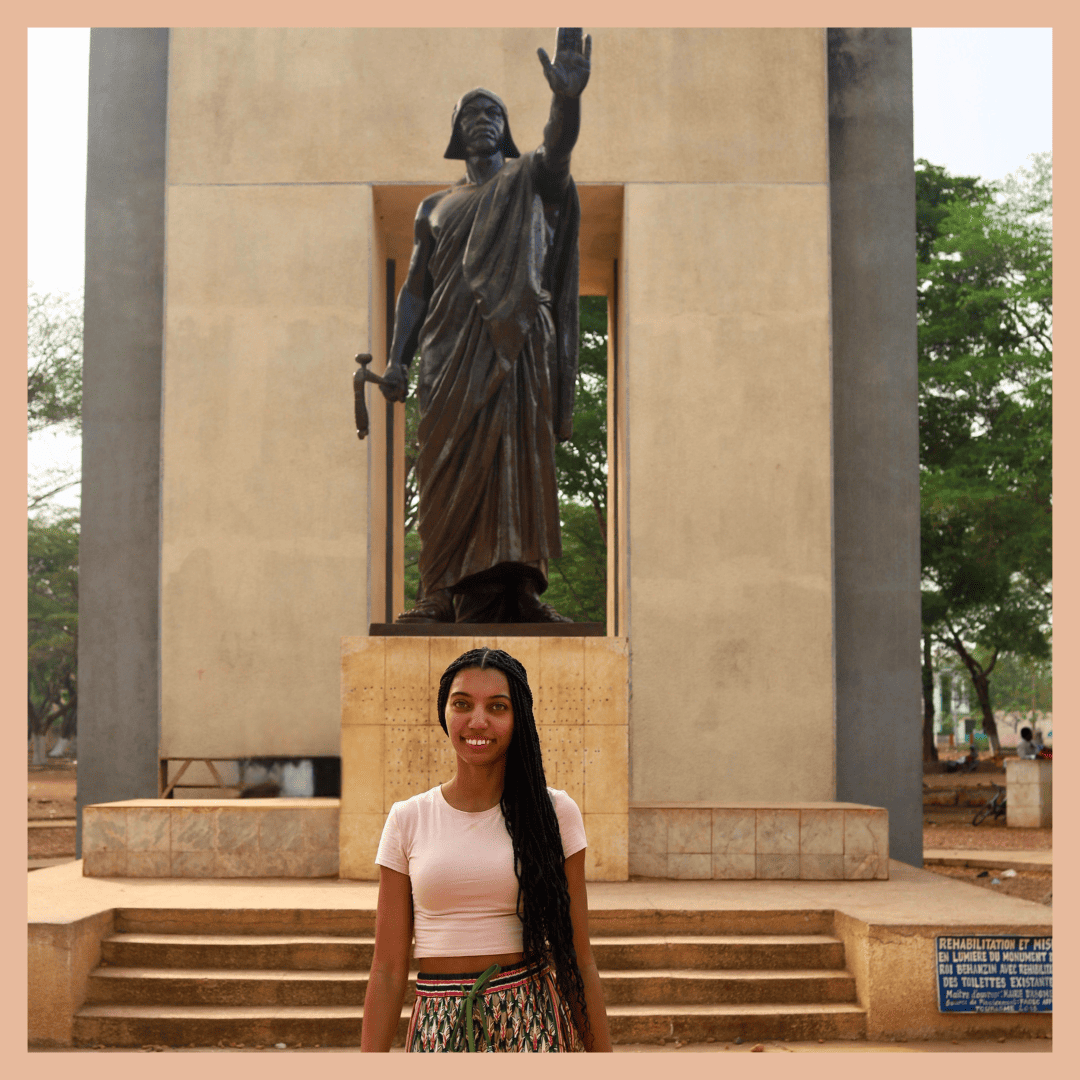
After the palace, we stopped at a monument honoring King Béhanzin, the 13th King of Dahomey, known for resisting French colonization.
There’s a story tied to him that people still tell, and it comes up again and again when you’re learning about Dahomey’s relationship to Vodun.
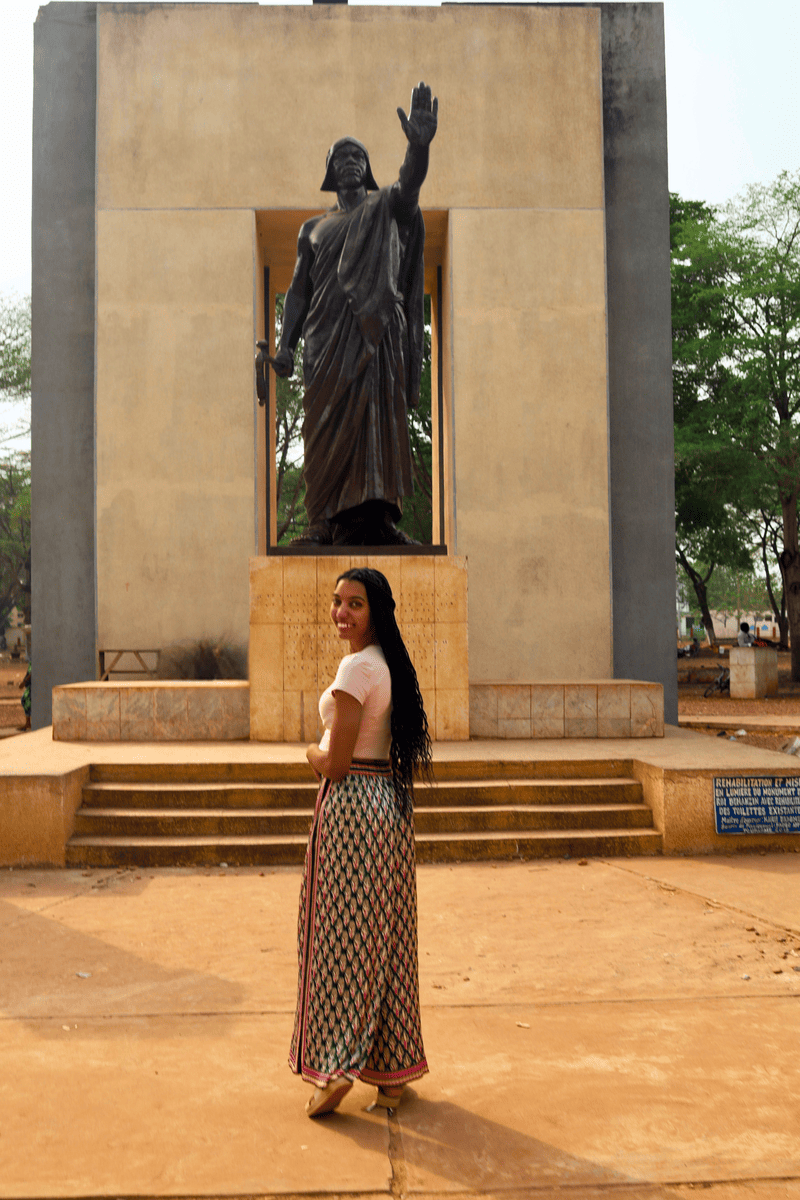
In battle, it’s said he lifted his left hand and a mystical force came from it, killing French soldiers. The conflict lasted 14 months.
Eventually, the French installed his younger brother as a puppet king and colonized Dahomey until independence in 1960.
Abomey doesn’t sugarcoat any of this.
The history is told plainly, and the spiritual side of it isn’t separated from the political side either.
Lunch in Abomey
At this point in the day, we were ready to eat.
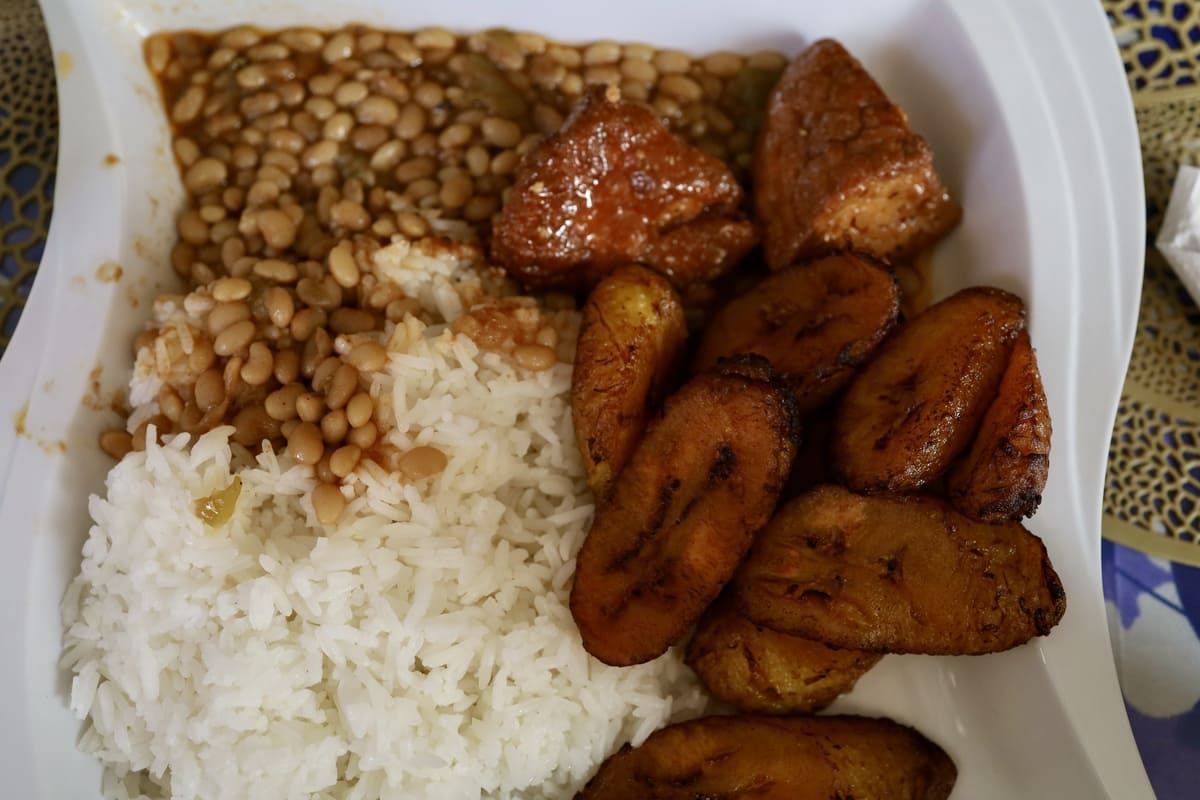
Thankfully, our next stop was a local spot where I was able to eat comfortably as a vegetarian with rice, plantain, beans, and cheese.
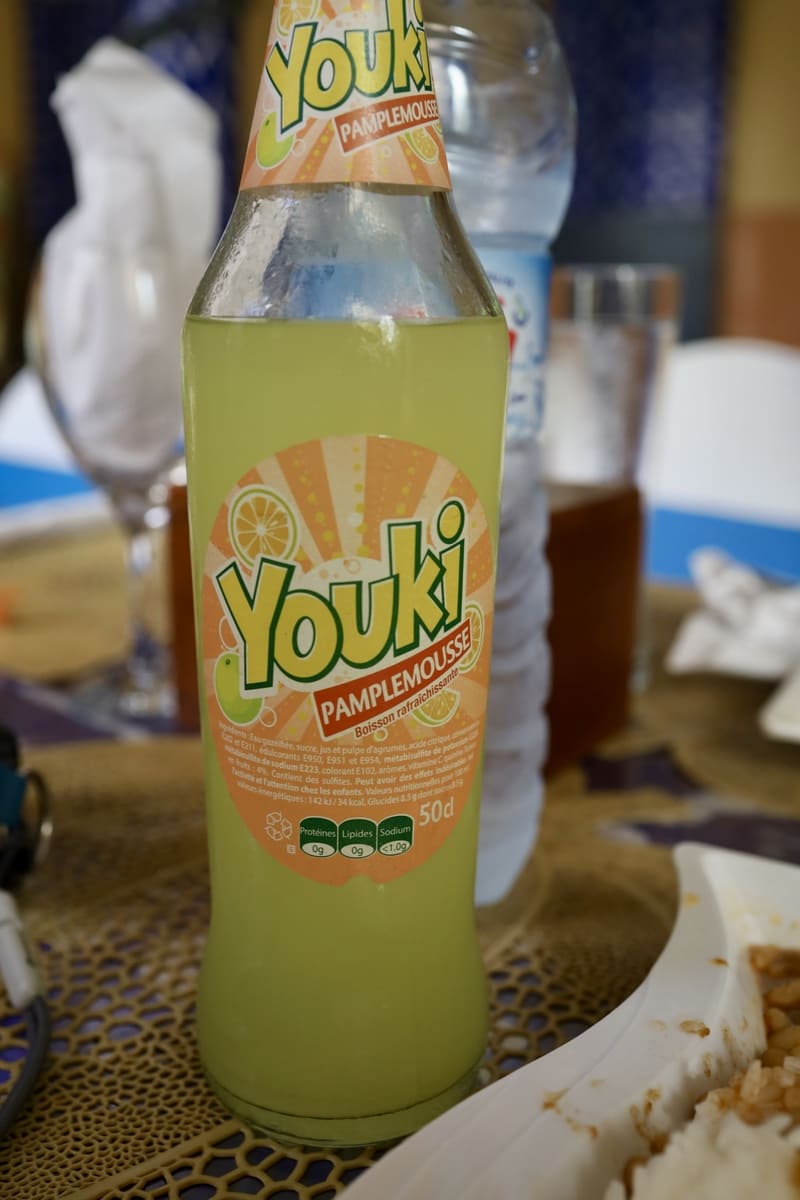
And to drink, I had to try the Youki, a local Benin drink. To me, this reminded me of Jamaican Ting (essentially pomegranate soda).
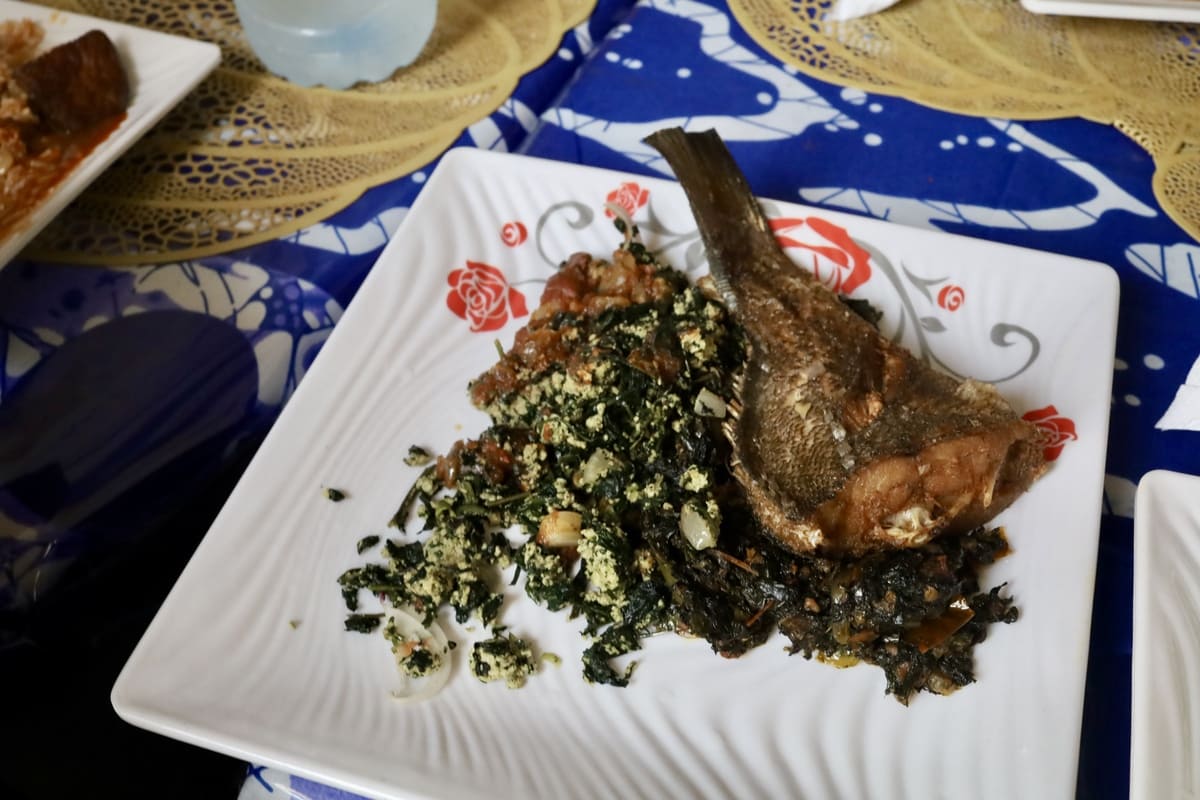
My husband ate fish and two different types of ma (kind of like greens), and enjoyed every bite.
Chew Tip: Vegetarian food is absolutely possible in Benin, especially if you communicate your needs and eat local staples.
Witnessing a Zangbeto Ceremony
Last stop was the Zangbeto ceremony, and I’m telling you now, if you’ve never seen this in person, videos don’t prepare you.
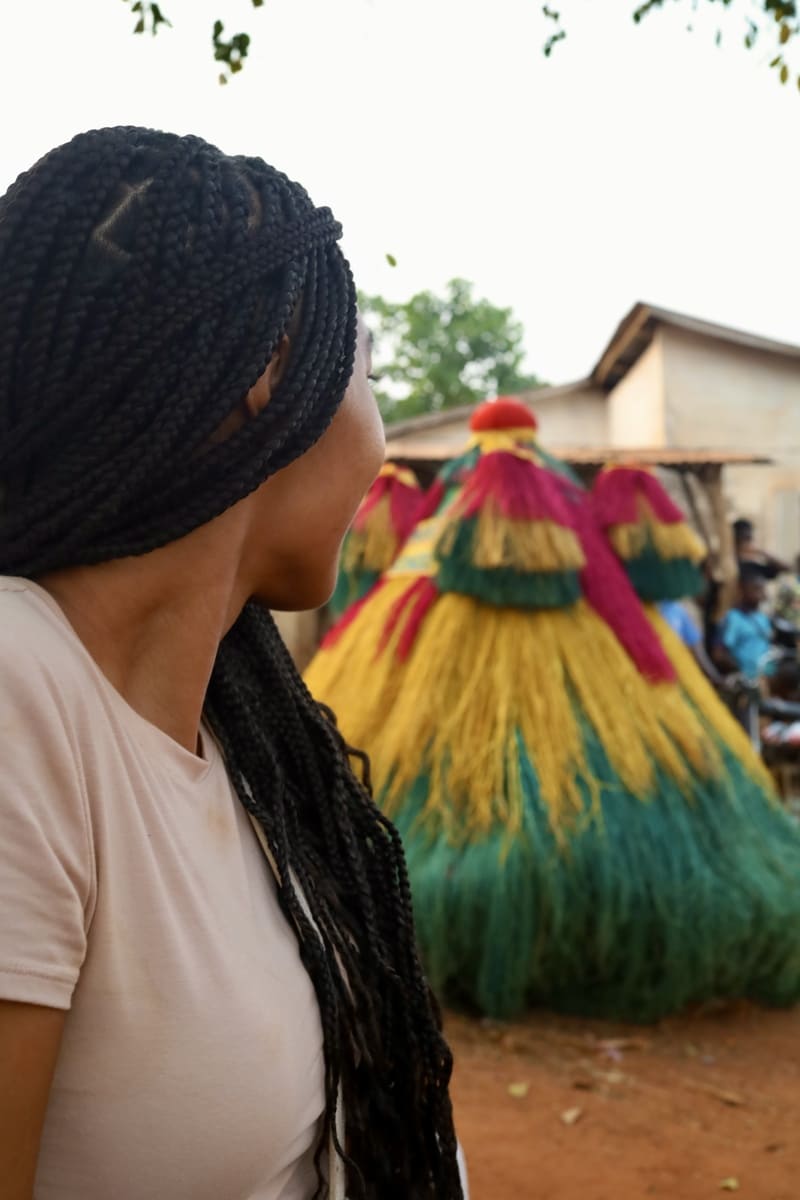
Zangbeto are considered night guardians, spiritual protectors of the community.
During the public ceremony, they spin and whirl so intensely that it doesn’t even make sense physically.
At times, they flip the Zangbeto over and different things appear underneath, like snakes or crocodiles.
But you never see a person.
This is the portion visitors are allowed to see. There’s much more that happens privately, tied to burials and sacred rituals.
It’s one of the clearest examples of how Benin holds tradition without turning it into a complete performance for outsiders.
Chew Tip: A private Zangbeto tour can cost around $140 USD, but if you’re with a group, splitting the cost can make it more affordable.
Why Abomey Belongs on Your Benin Itinerary
If you do Abomey early in your trip, it’s going to change how you experience everything else.
You start noticing the symbolism in daily life.
You understand the pride behind the traditions.
You see how spirituality and history aren’t separated into different boxes.
We also learned a lot that day about Benin’s wider role across the African diaspora, including connections to Brazil (Salvador da Bahia) and places like Casa das Minas.
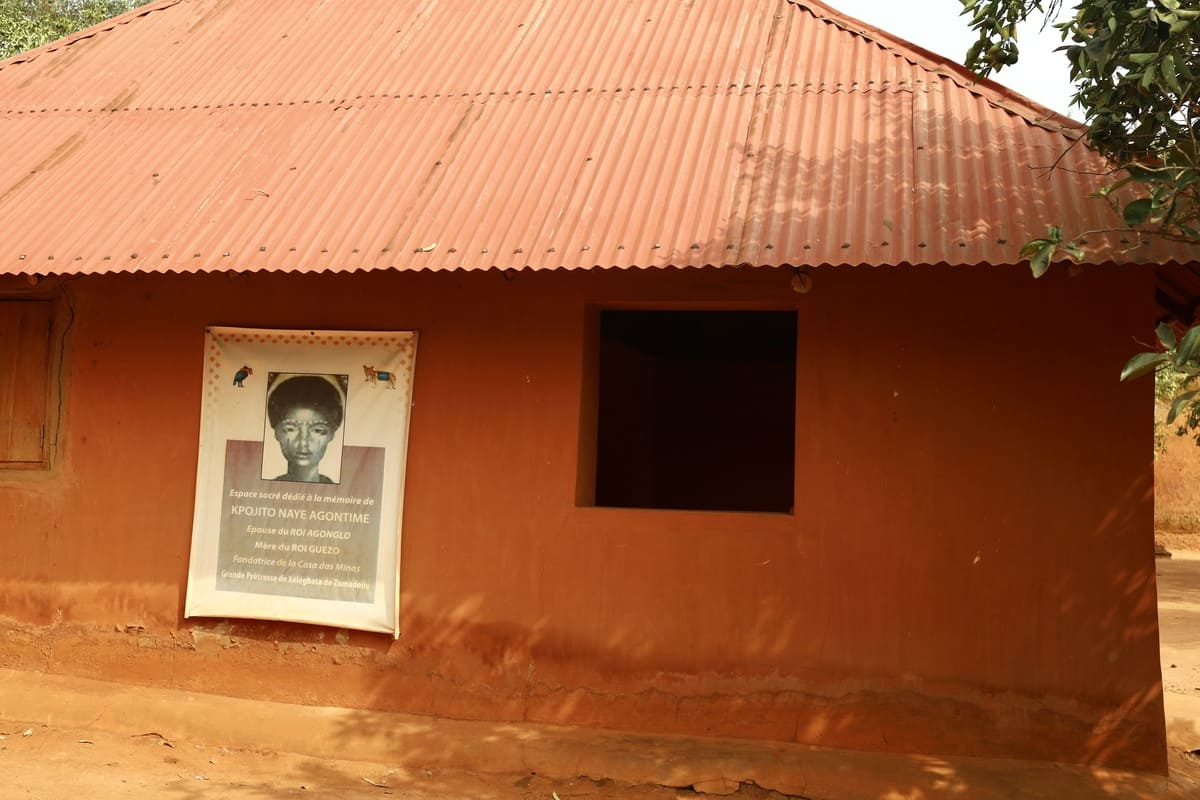
Benin was also the first African country to allow visa-free travel for all African nations, which reinforces its long history as a place of connection rather than exclusion.
Should You Visit Abomey?
Yes.
Just don’t treat it like a random day trip where you pop in and leave. Abomey makes the rest of Benin make sense, especially once you start recognizing the symbols and what they mean.
If you’re planning your itinerary, this is what Abomey gives you: a real look at Dahomey’s history, the royal traditions that are still respected today, and the kind of cultural depth you won’t get by winging it.
We explored Abomey with Massoud (Letouriste.bj), Mauriac (BENINOW), and our driver Adebayo, and the day wouldn’t have been what it was without them.
Abomey felt calm and easy to navigate, but if you’re planning a broader Benin trip, here’s our full breakdown of safety across the country.
Read next: Zangbeto in Benin | Door of No Return, Ouidah | Cotonou Highlights | What to Do in Lomé, Togo
Explore Benin Travel Guide: Full planning + logistics here.