Zangbeto is one of the most unforgettable things you can witness in Benin. And it’s also one of the easiest things to misunderstand.
Disclosure: This post may contain affiliate links, which means we’ll receive a commission if you purchase through our links, at no extra cost to you. Please read full disclosure for more information.
If you spend any amount of time in southern Benin, you’re going to hear about Zangbeto before you see it.
People will mention spinning figures. Night guardians. Mystery. “No one inside.”
And while photos and short videos float around online, most people still leave out the part that matters: what Zangbeto means here, and what parts of it were never meant for outsiders to fully unpack.
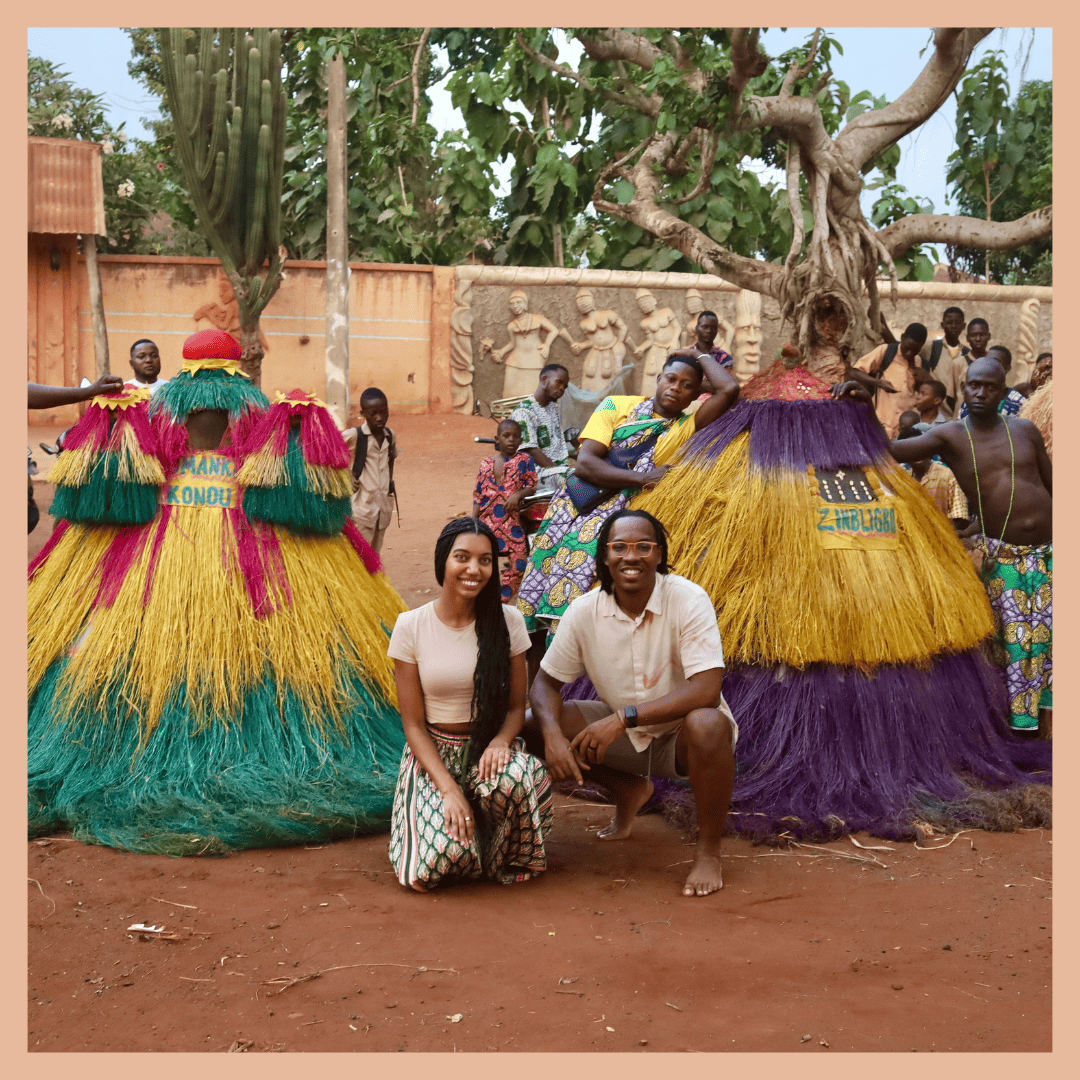
We witnessed a Zangbeto ceremony in Abomey while traveling with Massoud (Letouriste.bj) and Mauriac, founder of BENINOW.
It wasn’t even originally on our itinerary. Massoud heard it was happening nearby and reshuffled our day so we could make it.
It ended up being one of those moments you don’t necessarily “plan” in a neat way.
You hear it’s happening, you move with the community’s timing, and you move accordingly.
So let’s talk about what you’re actually seeing, what to expect in the moment, and how to experience it respectfully without turning it into a spectacle.
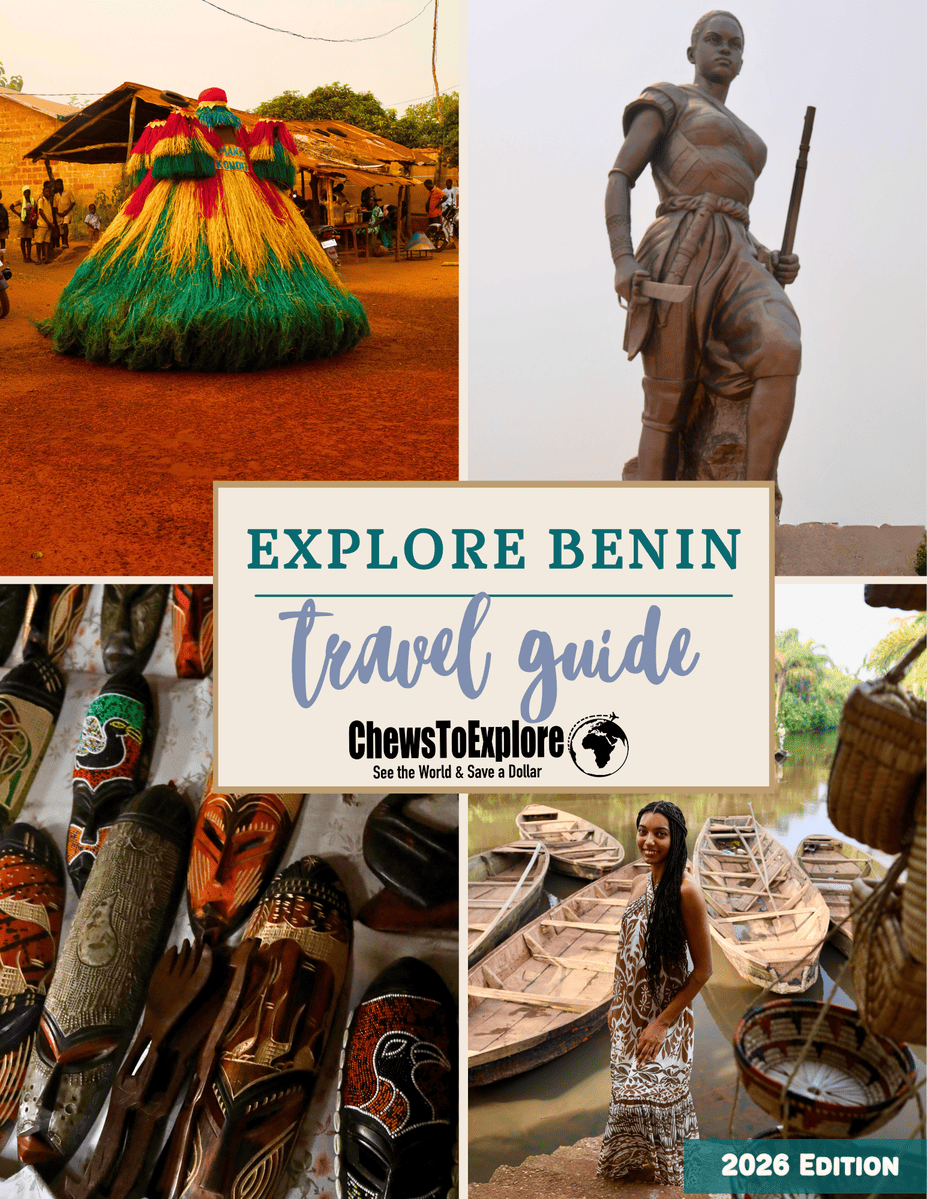
Planning your trip to Benin? Download our “Explore Benin Travel Guide” for the full itinerary, logistics, and what to prioritize.
What Is Zangbeto?
Zangbeto are known as the guardians of the night in parts of Benin, and also in areas of Togo and Nigeria.
They’re tied to Vodun culture and community protection, which is why people speak about them with a certain seriousness.
I’ve seen people online explain Zangbeto like it’s a costume or a performance, but once you’re actually standing there, that description feels… small.
Like it’s missing what the community believes they’re witnessing.
At the core, Zangbeto represents protection.
Protection of the community, protection of order, protection of what people consider sacred.
And it’s treated as something real, not symbolic.
What Travelers Are Allowed to See
Here’s what’s important to understand. What visitors witness is the public-facing portion.
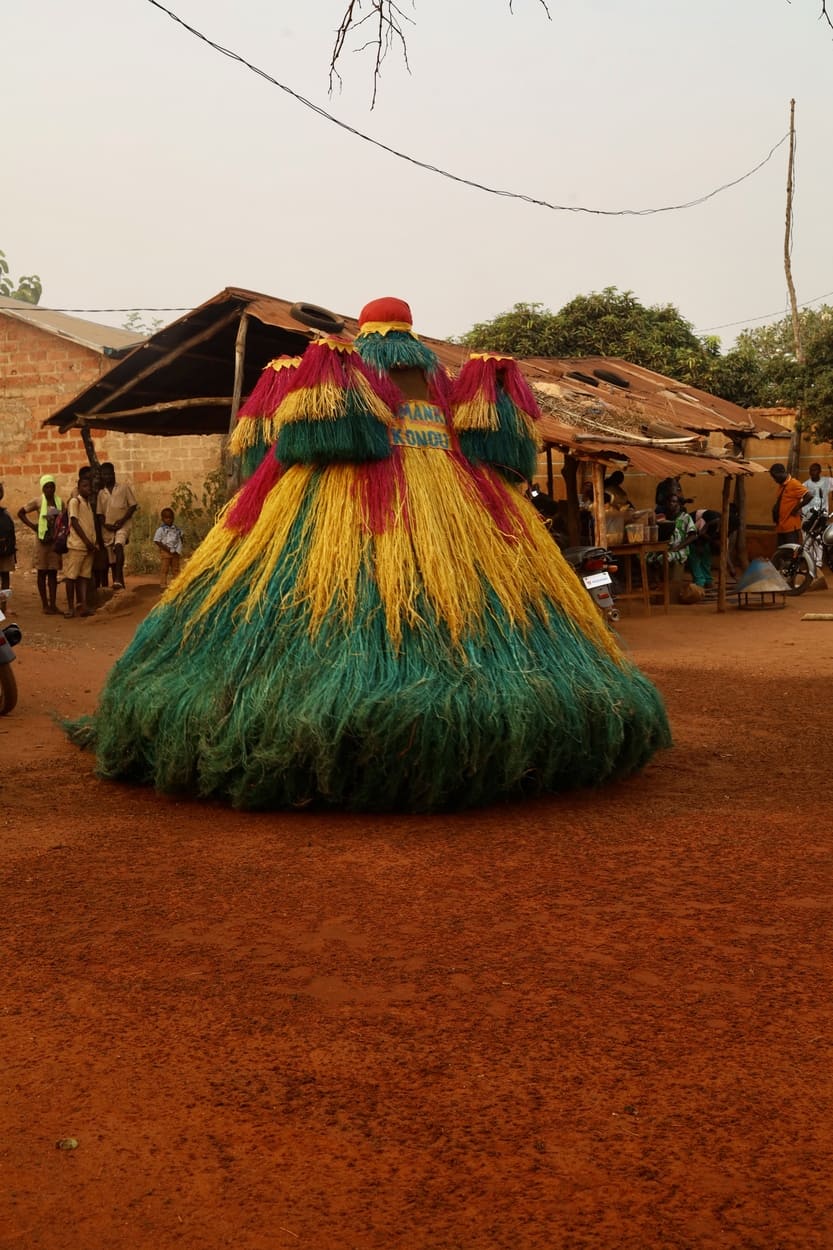
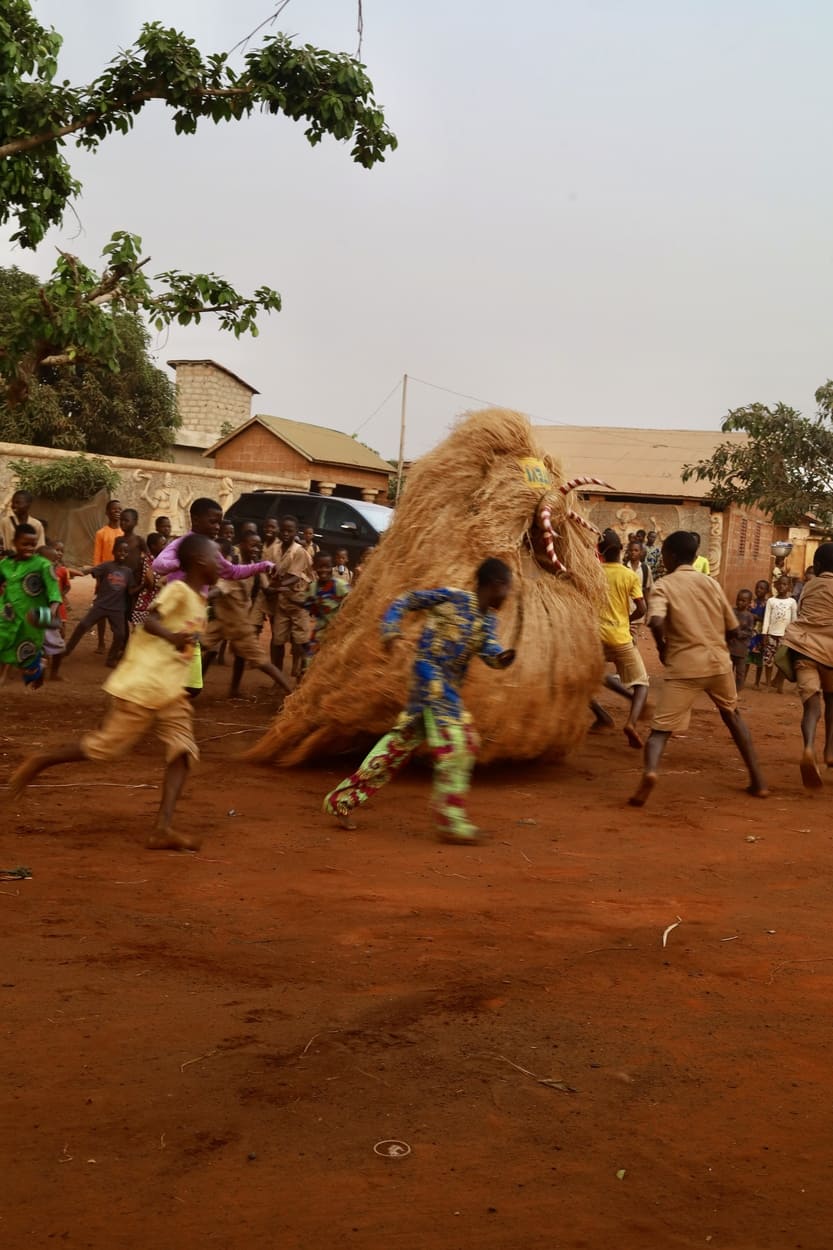
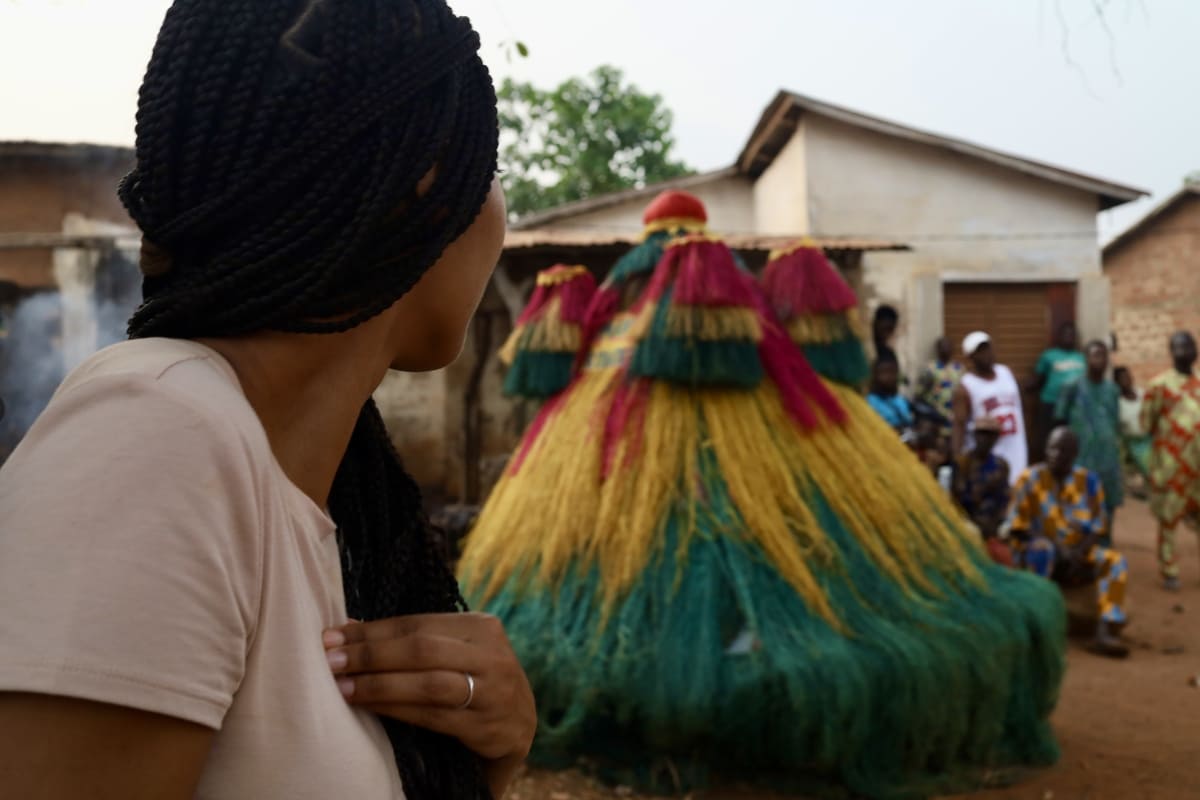
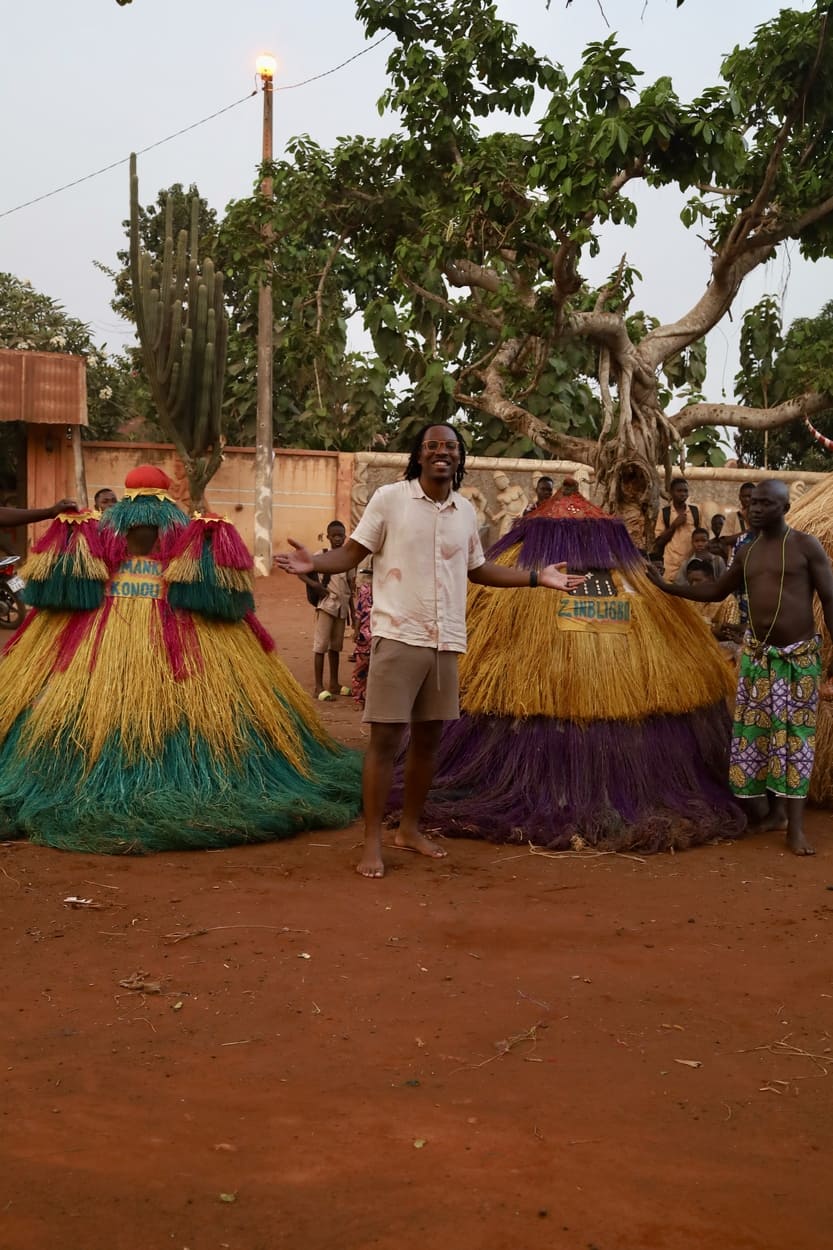
During a ceremony, the Zangbeto appears as this tall, cone-shaped figure made of raffia.
And when I say it moves, I don’t mean “someone walked around in it.”
It spins. Hard. Fast. Sometimes so aggressively it almost looks like it’s fighting the ground.
At different moments it drops, collapses, lifts, twists, snaps back up.
Sometimes it’s flipped over, and objects appear underneath. We saw things like live snakes and crocodiles.
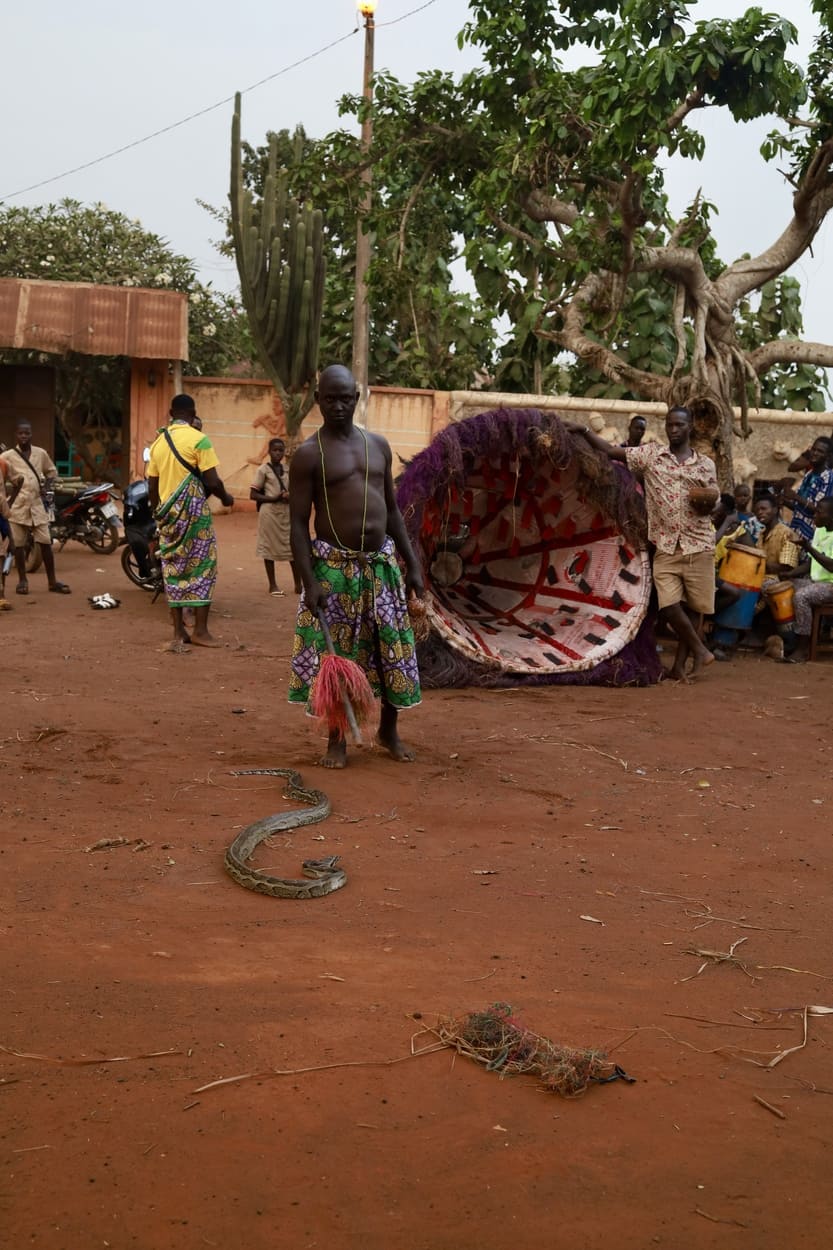
What we didn’t see was a person.
And you’re not supposed to.
There are parts of Zangbeto tradition tied to sacred rites and burials that aren’t shared publicly.
It’s one of those experiences where curiosity is normal, but not everything is up for debate or dissection.
“There’s No One Inside” and Why People Say That
You’ll hear it quickly: “There is no one inside.”
If you’re reading this and your brain immediately goes to proving it, solving it, debunking it… I’m telling you now, you’re going to miss the whole point of being there.
People aren’t saying that as a fun fact.
They’re saying it as a statement of belief, and a way of protecting the tradition from being reduced into something tourists can casually consume and explain away.
The fact that you never see a human body reinforces the idea that Zangbeto isn’t human-controlled.
So yes, it’s mysterious. But it’s also cultural. The mystery is part of how it stays respected.
The Role of the Community (and Why It Feels So Intense)
The thing about Zangbeto is it doesn’t happen in isolation. The crowd is part of it.
People gather. Kids weave in and out like they’ve done this their whole lives. Elders watch closely.
Drumming drives the whole atmosphere, and singing carries the energy in a way you can feel in your chest.
And I’m not even going to lie, I was definitely clutching my non-existent pearls because it’s one thing to hear about Zangbeto… it’s another thing to watch it happen right in front of you.
Large cultural events can raise questions for travelers, so we’ve also written about what safety looked like for us throughout Benin.
When Zangbeto Happens (and Why You Can’t Force It)
Public ceremonies can happen once a year in some communities, or during major communal moments, or around rites of passage and funerals.
We didn’t even have Zangbeto planned. Massoud heard it was happening nearby and rearranged our Abomey itinerary so we could witness it.
That’s the kind of “luck” you can only get when you’re traveling with people who are tapped in.
If you haven’t read our full overview of what traveling through Benin is actually like, that context will help this stop make more sense.
How to Witness Zangbeto Respectfully as a Traveler
If you’re hoping to see Zangbeto during your Benin trip, here’s what actually matters.
Go with trusted local guides
We experienced Zangbeto with Massoud (Letouriste.bj) and Mauriac (BENINOW). They are locals who work directly with communities, and nothing felt staged or forced for tourists.
Ask before filming
Some moments are fine to record. Some are not. In our case, drone footage wasn’t allowed since this took place within a temple space. Follow guidance and read the room.
Don’t go looking for “proof”
You don’t need to decide what you believe in order to be respectful. You just need to show up with humility.
For me, I’m a child of God and secure in my faith.
And I can still witness someone else’s culture without fearing it, or needing it to “prove” anything.
Remember you’re entering someone else’s world
Here’s what I mean when I say “you’re a guest.“
Zangbeto wasn’t created to be understandable to outsiders.
It wasn’t built for content. It wasn’t designed to make visitors comfortable.
So when you’re standing there, the goal isn’t to get the best footage or walk away with the perfect explanation.
The goal is to witness something that belongs to the community, on their terms, without trying to take ownership of it.
That mindset changes everything.
Why Zangbeto Stays With You
Long after the spinning stops, what stays with you is how the whole community holds it with so much certainty.
Not everyone needs you to understand it. Nobody’s trying to convince you. They’re just living it.
And as a traveler, that’s one of the most grounding things you can experience.
Some parts of the world are not interested in being translated for outsiders.
Some things are allowed to stay sacred. Even in public.
Zangbeto reminded me of that in the clearest way possible.
Planning your trip to Benin?
Read next: Know Before You Go to Porto-Novo | Things to Do in Cotonou | Sacred Forest of Kpassé in Ouidah | Largest Voodoo Market in the World
Explore Benin Travel Guide: Full itinerary, logistics + what to prioritize here.