One of the most important stops on a Benin itinerary. Here’s what to expect from a day in Ouidah before you go.
Disclosure: This post may contain affiliate links, which means we’ll receive a commission if you purchase through our links, at no extra cost to you. Please read full disclosure for more information.
We visited Ouidah and hopped between a few sites that were all close together, but emotionally, it felt like we covered a lot of ground.
It was one of those days where you’re taking photos, but you’re also processing while you’re standing there.
Ouidah is the Vodun capital of Benin, and it also holds some of the most important history connected to the transatlantic slave trade.
So the day isn’t light, but it’s worth it if you want deeper context for what you’ll see across the country.
If you’re considering adding Ouidah to your Benin itinerary, here’s what I wish someone had told me before we went.
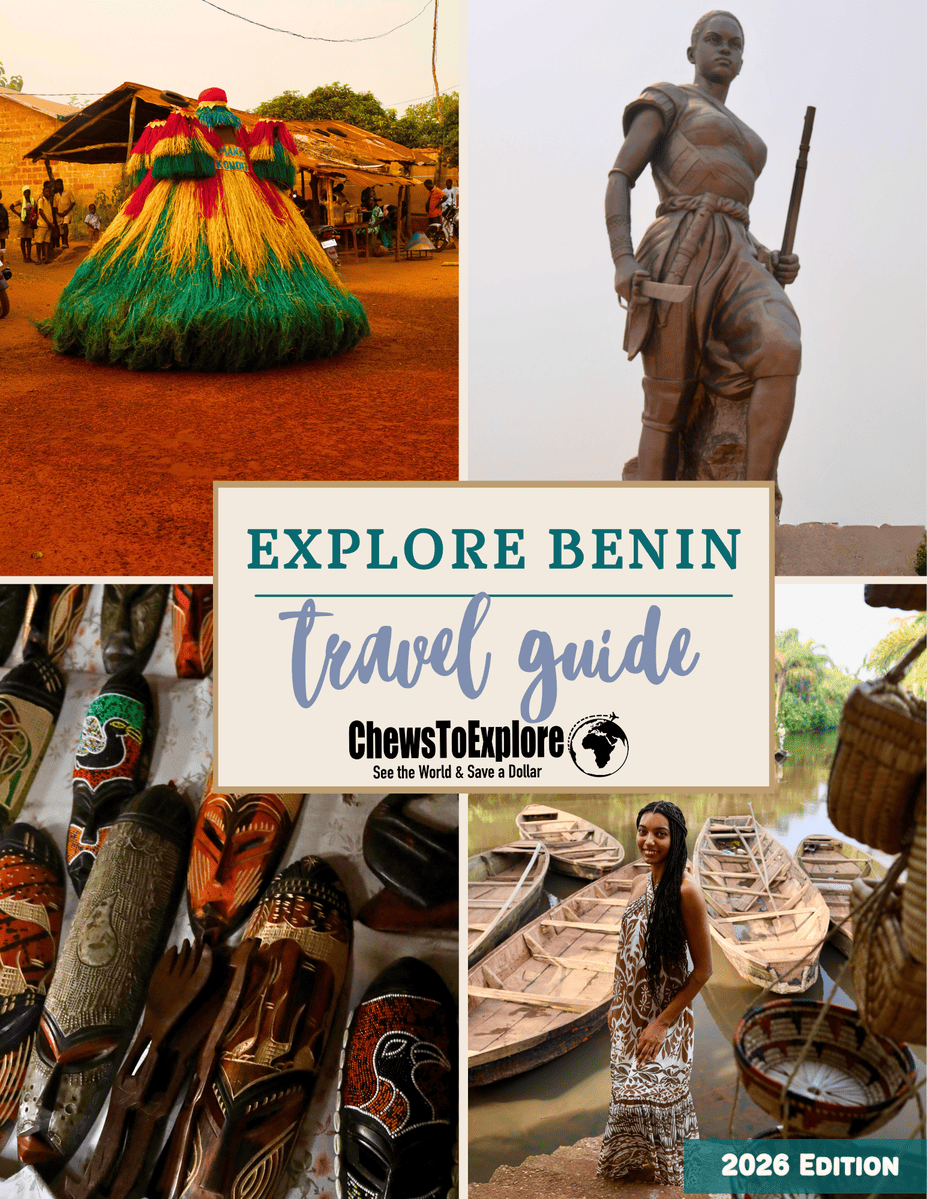
Want Benin to feel easy to plan? The “Explore Benin Travel Guide” lays out the whole trip plan so you can travel confidently and focus on the experience.
Why People Go to Ouidah
People visit Ouidah because it’s one of the clearest places in Benin where you can feel how history and spirituality sit in the same space.
Ouidah is the Vodun capital, but Vodun here isn’t presented like a “tourist concept” or a scary mystery the internet tries to turn into content.
It’s part of culture and everyday life.
It shapes how people relate to family, ancestors, healing, protection, and the land itself.
And then there’s the other reason people come here.
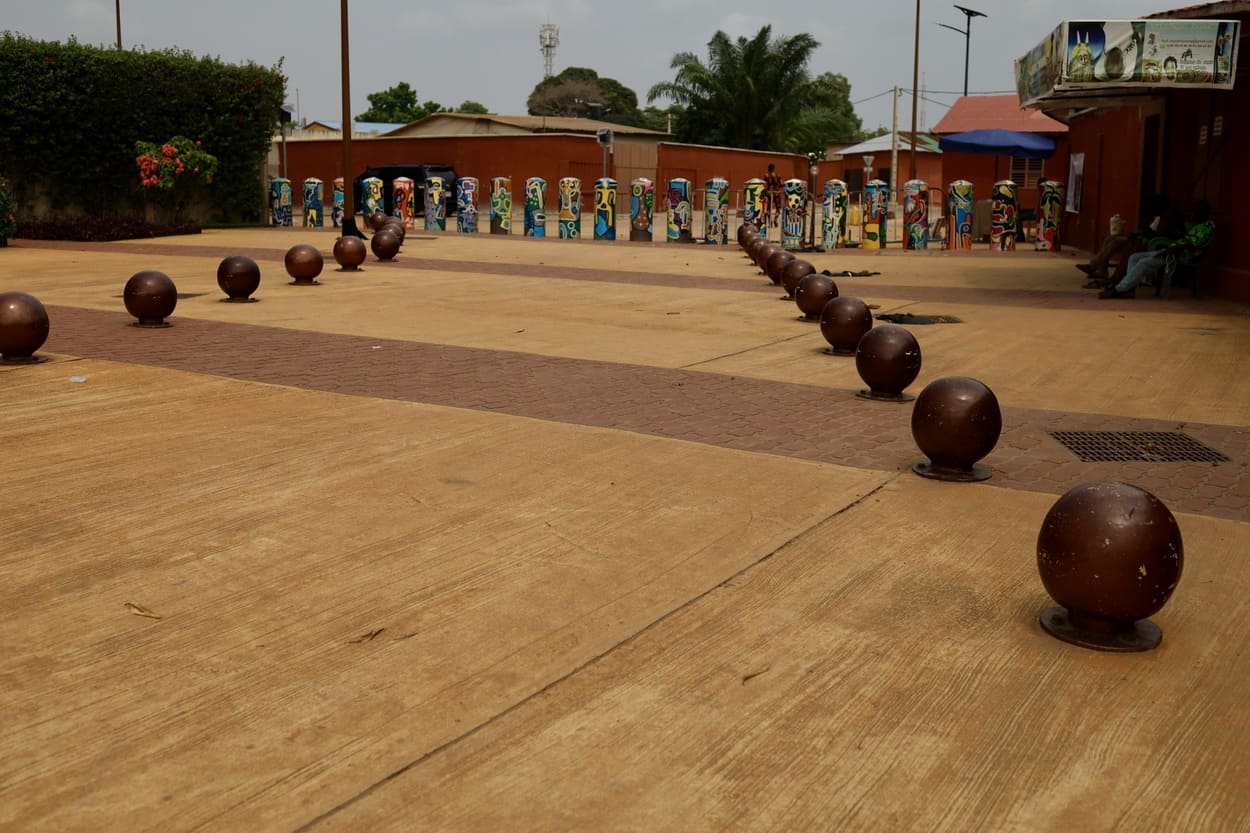
Ouidah holds some of the most painful history connected to the transatlantic slave trade, and visiting forces you to face that history in a way that doesn’t stay abstract.
So when you spend a day in Ouidah, you don’t just “see sights.”
You start understanding Benin differently.
The symbols you’ll notice later.
The ceremonies that make more sense.
Why certain places feel protected, even when they’re open to visitors.
Ouidah gives you that kind of context.
To understand how this stop fits into the bigger picture of a Benin trip, start with our overview of whether Benin is worth visiting.
Door of No Return
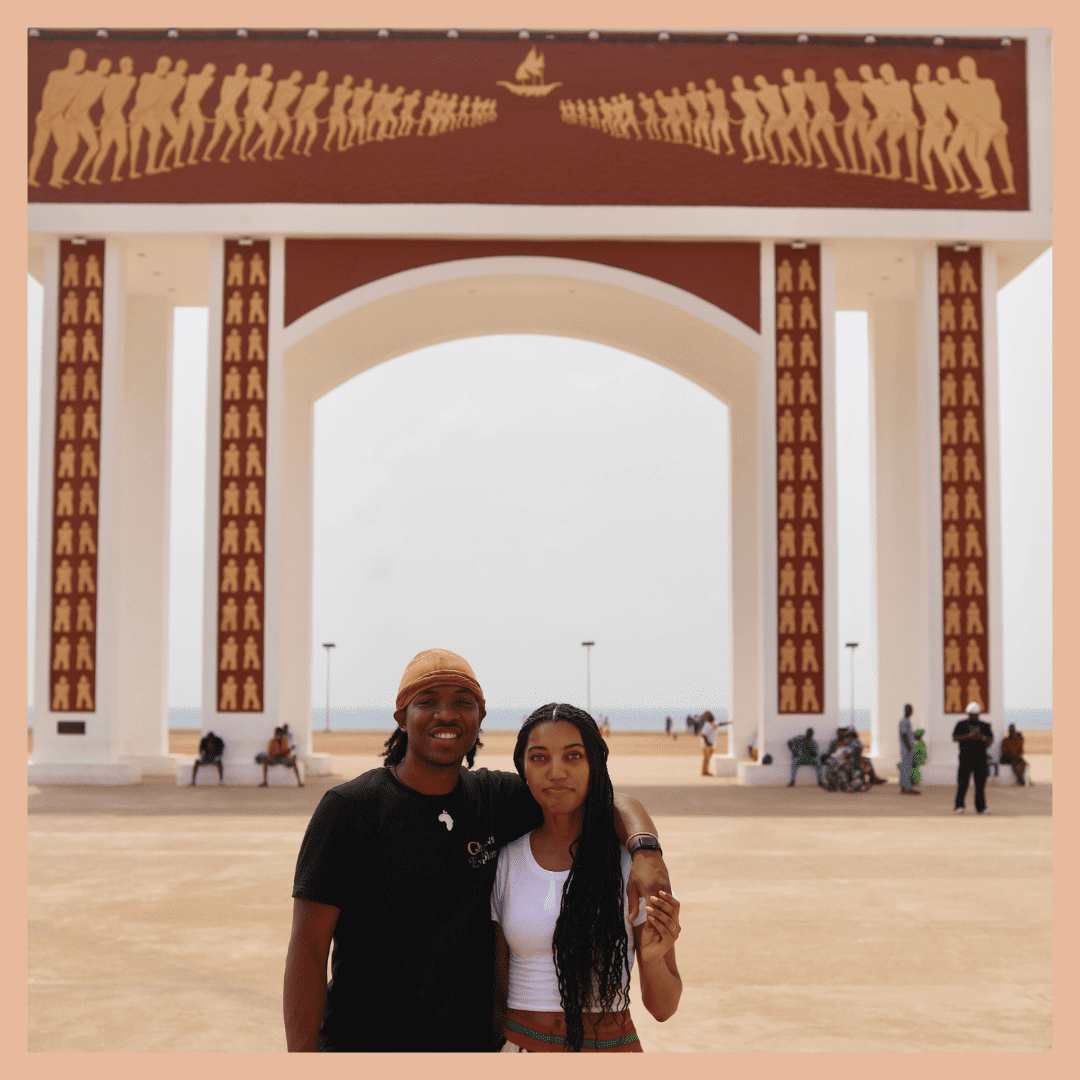
Standing at the Door of No Return is different from reading about it.
It’s on the coast in Ouidah, facing the Atlantic, marking the final point where enslaved Africans touched their homeland before being forced onto boats and taken across the ocean.
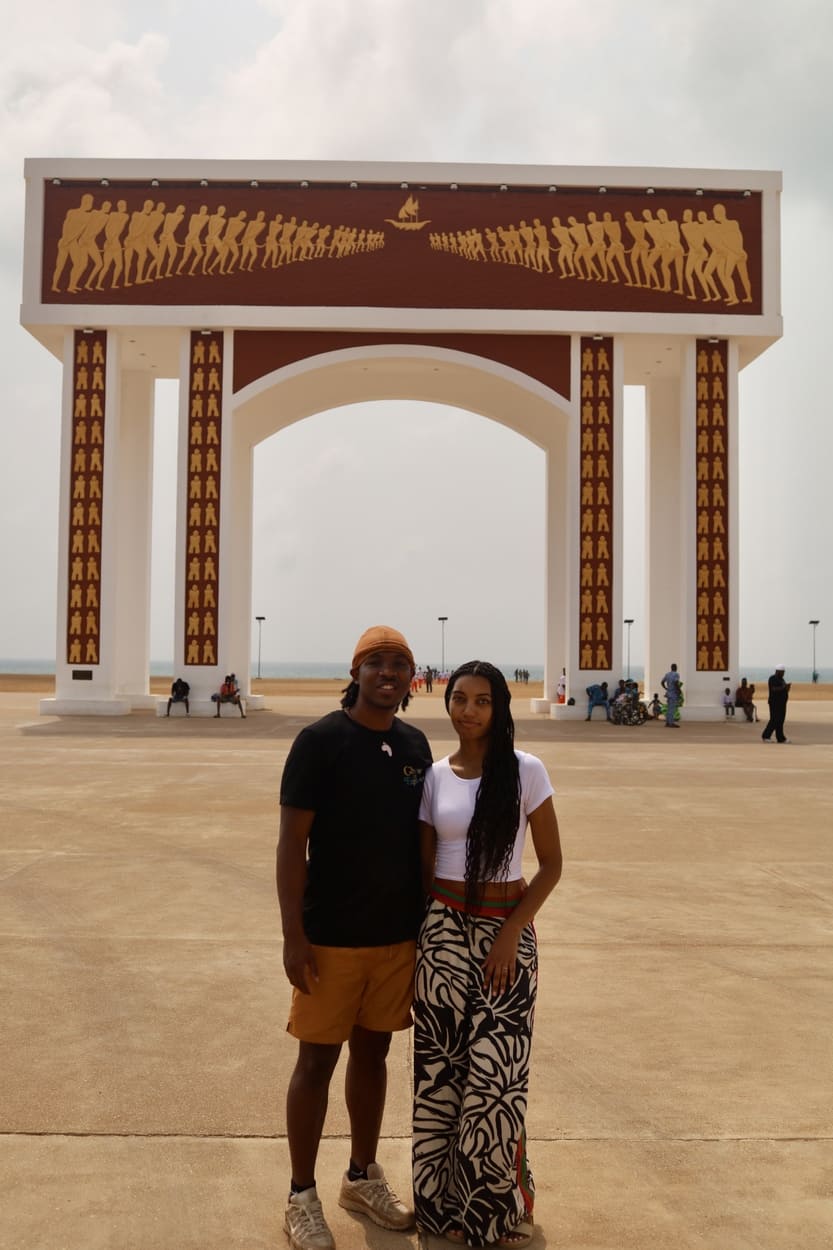
Massoud (letouriste.bj) walked us through the route people were forced to take before reaching the water.
It wasn’t one single moment.
It was a process designed to break people down long before they ever reached the shoreline.
They were auctioned.
Marked.
Forced through rituals meant to break identity.
Held in confinement.
And if they were deemed too weak to survive the journey, there were mass burials.
The monument itself is beautiful in a way that feels almost impossible to describe, because it’s marking something unbearable.
It was designed by an Afro-Brazilian artist from Benin, and it frames the ocean so directly that you’re not distracted by anything else.
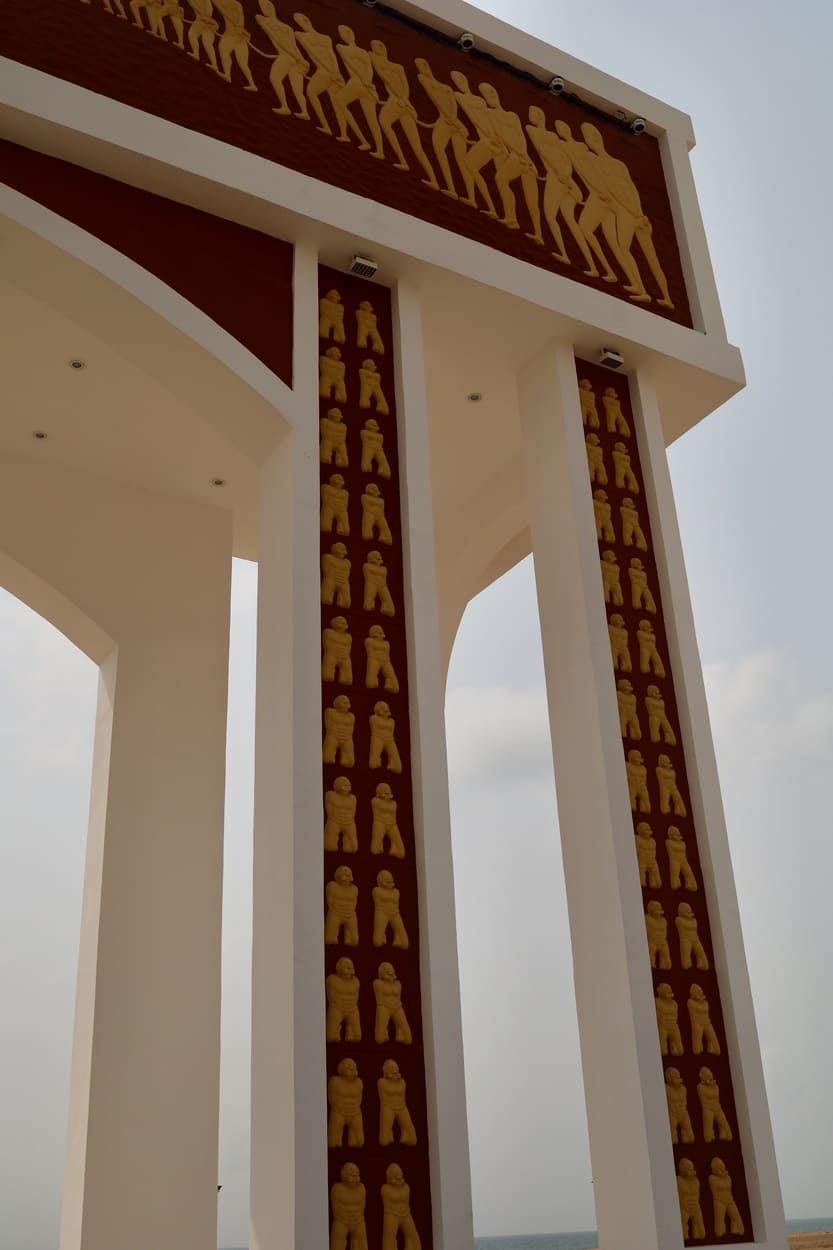
People call it the Door of No Return because of what happened here.
But for many of us in the Black diaspora, it can also hold another meaning.
Our ancestors didn’t leave by choice. Coming back is.
And having the privilege to stand there as someone who gets to return on your own terms changes how the site lands.
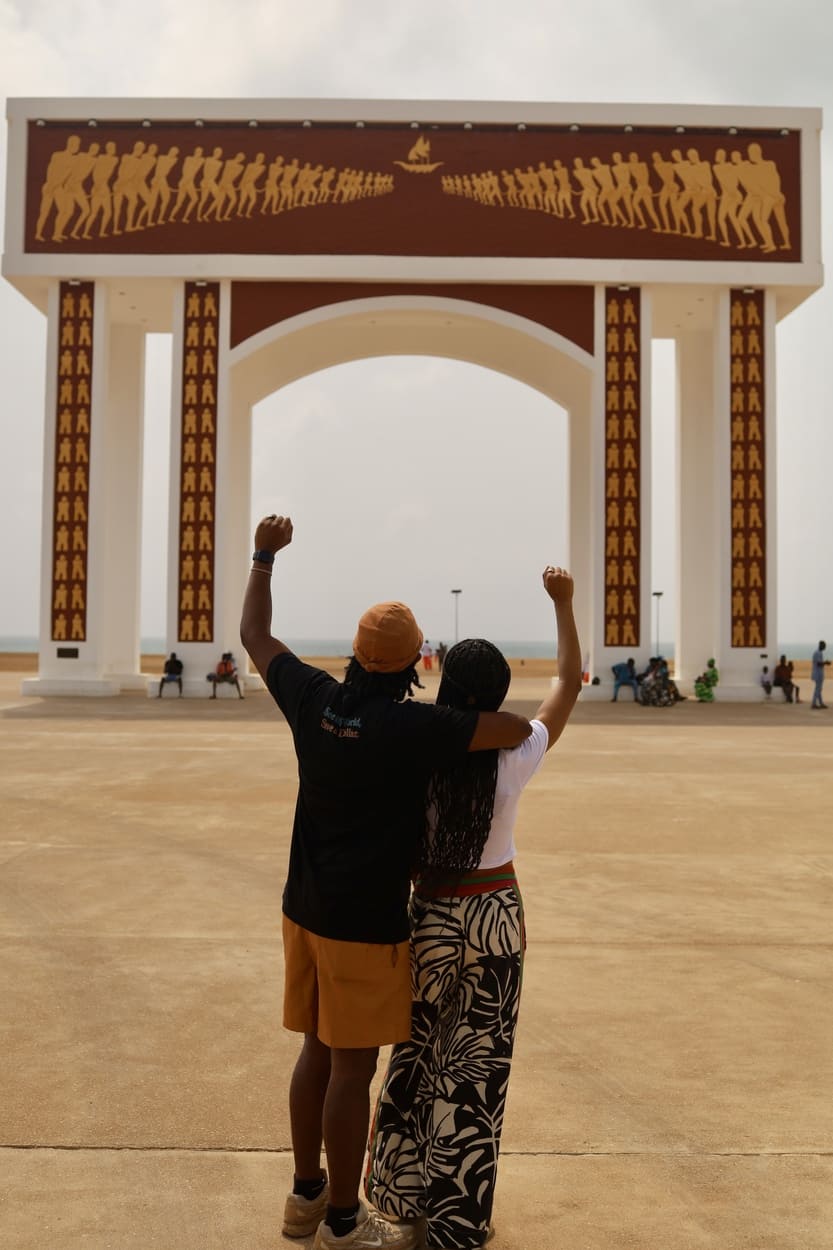
If Ouidah is on your itinerary, I think you should give yourself the time to experience this stop slowly.
And if this is your first time visiting West Africa, you might also be wondering about safety. We break down what it was really like traveling through Benin here.
The Sacred Forest of Kpassè
The Sacred Forest of Kpassè was one of the most interesting parts of the day.
You’re walking through a place that’s still spiritually active for the people who live here.
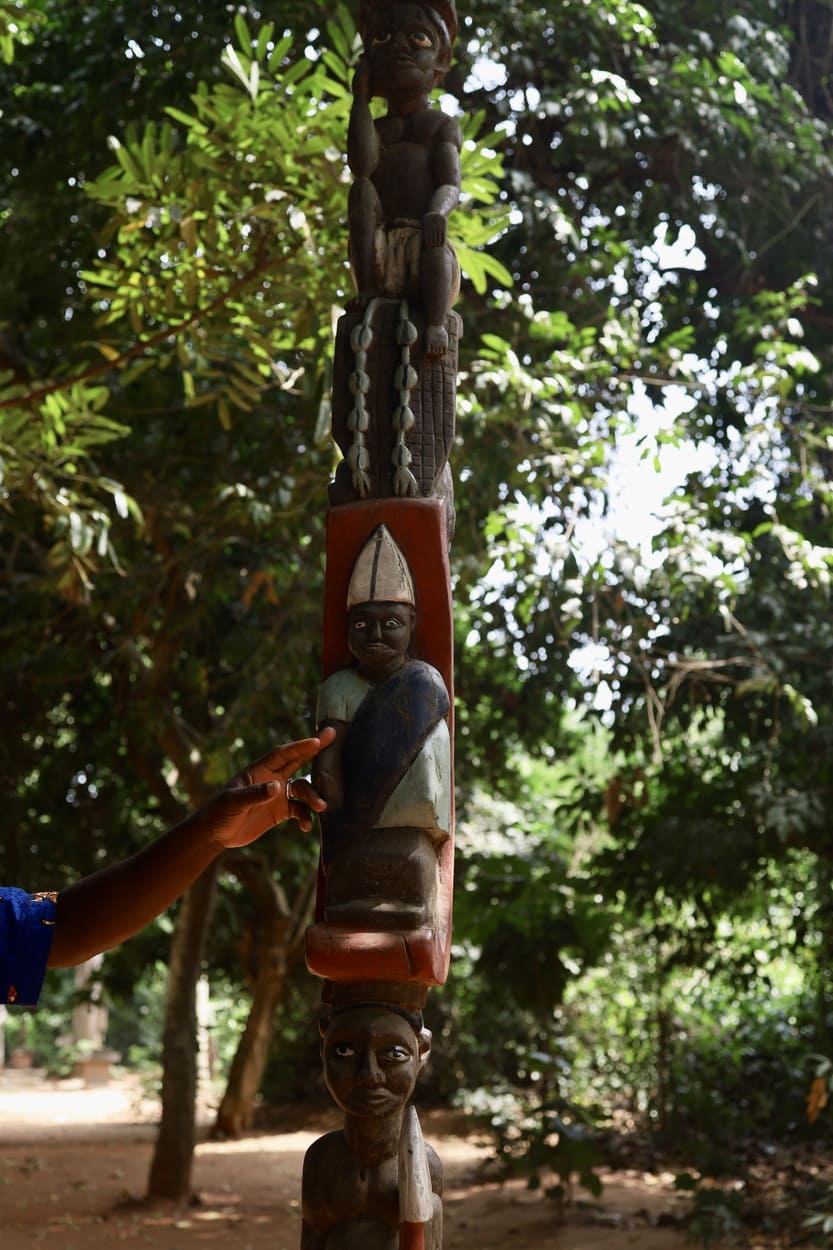
Some parts are open to visitors, and some parts are not.
You’re probably going to have questions and you should ask them.
The guide there will explain the stories and the meaning behind what you’re seeing.
But there are still boundaries, and certain areas are simply not for visitors.
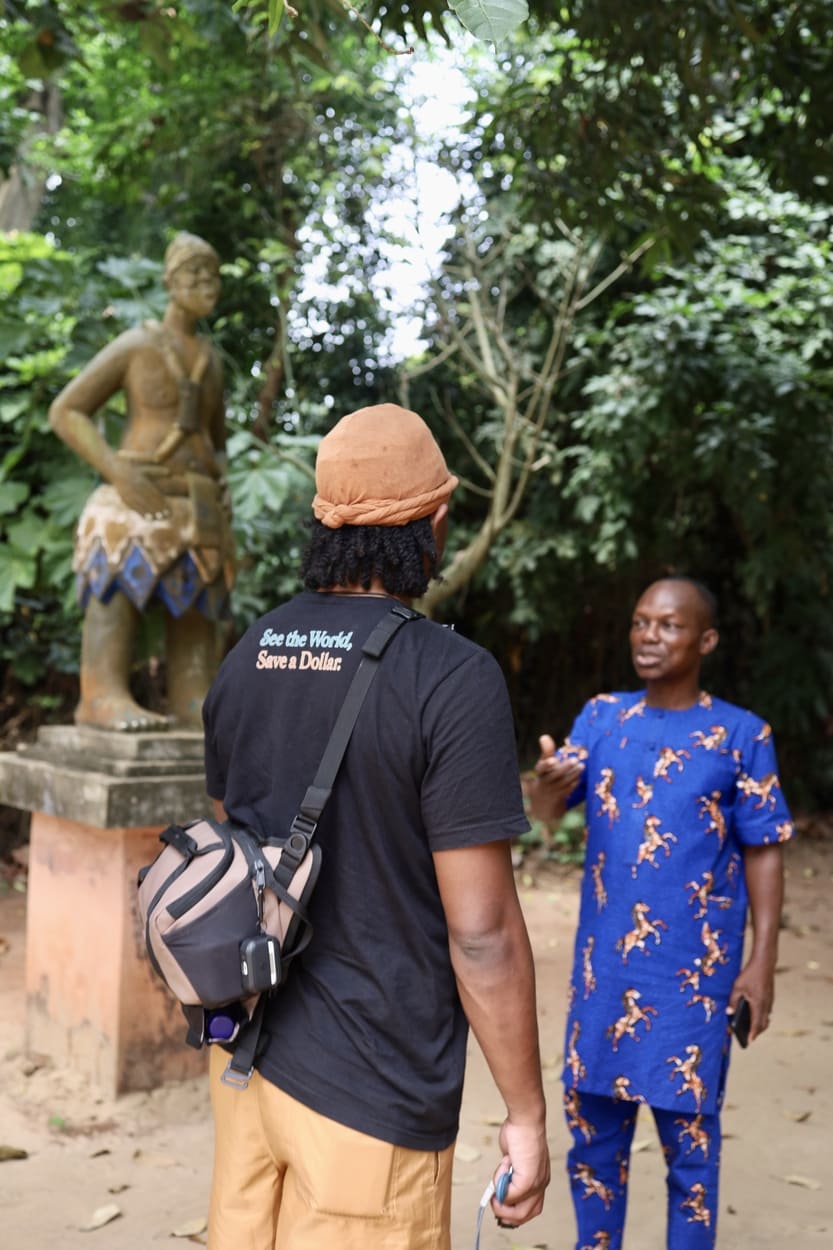
Overall, it’s quiet here, but it doesn’t feel empty.
That’s the best way I can explain it.
Pythons Temple
The Pythons Temple is the stop that makes people nervous, and I get it.
Because so was I!
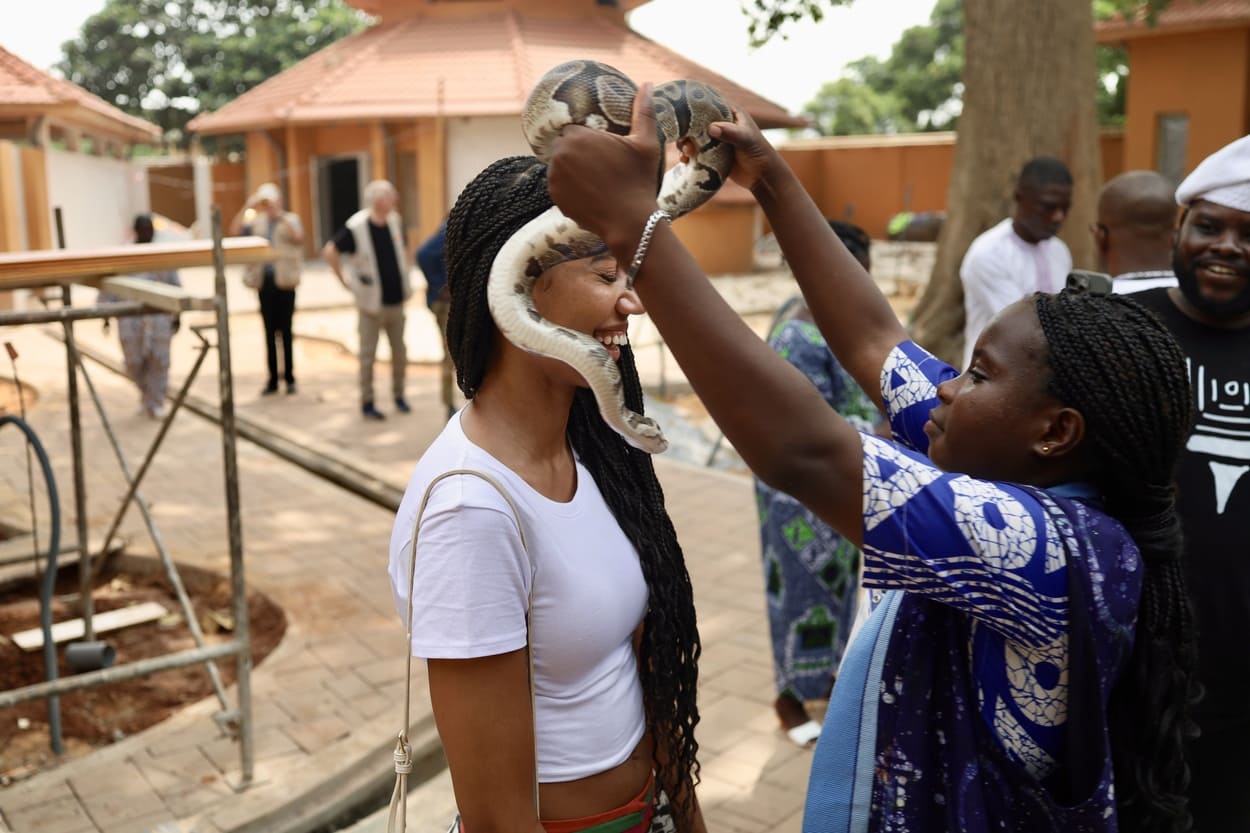
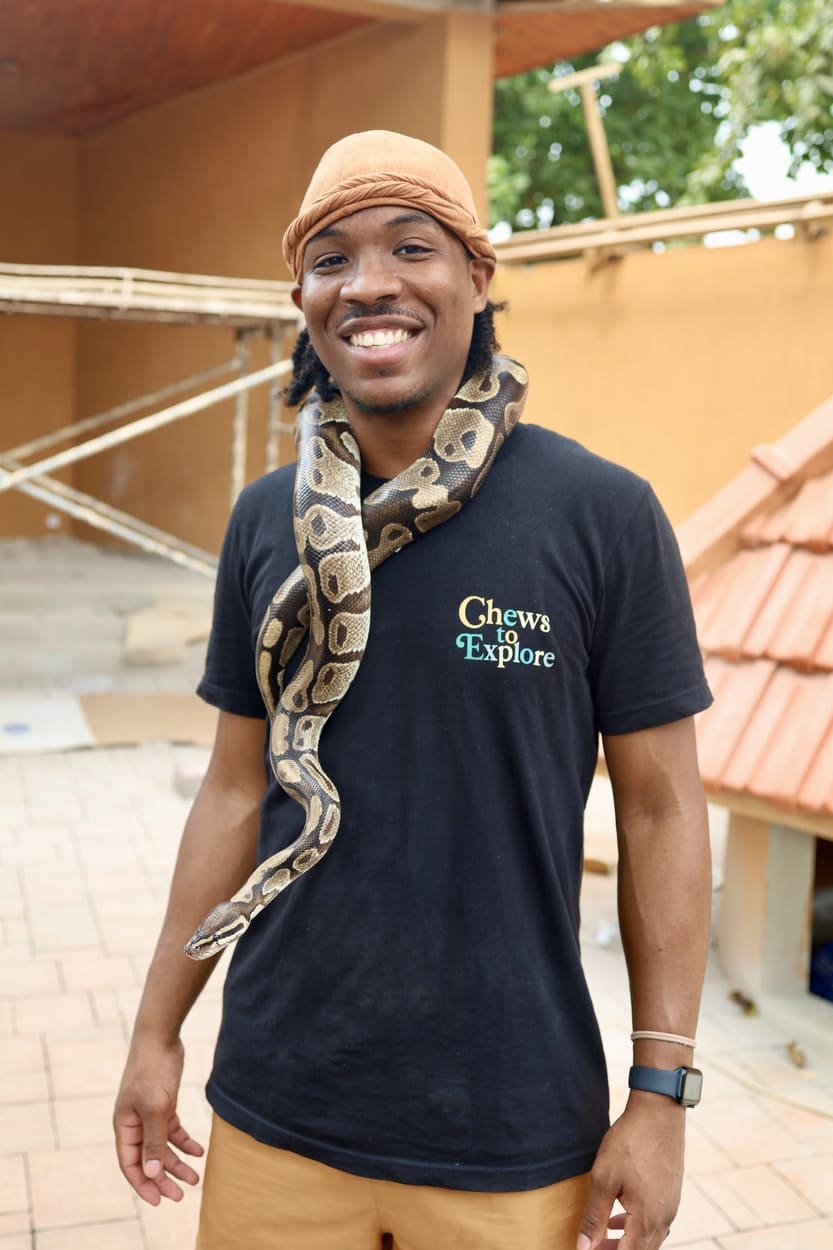
The visit itself is short and guided, and the biggest thing you take away is how sacred pythons are in this community.
Nobody is acting like this is extreme.
Nobody is screaming. It’s treated like a part of life.
Now, if snakes truly terrify you, skip it.
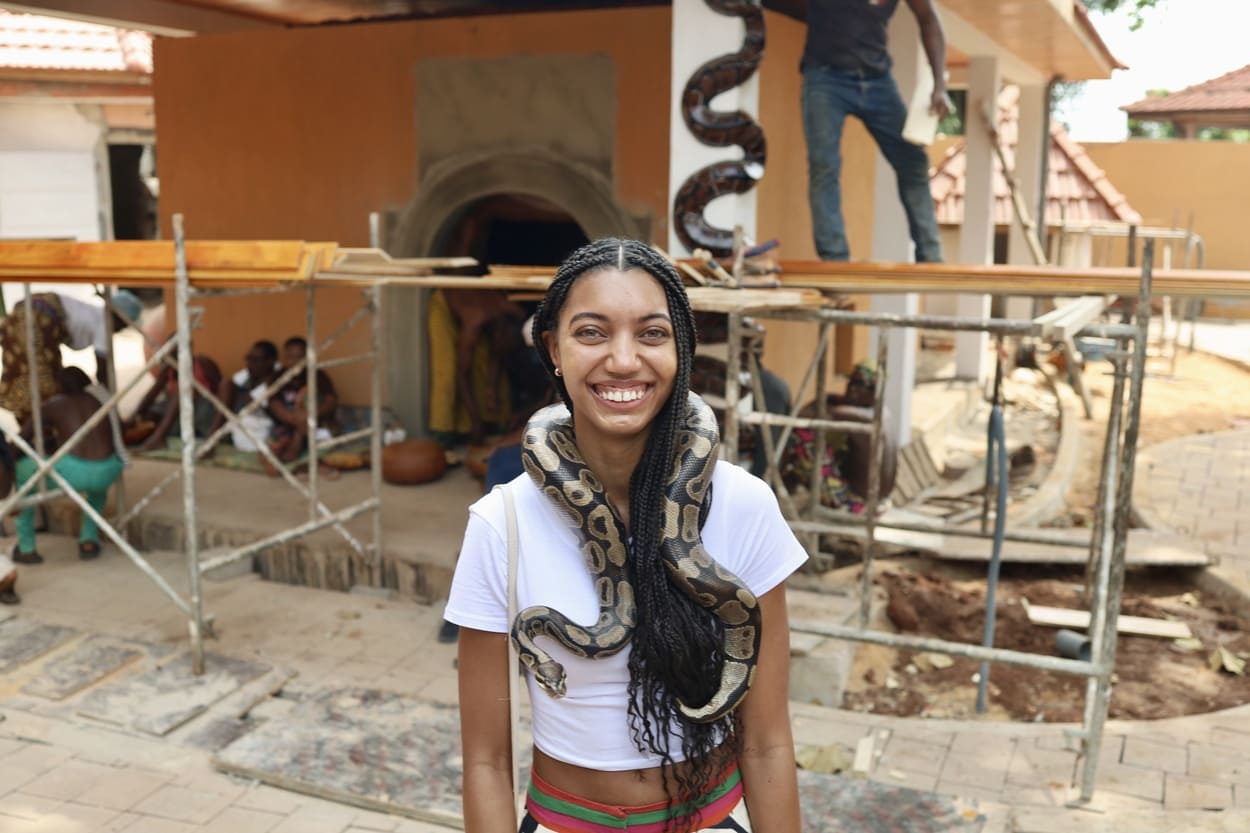
I’m not going to sit here and act like you have to power through fear for cultural education.
But if you’re curious and you can manage possibly having a python placed around your neck, it’s a rare chance to see how spiritual relationships with animals are understood in real life.
Musée Zinsou
The Zinsou Museum was one of my favorite stops in Ouidah because it adds a completely different layer to the day.
It was refreshing to step into a space that highlights Benin through art, photography, and contemporary storytelling.
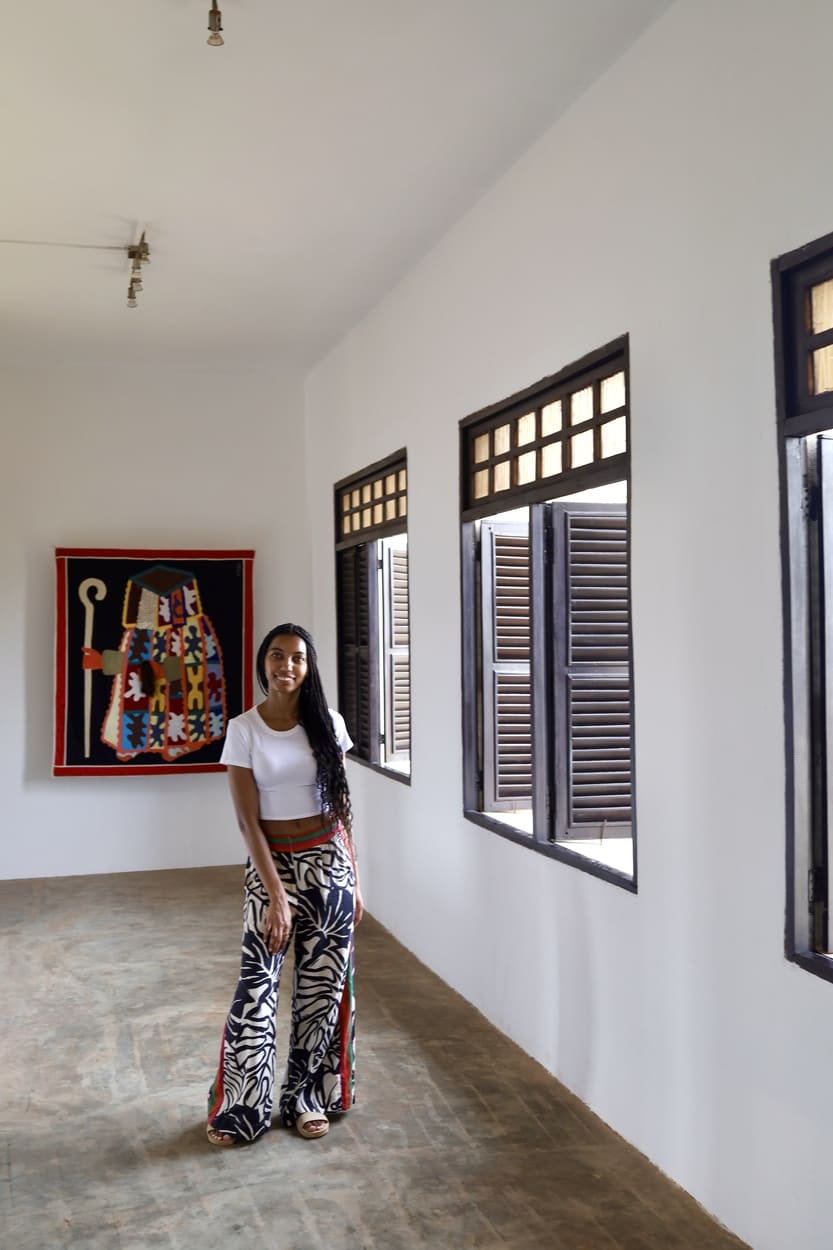
It’s calm, curated, and honestly just a nice reset.
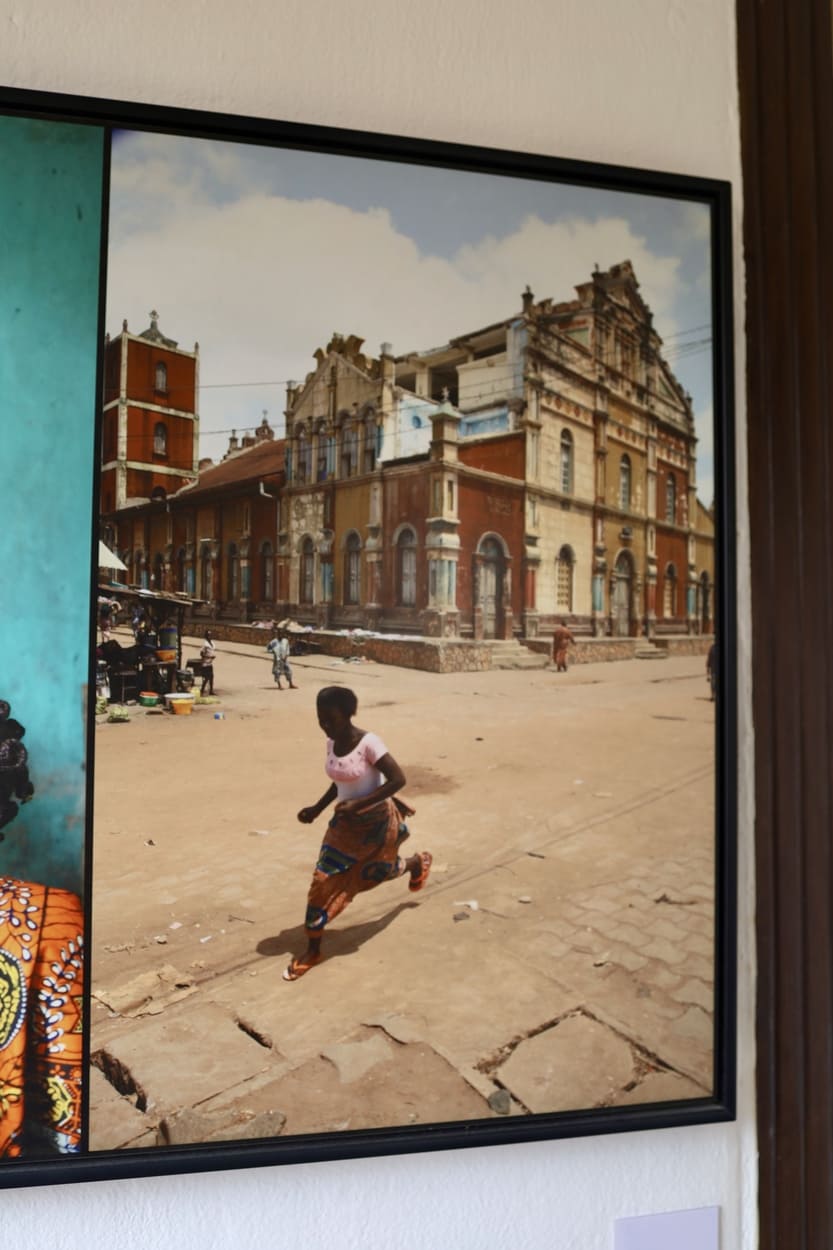
This is where you’ll see rotating exhibits that include images and pieces that connect Benin to the diaspora in ways that feel modern and personal.
It’s also where I first saw a photo of the Grand Mosque of Porto-Novo, and even as a museum display, the architecture stood out immediately.
If your Benin trip includes Ouidah, I’d recommend adding the Zinsou Museum for balance.
It won’t replace the major historical sites, but it rounds out the day and reminds you that Benin’s story isn’t only about the past.

There’s creativity, pride, and present-day perspective here, too.
So Who Is Ouidah Actually For?
Ouidah is for travelers who like trips with context and don’t mind a day that feels a little heavier emotionally.
If your favorite kind of travel day is more focused on food, nightlife, shopping, or just exploring without a structured plan, Ouidah can still be worth visiting.
It just might feel slower and more reflective than the rest of your itinerary.
This is the kind of day where you’ll get more out of it if you show up ready to learn, listen, and take your time.
The sites are close together, so the day is logistically easy.
The weight comes from what you’re learning, not from running around.
Ouidah gives you context you’ll carry into every other part of the trip.
Read next: Best Things to Do in Cotonou | Visiting Ganvié (Village on Water) | Zangbeto in Benin | Lomé Togo Tips
Explore Benin Travel Guide: Full planning + logistics here.