Ganvié, Benin is a village built entirely on water. Here’s what visiting is actually like, and why it changes how you see ‘normal.’
Disclosure: This post may contain affiliate links, which means we’ll receive a commission if you purchase through our links, at no extra cost to you. Please read full disclosure for more information.
Ganvié was our evening stop after exploring Cotonou, and Massoud (Letouriste.bj) and Mauriac (BENINOW) coordinated the entire day for us.
It’s often called the “Venice of Benin,” and sure, that comparison helps people picture it before they arrive.
But once you’re actually there, you stop trying to compare it to anything else.
It’s its own world, with its own rules, and it runs impressively well.
If you’re planning a Benin itinerary and wondering if Ganvié is worth making time for, here’s what it was actually like, plus what I wish more travelers understood before visiting.
Planning your route through Benin? Our “Explore Benin Travel Guide” has the full itinerary, timing, and logistics laid out step-by-step.
Arriving in Ganvié
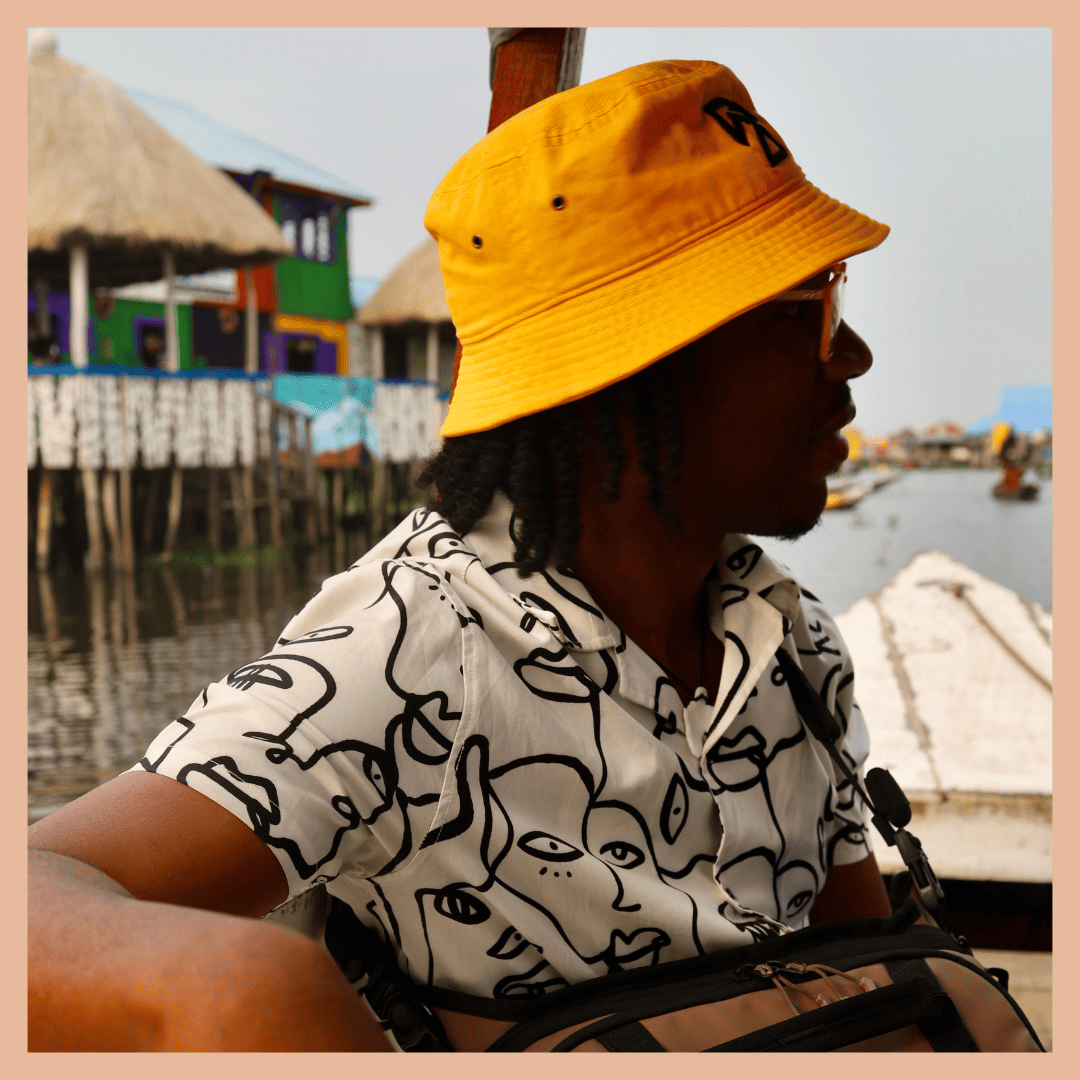
We met up with Herman, a local guide who grew up in Ganvié, and he took us out onto Lake Nokoué, the largest lake in Benin.
The lake connects into wider waterways and even links toward neighboring countries, which explains why this area has always been so active.
Ganvié itself is completely on water.
There are no roads. No sidewalks.
No “we’ll just walk over there.”
You move by boat, because boat is the default.
It’s transportation, work, and daily life all in one.
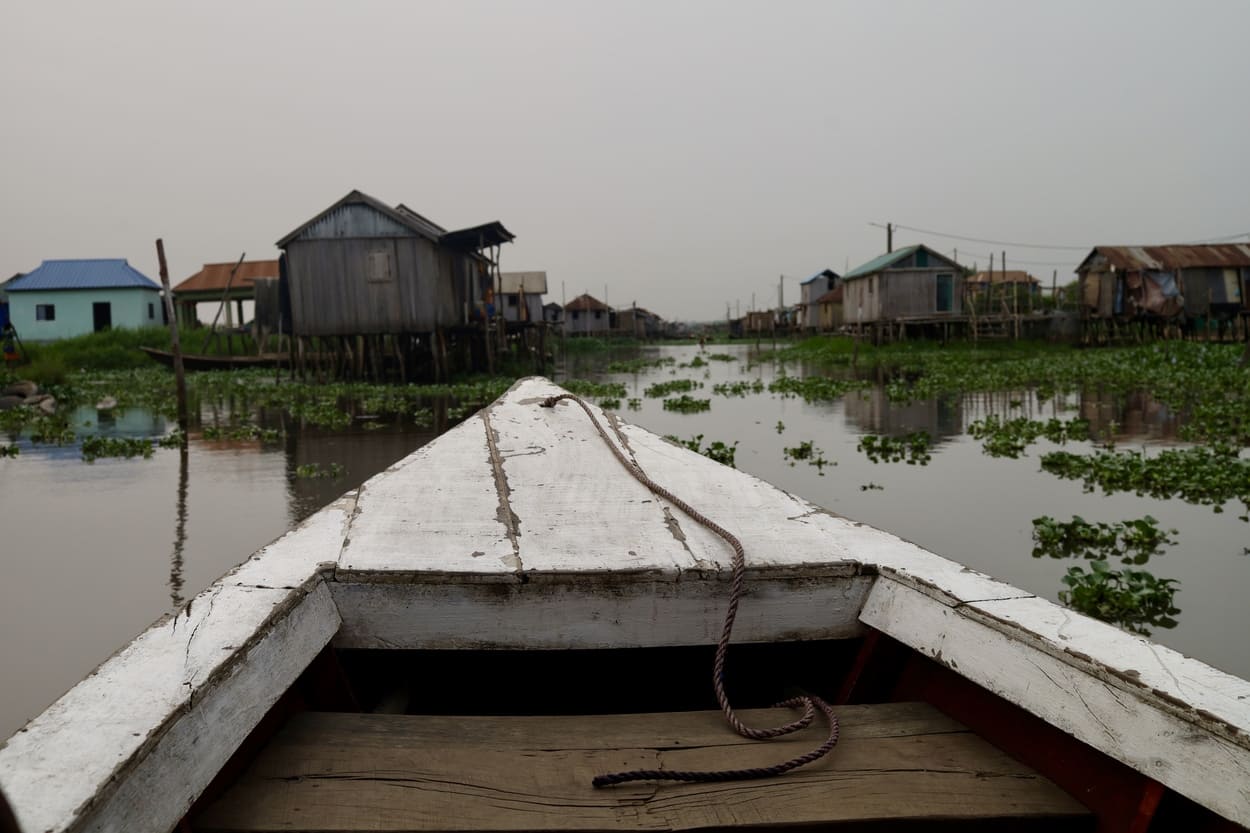
About 40,000 people actually live here, and I still have to pause when I say that number out loud.
It makes sense that everyone owns a boat the way people elsewhere own cars.
Most families have three boats.
One for the father, one for the mother, and one for the children.
When you’re visiting as a traveler, it’s hard not to stare at everything, because your brain is trying to adjust to the idea that this is normal life for tens of thousands of people.
How Life on the Water Actually Works
Fishing is central in Ganvié.
Men fish. Women sell the catch beyond the village.
There’s also a whole method of fish farming that we learned about while we were out there.
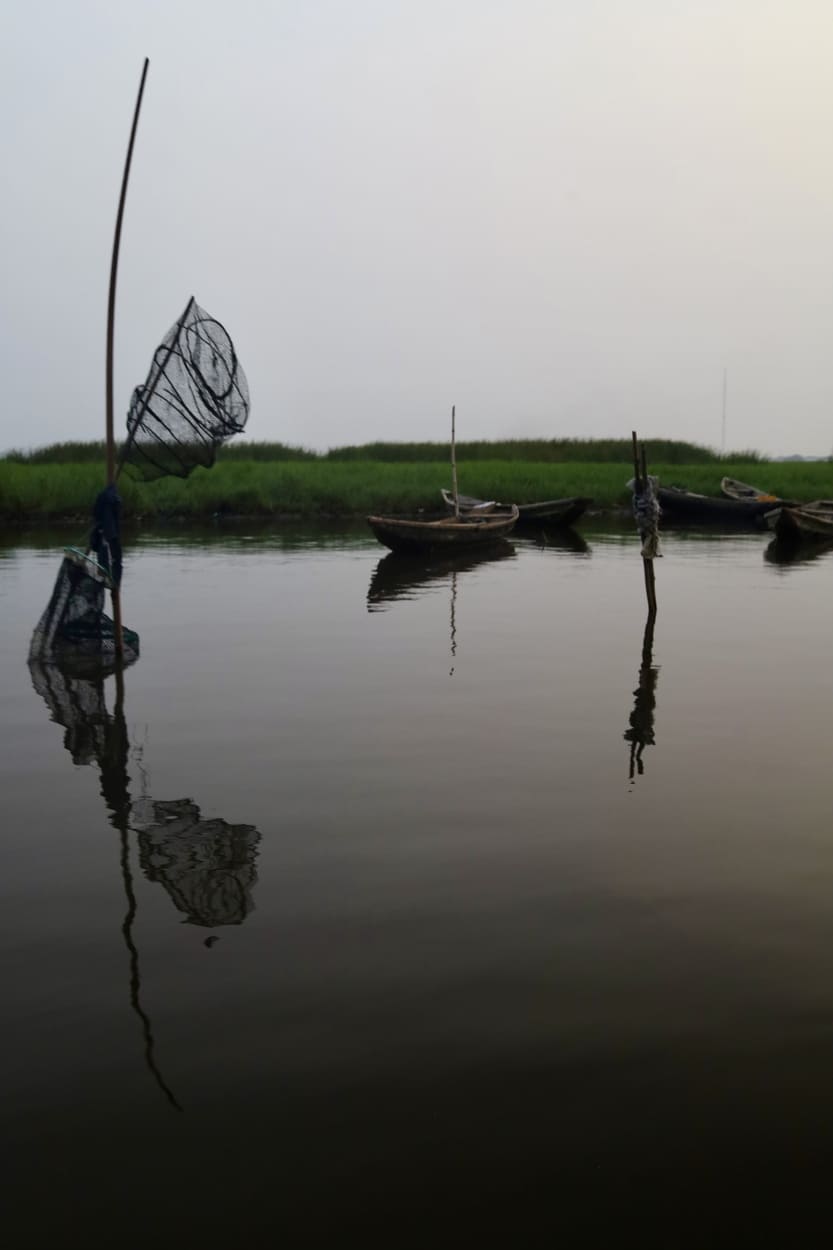
Families place branches and tree limbs into the water to attract fish.
The fish feed there, and later they’re trapped.
You’ll see small huts nearby, built specifically to keep watch over those fish farms.
Even the water levels shift the way seasons shift on land.
We learned that the lake has months where the water rises and months where it sits lower.
During our visit in January, the depth was low at only around only 1.45 meters.
When the water is lower, it can become saltier. Otherwise, it’s fresh water.
Moving Through the Village
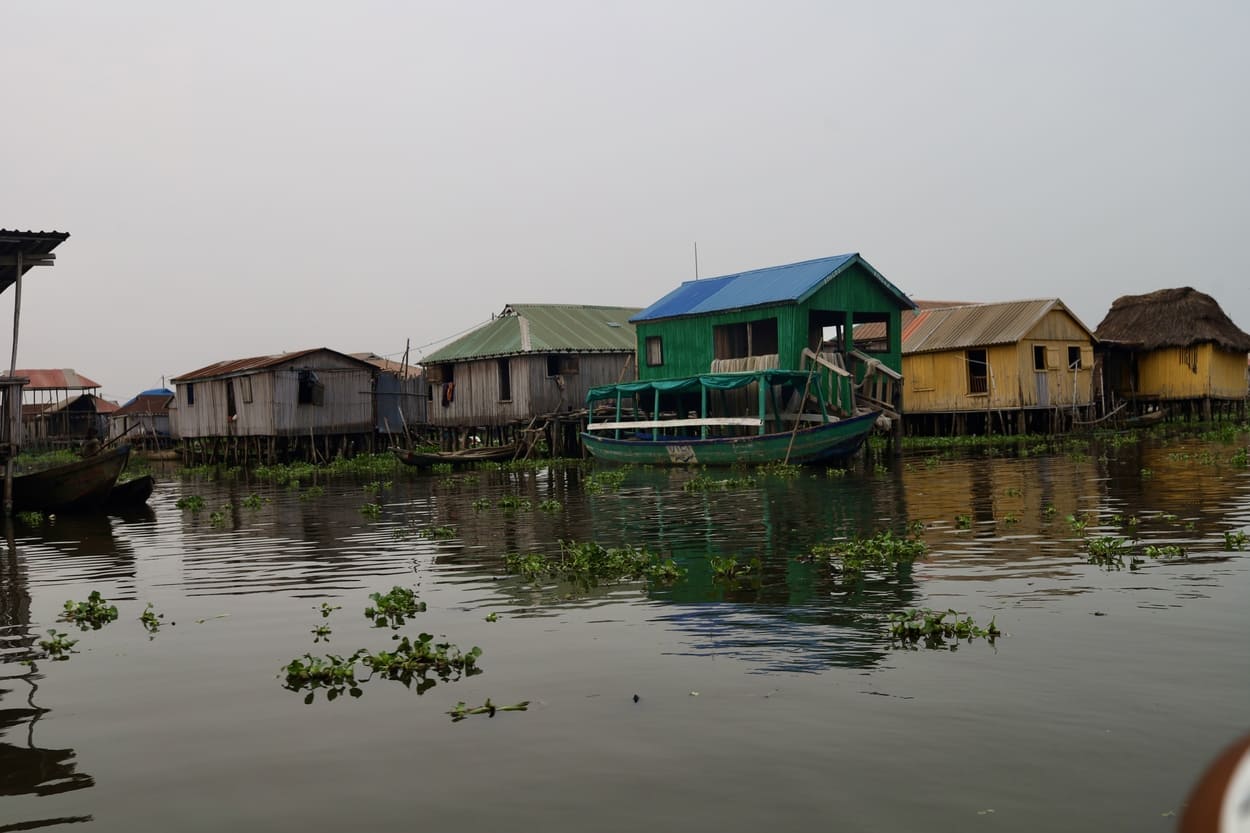
We moved through Ganvié by boat, weaving between homes, schools, and fishing areas like it was a normal neighborhood layout, just on water instead of land.
Once you’ve been out there for a few minutes, you stop thinking “this is crazy” and start thinking, “okay wait… this is actually a whole functioning town.”
Herman pointed out that a lot of what you’re seeing is built up over time.
Some parts of Ganvié are artificial islands, created little by little across generations.
He also pointed out the one natural island that’s used as a cemetery, and that island has a clear purpose.
It’s for the ancestors, and that’s it.
At one point, someone from outside the village tried to build there anyway, even after being warned.
He died mid-construction. Later, his son attempted it too and also died.
So yes, the rule is simple.
But the message is even simpler: leave that island alone.
Inside a Home in Ganvié
One of the most memorable moments was being welcomed into a home.
First, water is brought out and poured into a bowl.
Then some of it is poured out three times in honor of the ancestors.
And then comes sodabi (fermented palm wine).
If you’ve never had sodabi before, just know it’s strong. Very strong.
The kind of strong where your face might accidentally tell the truth before you can control it.
You drink a little, even if it’s not your favorite, because the point isn’t the drink. The point is the welcome.
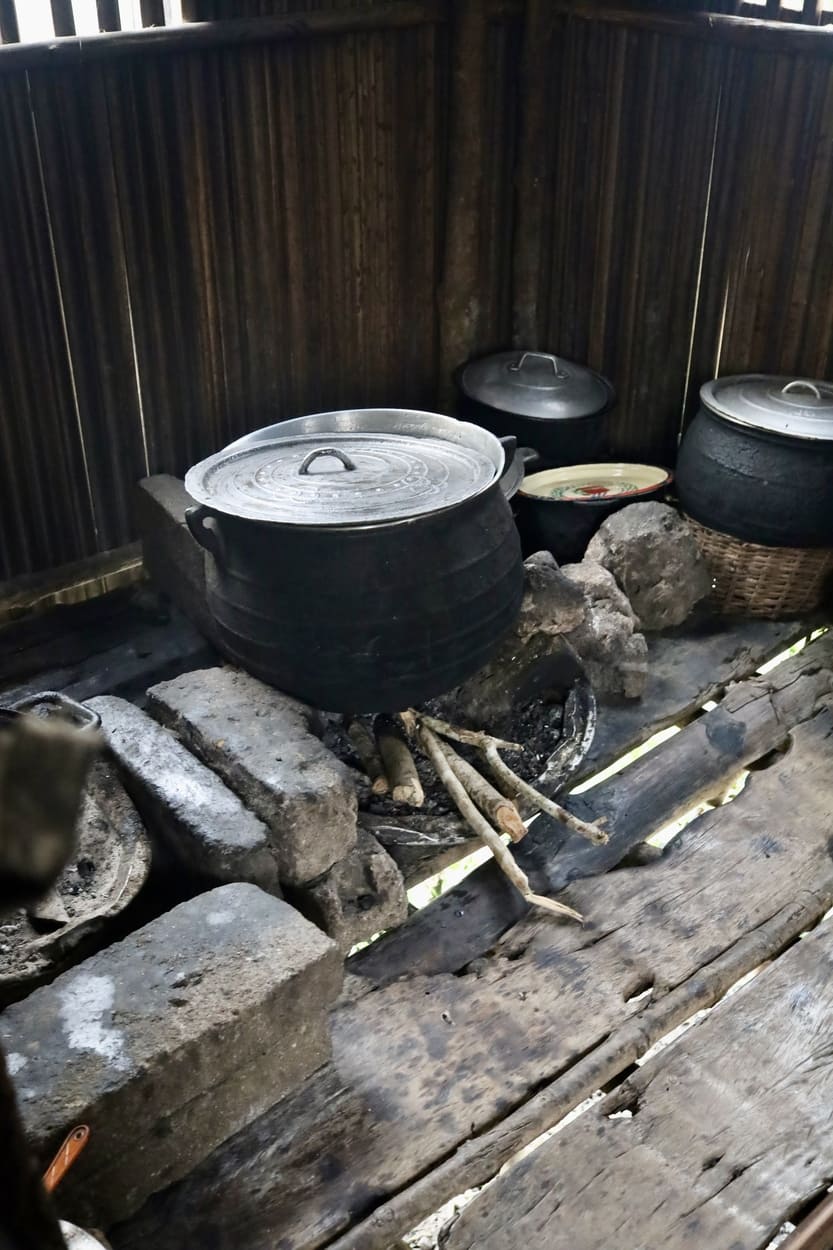
Homes here are often two to three rooms, sometimes more.
Traditionally, men could have multiple wives, and each wife would have her own house.
Life in Ganvié is practical. People talk, work, raise children, and keep things moving.
And yes, the village is modern in ways that surprise people.
You’ll see solar panels. Schools operating on the water. Healthcare access. A museum being built.
It’s not a village frozen in time.
It’s a place that has adapted and kept going.
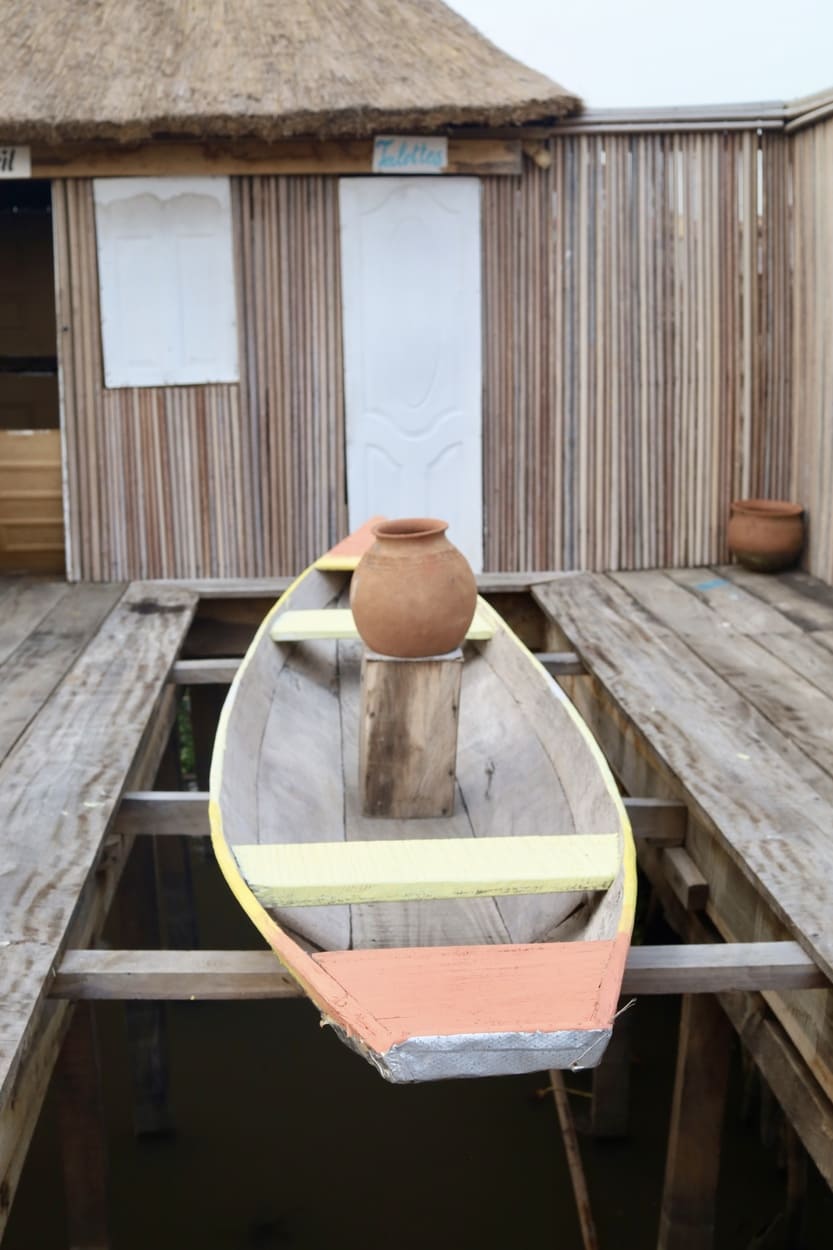
Photography and Being Considerate
Ganvié is stunning, so of course people want photos.
But it’s important to move with awareness here.
Nature shots are generally fine. People photos depend.
Some residents aren’t comfortable being photographed, and some believe it can take part of their soul.
Whether you personally believe that or not, the respectful thing is to honor what the community believes.
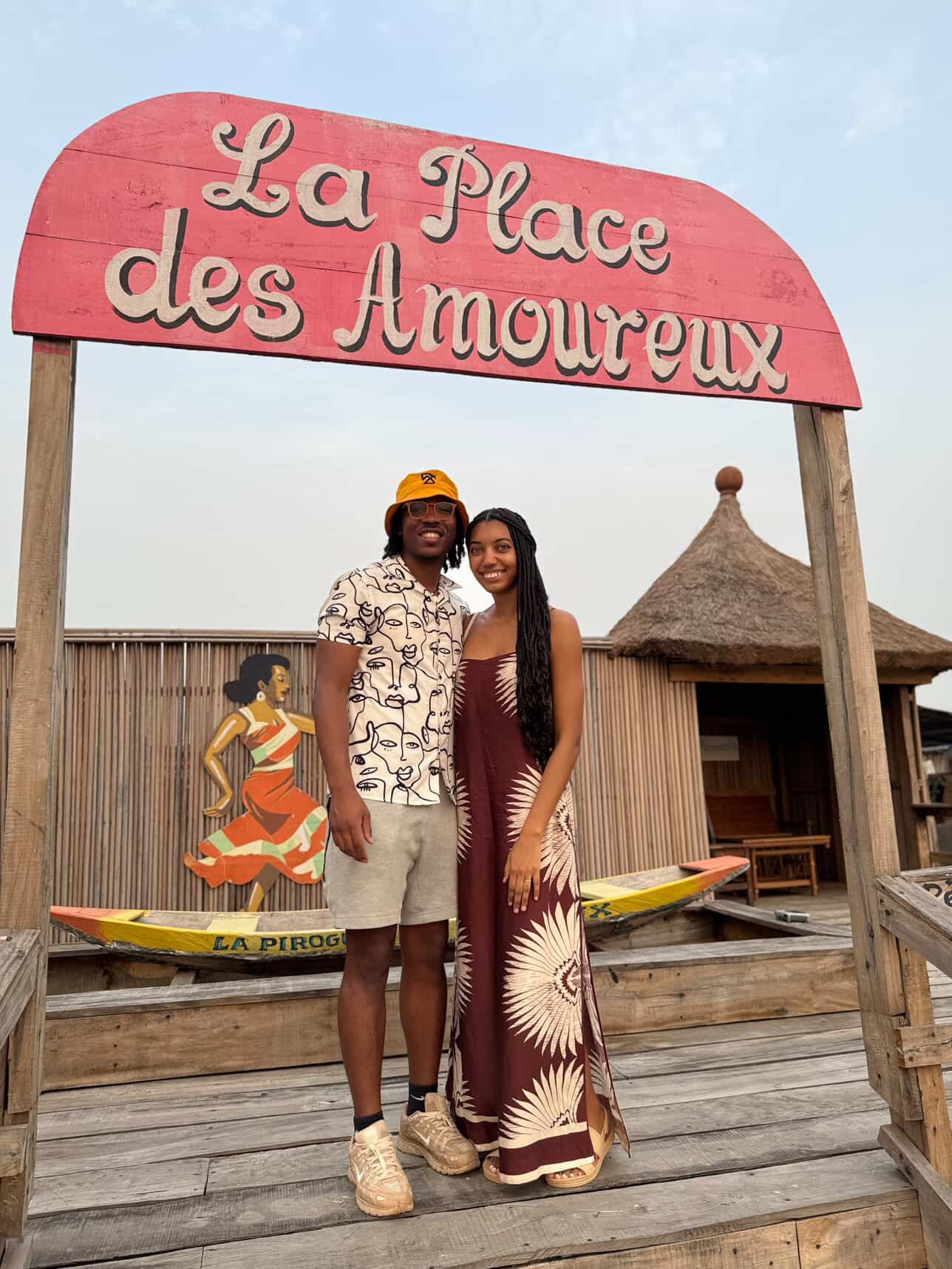
This is one piece of the southern circuit. If you’re mapping the full five-day route, here’s how the entire Benin itinerary connects.
Why Ganvié Belongs on Your Benin Itinerary
Ganvié works impressively well.
It’s organized, functional, and has routines and systems that make sense for the environment.
And the longer you’re there, the more you realize it didn’t survive for centuries by accident.
If you’re visiting Benin and you want to experience something that truly feels different from anything else you’ve seen, Ganvié is worth making time for.
It felt calm and well-organized during our visit.
If you’re planning a wider trip through Benin, we’ve also broken down what safety looked like for us across the country.
Read next: Zangbeto in Benin | Things to Do in Porto-Novo | Abomey Highlights | Visiting Lomé Togo
Explore Benin Travel Guide: If you want the full itinerary + planning details, it’s here.